

Meet us at iFx Cyprus
The proprietary trading industry has exploded in recent years, with hundreds of prop firms competing for talented traders worldwide. Behind many of these seemingly independent operations lies white-label technology, allowing entrepreneurs to launch fully branded prop trading firms without building the infrastructure from scratch. These platforms handle everything from risk management systems to trader evaluation processes, transforming what may seem like a complex technical challenge into a manageable business opportunity.
Entrepreneurs can now enter this lucrative market without the typical barriers of entry that once required massive upfront investment and technical expertise. The right technology partner provides the complete technical backbone, allowing business owners to focus on building their brand, attracting traders, and growing revenue. Trade Tech Solutions offers comprehensive prop firm technology designed specifically for entrepreneurs ready to launch their own profitable prop trading operations.
You need more than a trading brand and a marketing budget. Starting a prop firm requires brokerage relationships, liquidity provider agreements, trading platform licensing (MT4, MT5, or cTrader), a risk management engine, payout infrastructure, compliance frameworks, and jurisdiction-specific legal setup. Most people assume a prop firm is simply a trading brand built on a standard brokerage account. This assumption collapses when you onboard your first hundred traders and discover your infrastructure cannot handle evaluation tracking, automated payouts, or real-time risk monitoring across multiple accounts.

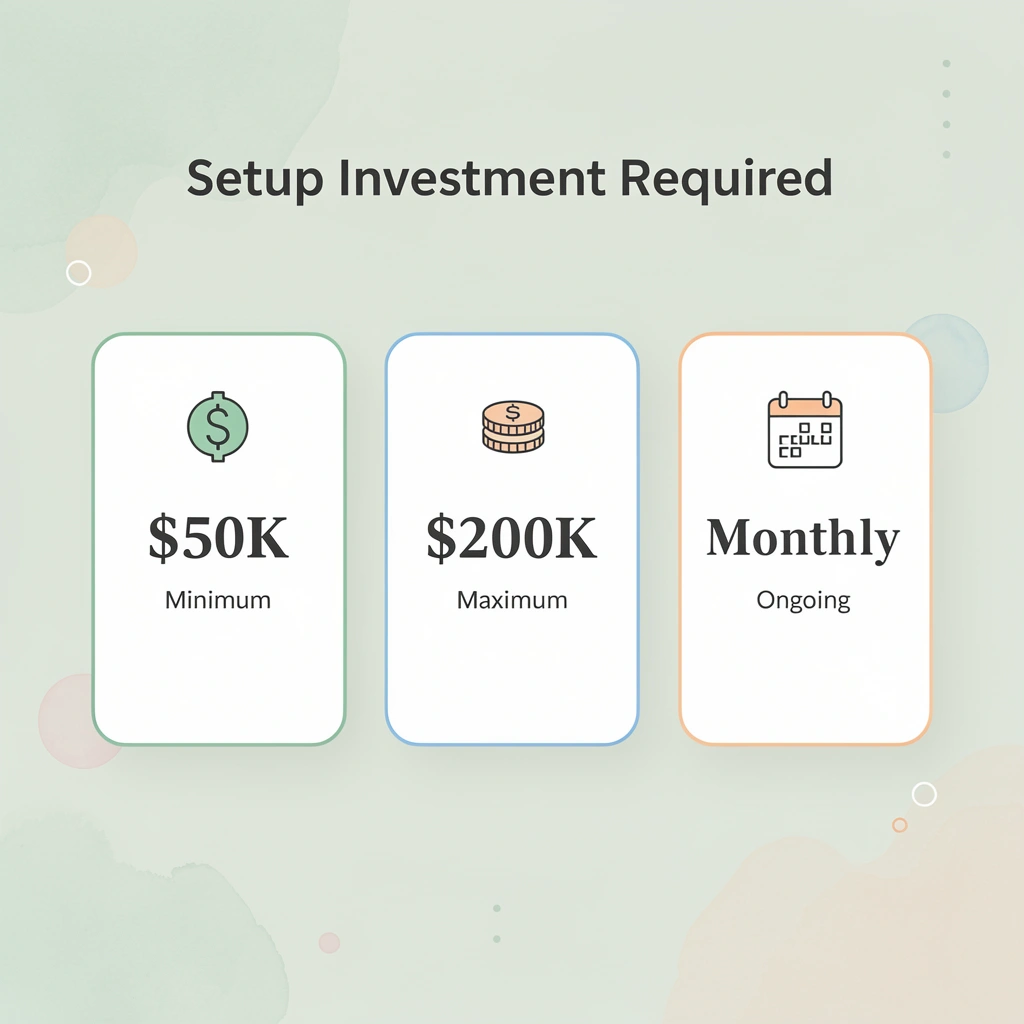
🎯 Key Point: The technical infrastructure requirements alone can cost $50,000-$200,000 in initial setup, not including ongoing monthly licensing fees and compliance costs.
⚠️ Warning: Many aspiring prop firm owners underestimate the regulatory complexity—you're not just running a trading service; you're managing financial risk across hundreds of accounts simultaneously.
"The infrastructure behind a successful prop firm is 10x more complex than most entrepreneurs anticipate, with real-time risk management being the make-or-break factor." — Industry Analysis, 2024
Every prop firm needs a brokerage partner supporting its operational model. You're negotiating liquidity terms, margin requirements, and institutional pricing that affect every trade your funded traders execute. Liquidity providers determine spreads, execution speed, and slippage, which directly impact trader performance and your firm's profitability. Without a brokerage relationship structured for scale, you'll hit capacity limits or pricing constraints that make growth expensive or impossible.
MT4, MT5, and cTrader require server licenses, risk engine integration, and custom setups to support evaluation phases, demo-to-live transitions, and rule enforcement. Each platform has different licensing costs, technical requirements, and integration complexity. You're building a system that monitors positions in real time, enforces drawdown limits, flags rule violations, and triggers automated account suspensions when thresholds are breached.
The risk engine is the operational core of your firm. It tracks every trader's equity curve, enforces daily loss limits, monitors consistency rules, and determines payout eligibility. According to propfirmapp.com, top prop firms pay out over $10 million monthly, requiring payout infrastructure capable of handling high-volume transactions across multiple payment processors, currencies, and compliance checkpoints. Payment integrations with processors like PayPal, Wise, or crypto gateways need API connections, fraud detection, KYC/AML verification, and reconciliation systems to ensure every dollar paid matches a verified performance record.
Where you incorporate determines your regulatory obligations, tax structure, and legal exposure. Some jurisdictions require financial licenses to operate a prop firm, while others treat it as an educational or technology service. You need legal counsel familiar with proprietary trading models, terms of service that protect you from trader disputes, and compliance processes for anti-money laundering and data privacy. For Traders reports the prop trading market reached $12 billion in 2025, attracting regulatory scrutiny across multiple regions. Operating without a clear jurisdiction strategy or compliance infrastructure exposes you to legal risk that can shut down operations overnight.
Building this stack from scratch requires hiring developers, negotiating with multiple vendors, and maintaining systems through constant API updates. Platforms like prop firm technology bring together these components with pre-built integrations for 50+ payment processors, AML/KYC tools, and trading platforms. Our integrated solution helps teams reduce launch time from months to weeks while eliminating technical debt across brokerage, risk, CRM, and payout layers.
But even with the right technology partner, most people never move past the idea stage.
Few prop firms are built entirely from scratch anymore. The process requires six to eighteen months of development time and starting money ranging from $500,000 to $2 million, depending on regulatory jurisdiction and infrastructure complexity. Custom development diverts critical time from founders who need to find traders and generate revenue.
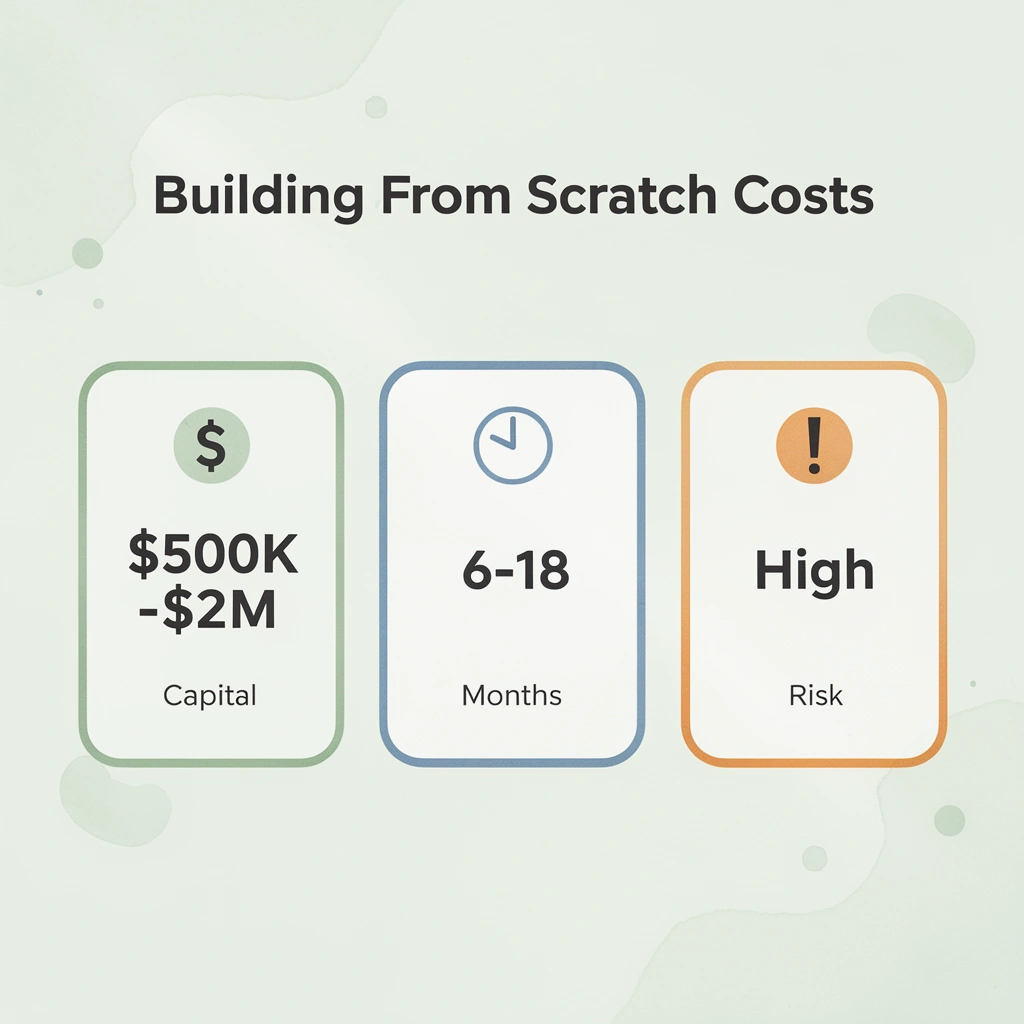
🎯 Key Point: The massive upfront investment and extended development timeline make building from scratch a high-risk strategy that delays revenue generation for 12-18 months.
"Starting capital requirements of $500,000 to $2 million represent a significant barrier to entry for most aspiring prop firm founders." — Trade Informer, 2025
⚠️ Warning: While founders spend months on technical development, competitors using white-label solutions are already acquiring traders and generating trading volume.
The upfront capital requirement is only part of the equation. Monthly operational burn rates ranging from $7,000 to $40,000 create relentless pressure before a single trader passes an evaluation. Trading platform subscriptions, risk monitoring tools, and CRM systems each demand separate vendor relationships with distinct integration requirements.
Support staff for risk management, compliance, and customer service add fixed costs that compound quickly, especially when the volume of challenges remains unpredictable early on.
Adhering to rules and regulations incurs unexpected costs for most founders. Operating from outside the country reduces initial capital requirements but creates banking limitations that complicate payouts and currency conversion.
Mid-level locations like Mauritius require $15,000 to $50,000 to legally establish a business. Obtaining full regulatory approval from authorities such as the FCA or CySEC can initially exceed $100,000, with ongoing compliance costs that scale with trading volume.
Cash flow management becomes the silent killer for undercapitalized firms. Prop firms must maintain accessible reserves between $30,000 and $100,000 to cover trader withdrawals during favorable market moves or promotional campaigns.
Relying solely on challenge fee revenue to fund operations creates a dangerous cycle where successful traders drain liquidity faster than new evaluations replenish it. When a firm cannot process withdrawals within promised timeframes, reputation damage spreads quickly through trading communities.
The main problem isn't creating the product—it's accessing the right infrastructure. Bringing brokers on board takes weeks because companies must negotiate liquidity terms and establish credit relationships. Trading platform licensing requires technical work to connect systems, delaying launch while legal teams review distribution agreements.
Getting approval from payment processors adds delays, especially for companies operating across multiple countries with different anti-money-laundering regulations.
Platforms like prop firm technology solve this problem by integrating CRM, risk management, and payout systems. Our platform connects to over 50 payment processors and major trading platforms, enabling firms to launch in weeks instead of months and eliminating the complexity of managing multiple vendors.
But there's a model that avoids most of these problems. It has become the standard approach for nearly everyone entering the market today.
A white label prop firm is a ready-made trading system that you can license, rebrand, and run as your own business. The provider manages the technical operations: monitoring trader performance, assessing risk, processing payouts, and onboarding traders, while you handle branding, recruiting traders, setting rules, and business operations.

🎯 Key Point: With a white label solution, you can launch a fully functional prop firm without building the complex technical infrastructure from scratch—saving months of development time and high upfront costs.
"White label prop trading platforms allow entrepreneurs to enter the market 60-80% faster than building proprietary systems, with significantly reduced technical overhead." — Industry Analysis, 2024

⚠️ Warning: While the technical foundation is provided, your success still depends on effective marketing, trader acquisition, and sound risk management policies—the white label provider handles the infrastructure, but you're responsible for the business strategy.
This shifts the launch process from engineering to configuration. Instead of spending 12 months assembling a development team to build evaluation logic and integrate payment processors, you're live in weeks. According to B2BROKER, operators can launch funded trading in weeks rather than months using white-label infrastructure. The question becomes "how do we position it?" rather than "can we build this?"
White labeling involves four distinct operational layers: the underlying broker provides execution infrastructure and liquidity access; the platform provider handles trading charts, order routing, and position tracking; the white label provider manages risk systems, challenge evaluation engines, and compliance workflows; and you focus on brand identity, marketing strategy, rule configuration, and trader support.
This separation moves complexity away from your engineering team to business logic decisions. You're not fixing API failures when a payment gateway times out. Instead, you decide whether Phase 1 challenges need 8% or 10% profit targets, whether to allow news trading during NFP releases, and how aggressive your daily drawdown limits should be. Your operational risk centers on market positioning and trader experience, not server uptime.
The platform lets you control profit targets, drawdown thresholds, minimum trading days, and prohibited strategies. You decide payout schedules (70% or 90% profit splits), withdrawal speed, available instruments (Forex, crypto, indices, commodities), and market restrictions during high volatility. You design the challenge structure, from single-phase evaluations to multi-step progressions with scaling account sizes.
Most operators underestimate how powerful these configuration choices are. Two companies using the same white label infrastructure can create completely different trader experiences based solely on how they set up their rules. One might target conservative swing traders by offering relaxed daily loss limits and longer evaluation periods. Another might appeal to scalpers by offering tight profit targets, aggressive leverage, and instant funding after one evaluation phase. The technology is identical. The business model becomes completely different through configuration logic.
Building everything yourself costs hundreds of thousands of dollars and takes over a year. White label infrastructure provides proven systems tested with real trading under live conditions across multiple companies. Our risk engine has processed thousands of trader accounts. Our payout automation handles complex situations, such as partial withdrawals while trades remain active. Our KYC workflows adjust to regulatory requirements across different jurisdictions.
White label infrastructure provides institutional-grade reliability without institutional-grade development budgets. Platforms like prop firm technology integrate challenge systems, risk management, CRM, and payment processing into unified environments with pre-built connections across 50+ processors and major trading platforms. Our Trade Tech solution helps firms compress launch timelines from months to weeks while eliminating fragmentation from managing separate vendors.
The power to set up your system comes with hidden complexity that most operators discover only after their first 100 traders test the limits of their rule design.
Starting a white label prop firm means choosing which parts of the system you control directly. Let someone else handle the infrastructure layer so you can own the business logic layer. That choice determines whether your firm grows profitably or becomes trapped by its own dependencies.

🎯 Key Point: The control structure you choose at launch will determine your firm's long-term profitability and operational flexibility. Focus your resources on the business logic layer where you can create competitive advantages.
⚠️ Warning: Many new prop firms make the mistake of trying to build everything in-house from day one. This approach typically leads to higher costs, longer launch times, and reduced focus on what actually drives trader acquisition and retention.

This is where you choose your provider: broker relationships, execution backend, platform access (MT4, MT5, or cTrader), and liquidity routing. You license these rather than build them, trading speed and capital efficiency for reliance on upstream stability.
According to Leverate, firms can launch white label operations in under 14 days, which would be impossible while negotiating brokerage agreements and configuring liquidity feeds from scratch. Your uptime, execution quality, and platform reliability depend on someone else's infrastructure decisions.
Most operators underestimate their dependence on this until their provider experiences downtime during high volatility. You cannot fix a liquidity issue or reroute execution without owning the backend.
The control you surrender worsens if your provider also runs competing prop firms or takes a revenue cut. Your data, trader behavior patterns, and payout timing become visible to a partner with potentially conflicting interests.
This is where your company's identity lives. You define evaluation rules, risk thresholds, payout structures, drawdown limits, phase transitions, and profit targets. A strong white label platform like Trade Tech provides full control without requiring custom development.
You should be able to launch a two-phase evaluation with trailing drawdown logic, adjust daily loss limits by asset class, and modify scaling rules as trader behavior changes. If your platform requires support tickets to change evaluation parameters, you lack control over your business logic.
Companies that grow fastest treat business logic as a competitive advantage. They test new challenge structures, iterate on payout timing, and adjust risk parameters based on real trader data.
Platforms like prop firm technology enable this by separating infrastructure from rule configuration, allowing operators to modify evaluation logic, automate phase transitions, and enforce custom risk policies without waiting on vendor roadmaps. Our platform turns your firm into a testing ground for what works.
Marketing, customer acquisition, and retention fall to you. No white label provider will build your brand, attract traders, or design your conversion path. You control messaging, positioning, pricing strategy, and trader lifecycle communication.
The technology should support this with CRM integration, automated email workflows, and real-time performance dashboards, but the strategy is yours. This is where most operators win or fade into irrelevance.
Companies that don't prioritize growth from the start launch with strong systems but no clear plan to acquire new traders. Trader numbers stagnate. Retention drops. Revenue fails to cover operating costs.
The white label platform can only help the systems you build work better at finding, checking out, and keeping traders in large numbers; it cannot fix problems with your plan.
Relying too heavily on your provider's stability is the first trap. A prolonged outage halts your business, and switching providers mid-month disrupts active evaluations and funded accounts. Misconfigured risk rules are the second trap. A trailing drawdown that triggers too aggressively or a daily loss limit that fails to account for slippage will either disqualify legitimate traders or expose you to unexpected losses.
Payout structure misalignment is the third trap. If your revenue per trader doesn't cover evaluation costs, platform fees, and payout obligations, growth accelerates your path to insolvency.
For most operators, white labeling is the only realistic way to start a prop firm without building all the financial systems from scratch. Your choice of provider and which parts to control yourself will determine whether your firm grows or remains fragile.
The firms that reach the market fastest aren't always the ones that survive their first year as they scale.
Most failed prop firm launches stem from structural misalignment, not weak ideas. Operators commit to a provider, configure systems based on assumptions, then discover critical gaps once trader volume begins. The broker doesn't support your promised payout cadence. The risk engine can't enforce drawdown rules your evaluation model requires. The CRM doesn't track multi-phase challenges. By launch, you've spent months and capital on infrastructure that doesn't fit your business logic.
🎯 Key Point: Infrastructure misalignment is the #1 cause of prop firm launch failures—not market conditions or capital constraints.

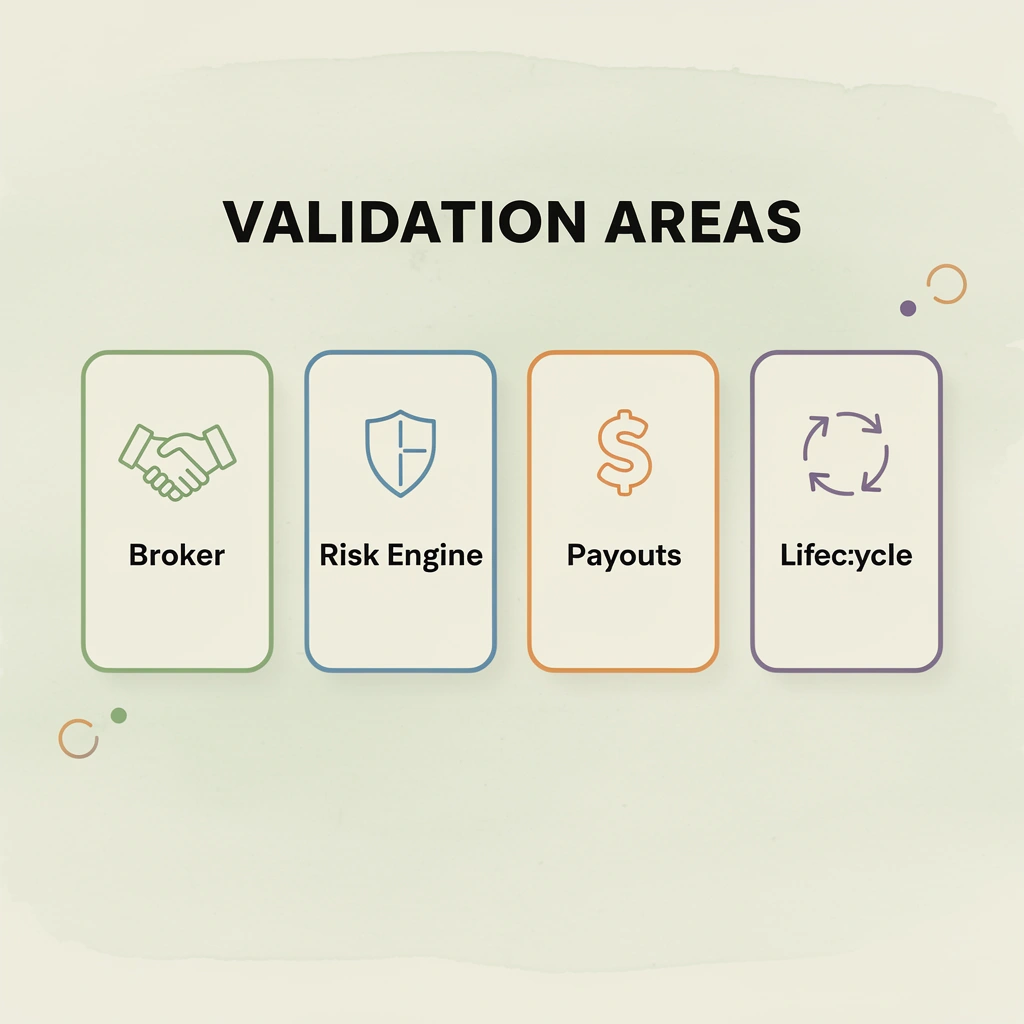
Trade Tech eliminates guessing by letting you validate your entire launch architecture in a production-ready environment before committing. Test broker dependencies, risk engine logic, payout workflows, and trader lifecycle systems against your specific evaluation model, not a generic template. See how the platform handles real scenarios: simultaneous payouts during volatility, CRM progression tracking when traders reset mid-challenge. You operate the system as if your firm is already live.
"Operators who scale validate structure before scaling demand." — Trade Tech Operational Framework, 2024
💡 Tip: Run stress tests on your payout system during simulated market volatility to identify bottlenecks before they impact real traders.
Operators who scale validate structure before scaling demand. A consultation shows whether your launch model holds under operational pressure or whether you're building on dependencies that break at volume. Book a consultation with Trade Tech to validate your white label prop firm setup and ensure structural viability before you build.
⚠️ Warning: Post-launch fixes cost 3-5x more than pre-launch validation and can damage trader trust permanently.

.png)
