

Meet us at iFx Cyprus
The proprietary trading industry has exploded in recent years, with ambitious entrepreneurs recognizing the massive profit potential in funding skilled traders while managing risk effectively. Most people who dream of launching their own firm quickly discover a harsh reality: creating a successful operation involves far more than just having capital and finding traders. Robust infrastructure for challenge evaluations, real-time risk management systems, payment processing, legal compliance frameworks, and scalable technology are all essential components that determine success or failure.
Specialized technology becomes the competitive advantage that separates thriving firms from those that struggle with operational headaches. The right platform handles everything from automated trader evaluations and account management to integrated risk controls and payout systems. This infrastructure typically takes years and hundreds of thousands of dollars to build in-house, but the right technology partner can help launch faster and operate more efficiently with prop firm technology.
Most people think prop firms are trading businesses built on institutional capital and market access. In reality, they're risk-allocation systems structured around trader performance, built from marketing, behavioral economics, and software.

🎯 Key Point: The real foundation of prop firms isn't capital—it's psychological profiling and risk management algorithms that predict trader behavior patterns.
"Successful prop firms operate more like behavioral laboratories than traditional trading houses, using data-driven insights to optimize trader selection and risk allocation." — Industry Analysis, 2024

💡 Warning: This fundamental misunderstanding is why most aspiring prop firm owners focus on the wrong metrics when building their business model—they optimize for capital efficiency instead of trader psychology.
The core financial structure is based on evaluation fees paid by traders seeking access to capital. These non-refundable challenge fees create the primary revenue stream. According to propfirmapp.com, 90% of traders fail their prop firm challenges, converting what appears to be a gateway to capital into a recurring payment model. Account resets and retake fees further fund operations long before any trader reaches profitability.
The challenge barrier functions as both a filter and a revenue generator. Traders pay upfront for simulated environments with strict rule boundaries, maximum drawdowns, and profit targets that most never consistently meet.
Prop firms assemble existing systems rather than building proprietary ones. Trading platforms such as cTrader, MetaTrader 5, and TradeLocker provide white-label user interfaces. Risk management engines monitor simulated trades and automatically close accounts when rules are breached. Third-party APIs handle KYC workflows, multi-currency billing, and CRM integration through a centralized trader dashboard.
This technology prioritizes operational efficiency over trading capital. The software selects eligible traders, automatically measures performance, and determines advancement through stages. Platforms like prop firm technology handle custom challenge rules, online store integration, and AML/KYC compliance across 50+ payment processors, eliminating the need to coordinate multiple vendors.
During evaluation phases, traders execute in simulated paper-trading environments where their orders never touch live markets, keeping trades within the firm's B-Book structure. Since most traders lose their accounts, the firm avoids paying real money or protecting positions that statistically won't survive. Only when a trader demonstrates consistent, long-term profitability does the payout logic layer activate, potentially routing their trades to live markets through liquidity bridges in an A-Book model.
This dual-routing system is structural, not hidden. The capital sourcing layer relies on trader fees rather than institutional investment. The performance measurement layer uses automated software to filter unprofitable behavior before deploying real capital. What traders perceive as direct market access with firm capital is a controlled risk-allocation system in which the firm's exposure remains minimal until profitability is proven.
But if the structure is this tightly engineered, why do so many prop firms still collapse within their first year?
The failure mode isn't market volatility or bad traders. Most prop firms grow their trader numbers faster than their control systems. When 500 traders operate under risk filters designed for 50, the infrastructure becomes probabilistically vulnerable. According to Axcera's analysis, 70% of prop firms fail within their first 18 months, and collapse is almost always systemic rather than individual.

🔑 Key Takeaway: The 10x scaling mismatch between trader growth and infrastructure development creates a critical vulnerability that leads to systemic failure rather than isolated trading losses.
"70% of prop firms fail within their first 18 months, and the collapse point is almost always systemic, not individual." — Axcera Analysis, 2024
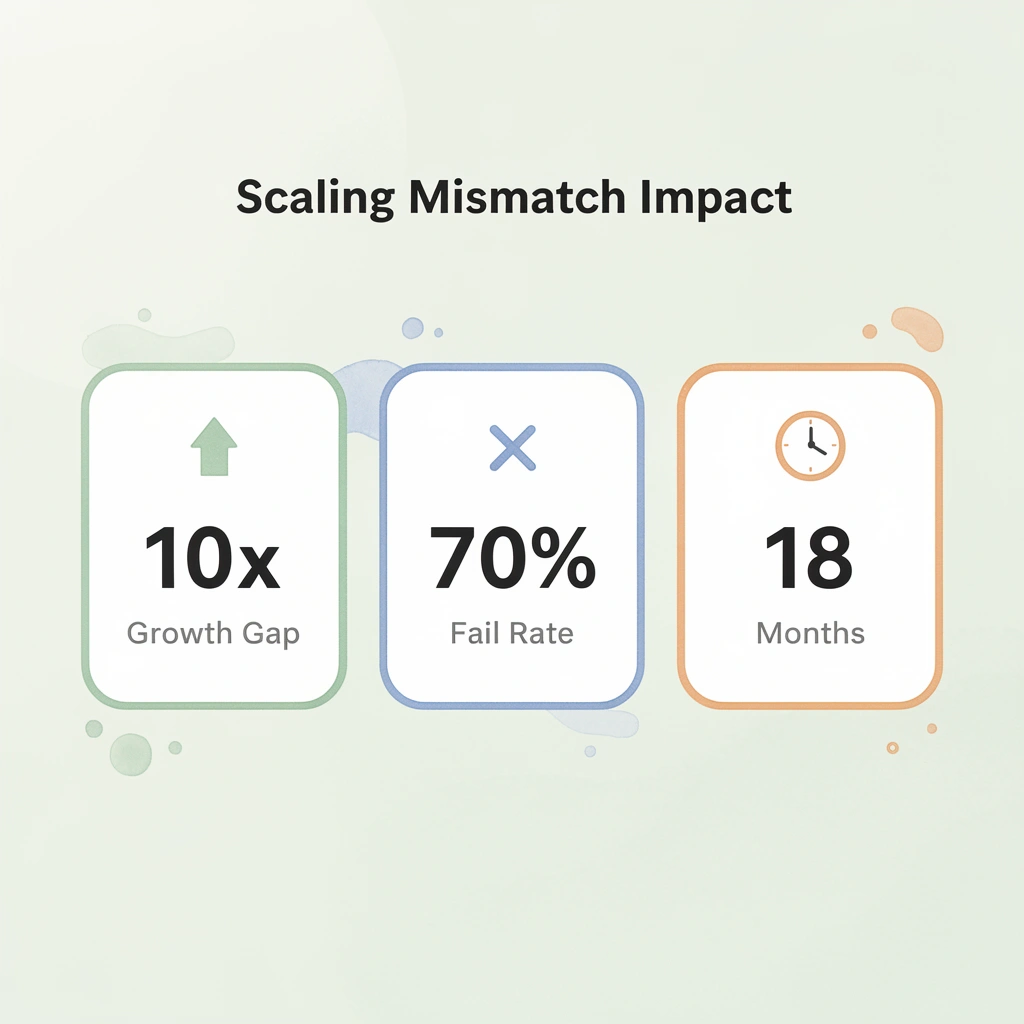
⚠️ Warning: When your risk management systems are designed for 50 traders but you're operating with 500, you're not just scaling—you're fundamentally changing the risk profile of your entire operation.
The business model depends on traders failing evaluations and paying retry fees, yet the marketing message promises funded accounts and profit splits. This creates an incentive structure in which the firm profits most when traders fail, while appearing committed to trader development.
When firms optimize too aggressively for evaluation revenue by tightening rules, shortening timeframes, and adding hidden constraints, traders notice. Churn accelerates and reputation erodes. The firm must then choose between loosening standards and increasing capital exposure, or maintaining strict filters and accepting rising acquisition costs.
Successful firms treat evaluation design as a predictor of trading success rather than a revenue mechanism. Rules should reflect how traders perform in real trading, not force restarts. When evaluation criteria predict who will trade profitably with firm capital, incentive misalignment diminishes. Traders who pass are statistically likely to generate returns.
Most companies start with basic drawdown limits and daily loss caps that are sufficient for 20 manually monitored accounts. At 2,000 accounts across multiple asset classes and time zones, static rules fail.
A trader can stay within drawdown limits while running a strategy that is statistically guaranteed to fail. Correlation risk across multiple funded accounts remains hidden when tracking only individual position sizing.
Platforms like prop firm technology build risk-management layers that automatically adjust as account volume grows. Our Trade Tech system monitors portfolio-level exposure, detects correlated positions across accounts, and flags behavior patterns that predict future losses before capital deployment.
The system scales oversight infrastructure alongside trader growth rather than reacting after exposure worsens.
Standard prop firm challenges test whether a trader can hit a profit target without exceeding drawdown limits over a set period. They don't test whether that trader can repeat the performance, whether the strategy works across market conditions, or whether the risk profile is sustainable. A trader can pass by taking oversized risks that happened to work during the evaluation window, then fail when funded.
A better evaluation architecture includes consistency metrics (how stable returns are over time), risk-adjusted performance (returns relative to volatility), and behavioral flags (whether the trader adjusts position sizing in response to drawdowns or doubles down). Research by a former The5ers risk chief indicates that fewer than 1% of traders can bankrupt a prop firm, but only if the firm's evaluation process filters out statistically dangerous behavioral patterns before funding. Most firms lack this predictive depth.
But even when the evaluation system works perfectly, a deeper structural question remains: what happens when the technology holding everything together can't handle the load?
A prop firm fails not because traders are reckless, but because the layers holding the system together weren't designed to depend on each other. Capital separation, trader behavior prediction, evaluation logic, risk exposure limits, and incentive structures must lock together. When one layer is missing or non-functional, the others cannot compensate. A spike in payout requests, a slowdown in evaluation fee income, or correlated trades across funded accounts triggers collapse. Architecture isn't about having the pieces—it's about ensuring they cannot work without each other.
🎯 Key Point: The strength of a prop firm lies not in individual components, but in how interdependent systems create unbreakable operational integrity.
"When one layer is missing entirely, the others can't make up for it—system failure becomes inevitable." — Prop Firm Architecture Analysis
⚠️ Warning: Many firms focus on building individual systems without ensuring they create mutual dependencies that prevent single points of failure.
Capital architecture requires separation: trader funds, operational reserves, and payout liquidity must sit in separate accounts with clear record-keeping. According to propfirmapp.com, top prop firms manage over $2 billion in trading capital, but that figure means nothing without registered clearing relationships with FCMs or liquidity providers that verify real market access.
Firms operating B-Book models internalize trades against their own book: your winning trade is their loss. When too many traders win simultaneously, the firm lacks outside liquidity buffers, and the capital architecture breaks down.
Ask whether the firm has a registered futures commission merchant partnership or a named liquidity provider relationship. If they avoid the question or cite "proprietary execution technology" without naming a specific partner, the capital structure is probably not real.
Payout delays, KYC loops, and sudden account closures signal a firm that never built reserves to handle winning traders at scale.
Companies that endure can predict when traders will make poor decisions. Trader modeling sorts applicants by risk tolerance, emotional resilience during losses, and consistency across volatile markets. The goal is to fund only traders whose behavior patterns indicate they won't fail with real capital at stake.
When propfirmapp.com reports that 80% of traders fail prop firm challenges, it reveals that most firms don't use behavioral data to improve results—they use it to profit from repeat attempts.
Sustainable companies track metrics such as average holding time, profit distribution across trades, and traders' responses to news events. They compare trader behavior in practice challenges to live trading and adjust position sizing or risk limits based on observed differences.
If a trader passes a challenge with 90% profit from a single lucky trade, the modeling layer flags them for a reduced allocation or an extended probation. The firm needs traders whose edge is repeatable, not random.
The evaluation is a stress test that shows whether a trader's process can survive real-money pressure. Challenge rules like minimum winning days, daily loss limits, and profit distribution caps separate traders with positive expectancy from those riding variance.
When firms tighten rules to maximize failure rates, evaluation stops serving risk management and becomes a revenue trap. The architecture breaks because evaluation no longer maps to real capital allocation; it's a product sold to people who will never get funded.
Functional evaluation architecture includes post-challenge monitoring. Passing should trigger a probationary, funded period in which allocation scales gradually based on consistency, rather than a binary switch to full capital access.
If a trader cannot maintain profitability under live conditions within 30 days, the modeling layer should flag them for re-evaluation or reduced size. This interdependence between evaluation and modeling prevents funding traders who achieved success through luck rather than a repeatable process.
Risk controls aren't rules. They're system-wide exposure limits designed to prevent correlated losses across multiple funded accounts from bankrupting the firm. A single trader hitting their daily loss limit is manageable. Two hundred traders holding the same directional position ahead of a news event is catastrophic if the firm lacks real liquidity-provider relationships to hedge aggregate exposure. Firms operating without this layer rely on spread manipulation, terminal freezes, or artificial slippage during volatility to force rule violations.
Risk control systems continuously monitor total exposure, automatically balance net positions via liquidity providers, and adjust leverage or margin requirements in response to market conditions. If the system detects 50 funded traders going long crude oil before an OPEC meeting, it either reduces position-size limits or hedges the exposure externally. This requires technology infrastructure that most challenge-based firms never build because their business model depends on traders failing rather than succeeding at scale.
The incentive structure reveals whether the firm profits from trader success or failure. Quick payouts, larger allocations for consistent performers, and transparent profit splits indicate alignment between the firm and traders. Slow payouts, arbitrary limits, and disqualification upon reaching withdrawal thresholds signal misalignment. When a firm earns more from evaluation fees and resets than from trading activity, the entire system is designed to make traders fail.
Companies with aligned incentives treat top traders as partners. Allocation increases, profit splits improve, and operational friction disappears because the company's revenue grows when traders succeed. If the company cannot afford to pay you when you win, it was never built to handle winning traders.
Building these five layers in theory differs from making them work under load when real traders, real capital, and real market conditions collide.
The design phase isn't about building yet. It's about checking whether your architecture can handle real volume before a single trader signs up. According to Leverate's 2024 industry analysis, 90% of prop firms fail within their first year, and most collapse because their foundational structure couldn't grow, not because they lacked traders. You're stress-testing whether the system works when trader count doubles, triples, or hits unexpected capacity limits.
🎯 Key Point: Design validation prevents costly rebuilds when your firm scales beyond initial capacity.
"90% of prop firms fail within their first year, and most collapse because their foundational structure couldn't grow, not because they lacked traders." — Leverate Industry Analysis, 2024
⚠️ Warning: Skipping stress testing is the fastest way to join the 90% failure rate when your first growth surge overwhelms unprepared systems.

Most founders treat entity selection like a checkbox: register an LLC, get a tax ID, move on. But the legal container you choose determines how capital flows, how liability attaches, and whether you can raise funds or bring on partners without restructuring everything.
An LLC works fine if you're staying small and self-funded. The moment you need outside capital, want to issue equity, or operate across multiple jurisdictions, that simplicity becomes a cage. Corporations offer flexibility for growth, cleaner pathways for investment, and structural separation between personal and business liability that matters when payouts reach six figures monthly.
Choosing where to set up your business isn't about finding a place with low taxes—it's about ensuring your payment systems and regulations align with your traders' locations. If you establish your business in a region incompatible with your customers' preferred payment processors, you've created a legal structural problem.
Stripe and PayPal have different rules depending on your location, as do crypto payment systems. Plan this carefully now, or you'll need to rebuild it later. Relocating your business requires moving contracts, establishing new banking relationships, and explaining payment method changes to your traders.
The phrase "you don't need a license" gets misinterpreted as "you don't need compliance systems." What you don't need is a broker-dealer registration if you're funding traders with your capital rather than holding customer deposits. However, AML requirements, KYC verification, transaction monitoring, and record-keeping obligations remain mandatory. The difference between firms that scale and those that collapse under regulatory scrutiny is whether compliance was built as an automated layer from day one or added manually after the first 100 traders.
Checking customer identity at account creation prevents identity problems during payouts—a system failure that damages trust and creates extra work for manual reviews. Automatic fraud detection systems must independently flag suspicious trading patterns, wash trading, or multiple accounts from the same IP address, separate from payout requests. When fraud detection starts only at withdrawal, you've built a reactive system rather than a preventive one. This means manual work grows in proportion to volume rather than scaling automatically.
White label gets you to market faster but limits control to the platform provider's capabilities. Building it yourself offers total flexibility but requires a technical team capable of real-time risk monitoring, payment integrations, and maintaining stability under high traffic.
Can your white label provider handle 5,000 people using evaluation accounts simultaneously without degradation? What happens to your in-house build when the database slows trader dashboards because you built it for 50 users, not 500?
Test the model by mapping every workflow at 10 times your launch projection. Payment processing requires designing backup systems for when your primary processor flags your account type, building payout lines that handle 200 simultaneous withdrawal requests, and building transaction logging that supports audit requests without manual CSV exports.
These constraints must be defined before the first evaluation purchase.
Drawdown limits and daily loss caps sound simple until you're monitoring 2,000 accounts across four asset classes with different volatility profiles. Static rules fail at scale. Your system needs flexible logic that automatically adjusts monitoring thresholds based on account type, asset class, and market conditions. Auto-liquidation triggers must execute in milliseconds, not minutes, because slippage in volatile markets can transform a controlled stop into substantial losses.
Many prop firm owners design evaluation and payout systems with clear decision trees, only to discover that those trees require human review at every branch as volume increases. Automated rule validation at account creation, real-time compliance checking during trades, and systematic payout approval workflows that escalate only edge cases to manual review separate firms processing 50 payouts monthly from firms processing 500. The difference isn't effort: it's whether the architecture was designed to handle volume without proportional increases in operational overhead.
But knowing what to design and turning that into buildable infrastructure are two different problems.
You need three working components: a trader evaluation workflow that defines progression from registration to funded status, a risk control structure that sets capital exposure limits, and a payout logic that determines when performance gets rewarded and how accounts grow. These operational elements determine whether your firm processes 50 payouts monthly or 500 without expanding staff.

🎯 Key Point: Map your evaluation workflow on paper: define entry challenge parameters (account size, profit targets, drawdown limits, time restrictions), verification steps between phases, and funding approval criteria. Outline your risk framework: maximum aggregate exposure, per-account position limits, drawdown thresholds that pause trading automatically, and monitoring frequency. Document your payout structure: minimum profit thresholds, withdrawal frequency, scaling triggers, and the approval process from request to disbursement.
"The gap between 'here's how it should work' and 'here's the technology that makes it work' is where most prop firm launches stall." — Industry Analysis, 2024
Most teams sketch this in spreadsheets or slide decks, then realize those documents don't translate into systems that work. The gap between "here's how it should work" and "here's the technology that makes it work" is where most prop firm launches stall. You're left explaining your vision to developers who quote six-month timelines and five-figure budgets, or assembling five tools that weren't built to work together.
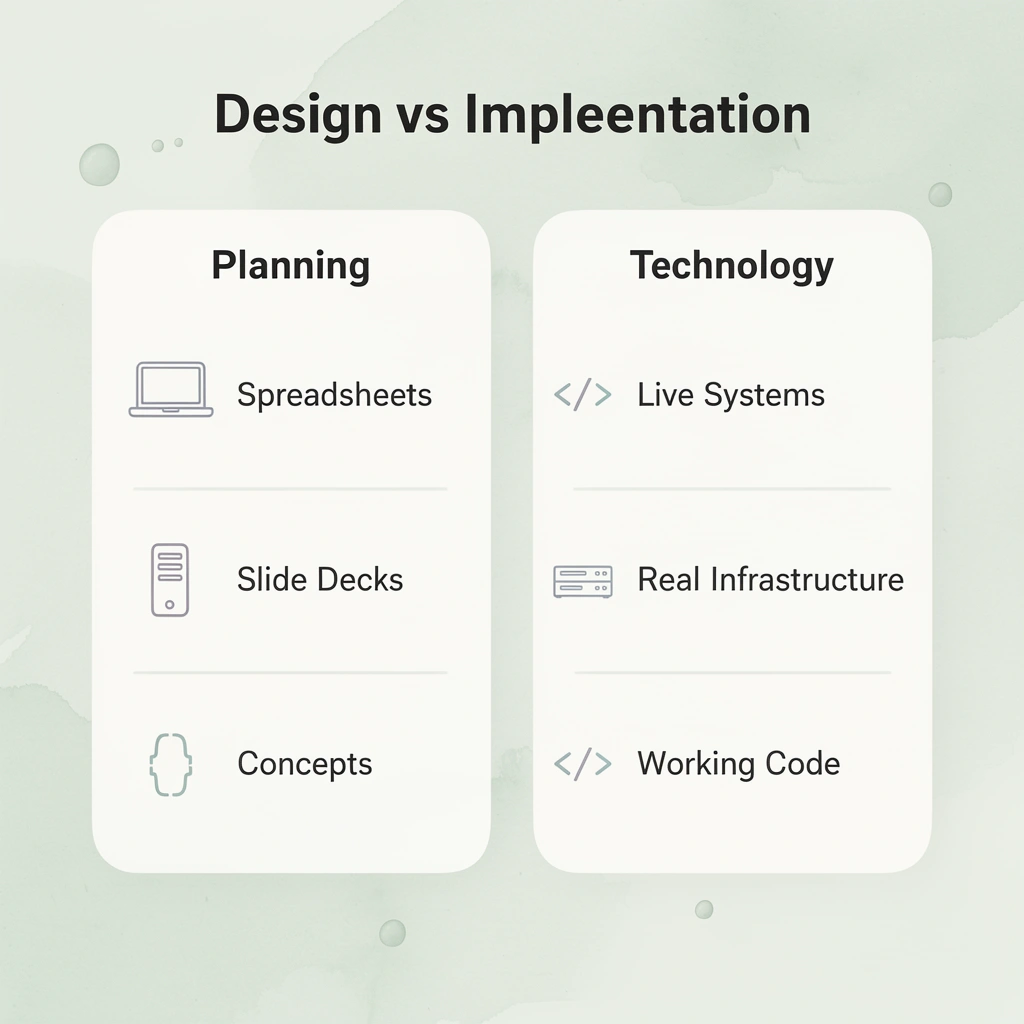
⚠️ Warning: Platforms like prop firm technology compress that translation layer by providing pre-built infrastructure mapped to your three components. Our Trade Tech platform helps you configure challenge rules through prop firm-designed interfaces instead of explaining workflows to developers. Risk controls become parameter settings. Payout approvals run through automated workflows that flag exceptions without manual review of every transaction. You're defining the rules the system enforces, not building the enforcement mechanism.
Components, Key Elements & Infrastructure Needs

Write down your three core components in plain language as if explaining them to a trader. That clarity becomes your blueprint. Once you articulate the logic, you can evaluate whether your infrastructure executes it at your target volume or whether you're designing a system that collapses when 200 traders submit payout requests simultaneously.


.png)
