

Meet us at iFx Cyprus
The dream of launching a proprietary trading firm attracts ambitious entrepreneurs who see the potential to fund skilled traders and build a profitable business model. Yet most new prop firms fail within their first year, not for lack of capital or talent, but due to preventable mistakes in structure, risk management, and trader onboarding. Understanding how to start a prop firm requires mastering foundational decisions that separate sustainable operations from costly failures. Building systems that protect capital while creating real opportunities for traders demands careful planning and execution.
Success requires more than conceptual knowledge of business structure and funding models. Operational challenges like automated risk controls, trader evaluation systems, and platform integration often derail new firms before they gain momentum. Trade Tech Solutions offers prop firm technology designed to handle these critical infrastructure needs, allowing founders to focus on growth strategy and trader relationships.
A proprietary trading firm uses trader performance to generate returns by deploying capital to work. The firm provides money to traders, who employ strategies to trade forex, indices, commodities, crypto, and CFDs. Profits get split based on performance. If traders don't generate returns, neither does the firm.

This is different from running a brokerage: you're not holding customer deposits or giving investment advice. The firm makes money from trader performance, evaluation fees, and execution markups. According to Track360 Blog, 80% of prop firm revenue comes from challenge fees, not trader profits.
🎯 Key Point: Prop firms operate on a performance-based model where both the firm and traders succeed together through profitable trading, making it a symbiotic relationship rather than a traditional client-service business.
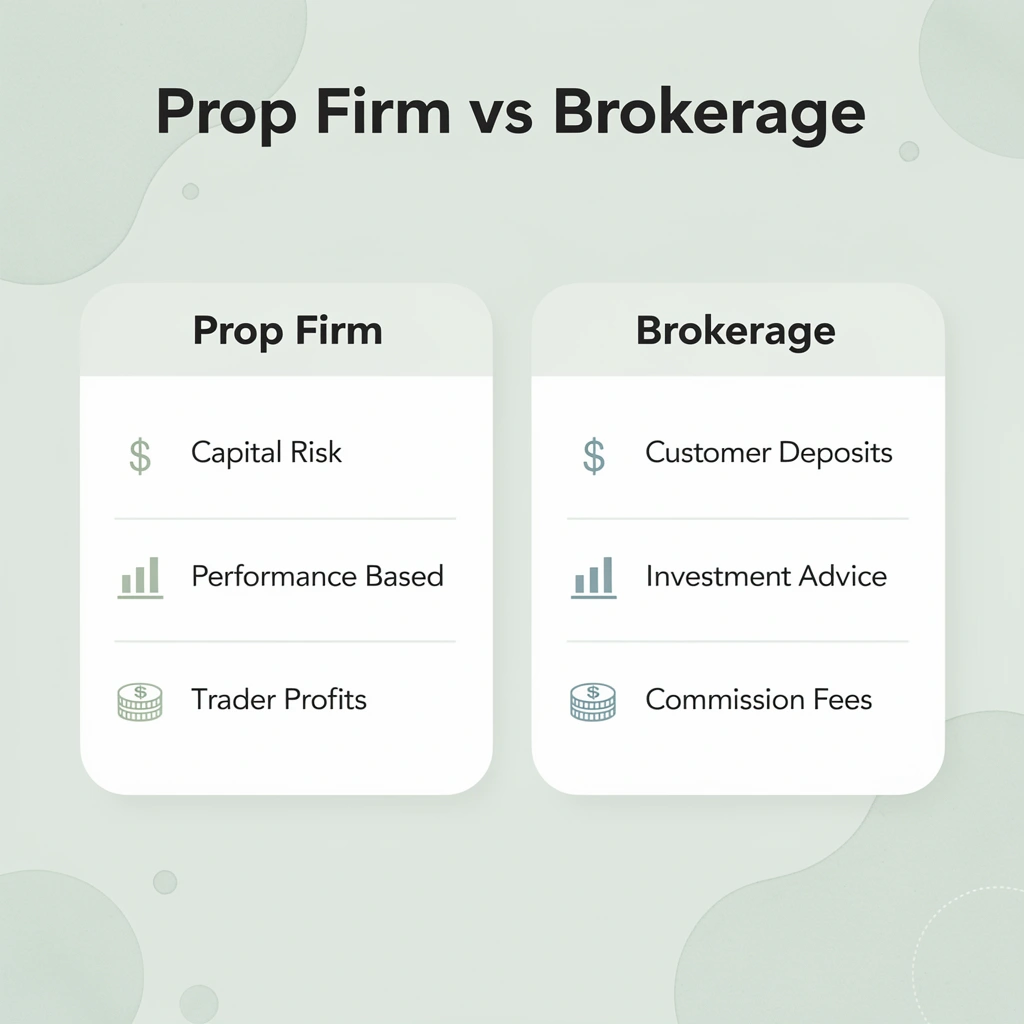
💡 Revenue Insight: While most people think prop firms make money from trading profits, the reality is that evaluation fees and challenge costs form the primary revenue stream for most prop trading businesses.
According to Track360 Blog, 80% of prop firm revenue comes from challenge fees rather than trading profits. Aspiring traders pay an evaluation fee to attempt to meet a profit target while maintaining strict drawdown limits. Track360 Blog reports that only 5-10% of traders pass the evaluation phase, making these fees a significant revenue stream independent of funded account performance.
The firm provides $100,000 in practice or real trading money. The trader operates under strict rules: maximum drawdown, daily loss limits, and profit targets. Profitable traders retain 70% to 90% of profits, while the firm keeps 20% to 30%.
Beyond evaluation fees and profit splits, many firms generate revenue through spread markups on execution and platform access fees. Evaluation fees provide a safety net that sustains the business when most traders fail.
Google Trends data shows search interest in "prop trading" surged over 3,000% between 2022 and 2026, with searches for futures prop firms growing even faster. Industry estimates value the global prop trading industry at over $20 billion, with 2,000+ firms operating worldwide. For brokerage leaders, the question has shifted from "is this worth exploring?" to "how fast can we launch?"
The appeal is scalability: start small with a handful of traders and scale globally with the right technology. Multiple revenue streams—evaluation fees, profit splits, spread markups, and platform fees—create diversified income independent of market conditions or trader success. Launching a prop firm positions you as a leader in trading fintech, building authority in an area where millions of traders seek funding and traditional capital access remains limited.
Trader variance is high: some firms fund 200 evaluations before consistently seeing payouts, and most accounts blow up within weeks. System discipline matters more than trading skill. Strong risk controls are essential—automated drawdown monitoring, daily loss enforcement, and fraud detection protocols that catch shared payment methods or rule violations before they drain firm capital.
The choices you make about how to run your business directly affect your time to market. Which regulatory path fits your location and risk tolerance? How much capital do you need before funding a trade? What does your integrated tech stack look like? These decisions determine whether you launch in three months or spend a year assembling disconnected platforms while competitors capture market share.
For Traders reports that prop trading reached a $12 billion market in 2025. Google Trends data shows searches for "prop trading" increased over 3,000% between 2022 and 2026, with futures prop firms growing even faster. Industry experts estimate the global prop trading industry is worth more than $20 billion, with over 2,000 firms operating worldwide.
For brokerage leaders, the question has shifted from "is this worth trying?" to "how fast can we launch?" The scalable trader-leverage model enables you to start small and expand globally with the right infrastructure. You allocate capital to traders demonstrating system discipline under pressure. Performance-based capital deployment aligns your success with theirs, while the evaluation fee model mitigates downside risk.
The familiar approach of separate platforms for trader evaluation, risk management, payment processing, and compliance creates bottlenecks as trader volume grows. Evaluation cycles slow, risk controls lag behind real-time trading, and compliance gaps emerge. Our prop firm technology integrates CRM, automated risk controls, payment processing, and AML/KYC compliance into a single platform, compressing launch timelines from months to weeks while maintaining operational discipline.
But here's the tension nobody discusses at launch: trader variance is extreme, and the revenue model only works if you enforce rules without exception.
Many people think prop firms only make money from trading profits. The reality is much more complicated. Prop firms generate revenue through evaluation challenge fees, re-entry fees after rule violations, profit splits from successful traders, monthly account management fees, educational content, and copy-trading templates. How these different money sources are divided matters far more than how any single trader performs.

🎯 Key Point: The evaluation fees and re-entry charges often generate more consistent revenue than actual trading profits, since most traders fail their first attempt and pay multiple challenge fees.
"The prop trading industry generates an estimated $2.3 billion annually from challenge fees alone, with only 15-20% of traders ever reaching funded status." — Trading Industry Report, 2024
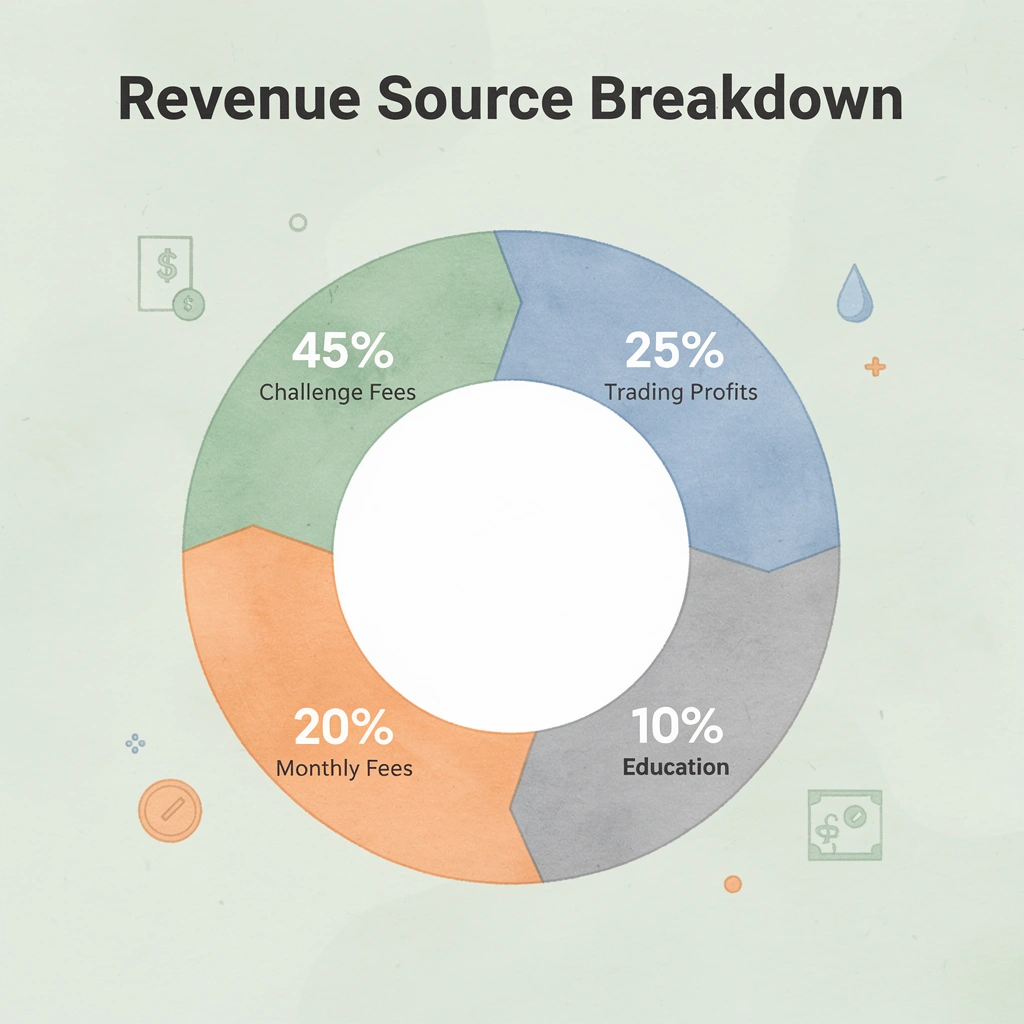
Revenue Sources, Consistency & Profit Margin
⚠️ Warning: Understanding this revenue model is critical because it explains why prop firms can afford to offer high profit splits - they're making most of their money before you ever start trading with real capital.
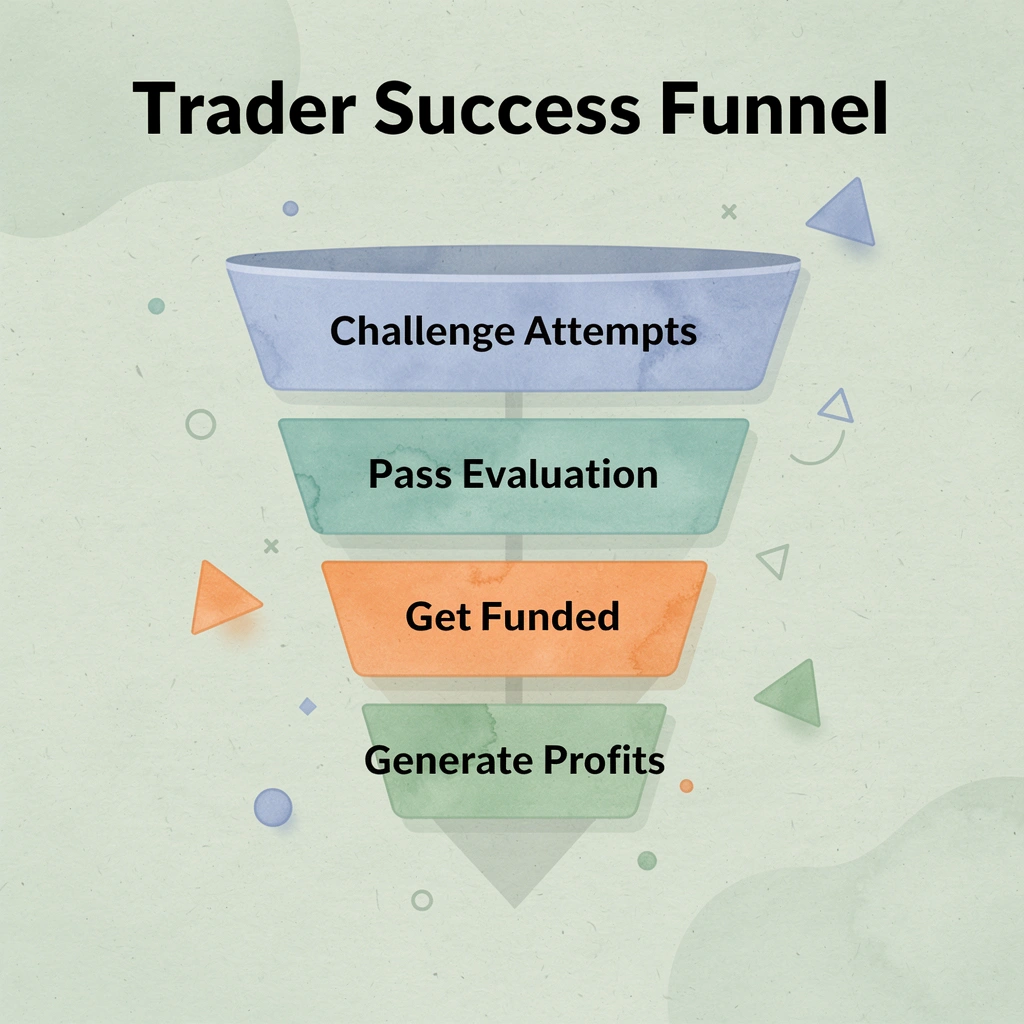
Challenge fees ($300 to $600) form the foundation. Traders must hit profit targets without exceeding drawdown limits, then pass or fail. According to Best Prop Firms, over 2,000 firms operate worldwide, and most rely on the same basic truth: most traders pay multiple times before passing, if they pass at all.
Re-entry fees after a blown account add another layer. This isn't meant by design; it's based on probability. The firm doesn't need every trader to fail, but enough to fail in a predictable way to cover the cost of funding the few who succeed.
The profit split appears collaborative but is inherently uneven. A trader who passes receives 70% to 90% of profits, while the firm retains the remainder. The firm provides account capital, manages risk infrastructure, processes payments, and covers compliance costs.
The trader risks their time and challenge fees. The firm risks its capital and operational continuity. When a trader withdraws $5,000 after a profitable month, the firm keeps $500 to $1,500, but it also covers 80% of the traders who paid fees and never reached payout. The firm profits from overall distribution, not individual traders.
Traders want payouts. Firms want traders who can survive and grow returns over months, not weeks. This difference creates the filtering system: tight drawdown limits, daily loss caps, prohibited trading styles, and consistency rules that disqualify aggressive risk-taking.
Traders often pass evaluations and get funded accounts, then lose them within days because real capital changes behavior. The trader feels they failed. The firm sees the system working: the challenge fee was collected, and the trader either pays to re-enter or exits.
Monthly account fees burden traders while providing firms with predictable revenue. Some prop firms charge $50 to $150 per month for technology or data access. For traders, this recurring cost erodes profits unless they generate consistent returns.
For firms, it's the money that keeps coming in regardless of traders' performance, stabilizing income during slow months. A trader who maintains a funded account for six months without withdrawals pays $300 to $900 in fees, even if they never violated any rules.
Educational content and signal services are important revenue streams, especially as 62% of prop trading firms are based in the United States, where marketing infrastructure is well developed. Firms sell courses on risk management, psychology, and strategy, often bundled with discounted challenge fees.
Copy-trading templates let less experienced traders copy profitable traders' positions, with the firm taking a percentage of profits or charging subscription fees. These offerings don't require the firm to risk capital; they generate revenue from the brand and audience of aspiring traders.
The tension is built into the system. Traders enter believing their skill will beat the odds; for a small number, it does. Firms make money from the many traders who pay fees, not the few who take out profits.
Platforms like prop firm technology automate challenge management, payment processing, and compliance at scale. Our Trade Tech platform enables firms to onboard thousands of traders while maintaining risk controls that prevent excessive payouts. The model works because misaligned incentives are built in by design, and both sides accept this as the cost of access.
Starting a firm that sustains this model requires understanding more than how money comes in.
Starting a prop firm requires testing different approaches. You'll create the business plan, discover your tech stack can't handle your challenge logic, then rebuild both. You'll set profit targets, watch your first 50 traders fail within three days, then adjust drawdown limits and reanalyze the data. According to Spotware, the global proprietary trading market was worth about $4.5 billion in 2023 and is expected to grow at a CAGR of 6.8% from 2024 to 2030. However, that growth accrues to firms that survive their first six months. Expect to tune, test, and lose money on early operations before the model stabilizes.
"The global proprietary trading market was worth about $4.5 billion in 2023 and is expected to grow at a CAGR of 6.8% from 2024 to 2030." — Spotware, 2024
🎯 Key Point: Most prop firms fail in their first six months due to inadequate risk management and unrealistic trader expectations.
⚠️ Warning: Your tech stack and challenge parameters will likely need complete overhauls after real-world testing with your first batch of traders.

Your business plan needs four concrete decisions before touching technology. Choose your niche: forex-only firms face different liquidity costs than multi-asset platforms adding crypto or futures. Define your revenue model: one-time evaluation fees, monthly subscriptions, or both.
Sketch your ideal trader profile, as attracting beginners requires different marketing and support than targeting elite swing traders. Set your KPIs: challenge pass rate, client lifetime value, churn rate, and average time-to-funding. These metrics reveal within 60 days whether your challenge design is too hard, too easy, or attracting the wrong risk profile.
Consider tech costs, legal help, and partner integrations before spending. Founders often budget $15,000 for a white-label platform, only to discover they need $5,000 for CRM integration, $3,000 for KYC compliance tools, and $2,000 per month for payment gateway fees.
Failed firms typically lack sufficient funds for support staff or compliance monitoring, not due to design problems.
The challenge-based model generates steady upfront revenue as traders pay $300 to $600 per evaluation attempt. While this attracts many users, it requires robust risk technology and support infrastructure for disputes, retakes, and payments. Our Trade Tech platform manages these complexities with built-in risk controls and payment processing, making it ideal if you prioritize predictable monthly revenue and can invest in automation early.
Direct funding skips evaluation completely. You allocate capital based on application reviews and take a higher profit split, which attracts top participants and builds credibility faster, but you assume higher capital risk from day one. Most new founders cannot handle that risk in the first six months.
The hybrid model offers both options, allowing you to test which customer group generates more revenue across different monetization approaches. Start with one model, measure conversion and churn rates over 90 days, then adjust your plan based on actual user behavior.
Your platform needs to support demo challenges, real-time performance tracking, and automatic rule enforcement. Traders expect dashboards showing profit, drawdown, and time remaining without manual refreshing.
You'll also need a CRM for onboarding, a KYC system for identity verification, and payment processors handling credit cards, crypto, and local gateways across regions. Our prop firm technology lets you customize evaluation rules, drawdown settings, and payout structures without building backend infrastructure from scratch, enabling launch in weeks instead of months.
Skip advanced features like copy trading or API access until you've funded your first 100 traders. Building too much too soon delays your launch and wastes money on unused features.
Start with the simplest version you need, then add more complex features based on customer requests.
Most prop firms fail because their technology cannot scale with them, not because their business plans are flawed. Your technology tools must handle demo challenges, track trader performance in real time, and scale automatically from the start.
Essential components: prop trading platform, trader dashboards with performance metrics and risk limits, CRM for customer data and onboarding, KYC integration, and payment processors handling credit cards, crypto, and local gateways. Optional additions include copy trading tools, API access, and advanced analytics.
Platforms like prop firm technology enable launches in weeks rather than months, with full customization of evaluation rules, drawdown settings, and payout structures. Our Trade Tech platform provides a professional interface and seamless processes that drive trader retention and referrals. Platform lag, crashes, or poor UX cause traders to leave before their first payout.
Register your business in a place with light regulatory oversight, but don't skip AML and KYC protocols. Write terms and conditions that explain challenge rules, payout timelines, and trader obligations in plain language. Avoid wording that suggests portfolio management, direct investment, or brokerage services. Keep offerings within the "evaluation service" category to reduce scrutiny from regulators such as the CFTC and OSC, which began reviewing firms for deceptive practices in 2024. Clear terms reduce refund disputes and chargeback losses because traders cannot claim misunderstanding when every threshold is documented upfront.
Prop firms operate under lighter rules than brokerages because they offer practice trading challenges rather than real access to customer money. You still need to register as a legal business in a reputable jurisdiction, draft terms and conditions that clearly explain the challenge rules and payout obligations, and establish AML and KYC processes to mitigate the risk of fraud.
Talk to legal experts about rules for your specific location, especially if you're targeting US or EU traders. Avoid language suggesting direct investment or portfolio management, and keep your offerings in the "evaluation service" category.
In 2024, regulatory bodies like the CFTC and OSC began reviewing firms for deceptive practices. Transparency and compliance must be built into your operations from the outset.
I've seen traders get permanently banned after their first successful withdrawal because the firm's terms weren't clear when they created their account. Selective enforcement like this destroys trust faster than any technical problem.
Set profit targets between 5 and 10 percent within a fixed 30-day period. Drawdown limits should cap daily losses at 5 percent and overall losses at 10 percent to appropriately control risk.
Define which assets traders can access and whether you'll allow news trading or high-frequency strategies. A second verification phase over 30 days filters out participants who achieved success by chance rather than skill.
Use automation to track metrics in real time with feedback dashboards so traders know exactly where they stand. When founders see that 80 percent of participants break drawdown rules within the first week, they adjust limits or extend the time window, then retest with the next group.
Once the platform is live and traders begin signing up, the real work begins.
Once your firm is live, the operational plan you built becomes the system you test every day. You need three core elements defined before launch: how traders enter and qualify (onboarding flow), how exposure is controlled (risk management rules), and how performance is rewarded (payout structure). These determine whether your firm runs smoothly or falls apart from operational chaos.

🎯 Key Point: Your trader onboarding flow determines whether you retain or lose prospects in the first 48 hours.
Start with your trader onboarding flow. Map the exact steps from signup to first trade: account creation, payment processing, challenge selection, platform access, and rule acknowledgment. When 50 traders sign up in the first week, you'll discover which steps create friction—KYC verification taking three days instead of hours, or payment options too limited. Track dropout rates at each stage and adjust. Our prop firm technology automates this workflow with integrated CRM, payment gateways, and compliance tools so you're not manually putting together five different systems.
Define your risk management rules with precision. Specify maximum daily loss limits (typically 5% of account balance), total drawdown thresholds (usually 10%), position size caps, and restricted trading hours. Build these into your platform so violations trigger automatic account suspensions. Test the rules against historical market volatility to ensure they're neither too loose nor too tight. When 80% of your first cohort violates drawdown rules in week one, your parameters need adjustment.
"When 80% of your first cohort violates drawdown rules in week one, you'll know the parameters need adjustment." — Prop Firm Statistics Analysis, 2024
Structure your payout system to reward consistency without draining capital reserves. Set minimum trading days (10 to 15), profit targets reflecting realistic market conditions (8 to 12% for first payout), and withdrawal schedules (bi-weekly or monthly). Calculate your maximum payout liability if all funded traders hit targets simultaneously. If that exceeds your capital buffer, adjust profit splits or extend evaluation periods.
⚠️ Warning: If your maximum payout liability exceeds your capital buffer, you risk cash flow disasters.
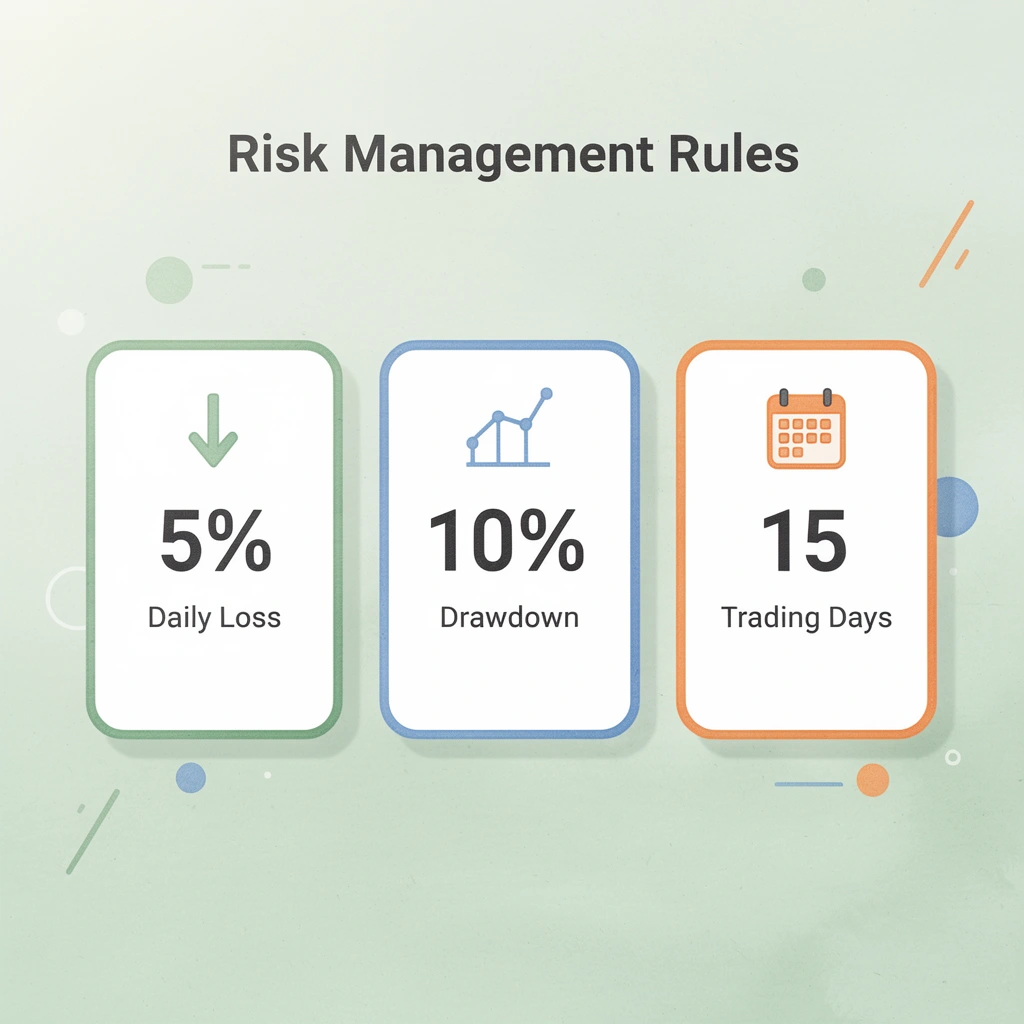
System Elements, Key Requirements & Testing Methods
Document these three elements in a single page right now: your onboarding steps, exact risk thresholds, and payout criteria. This becomes your operational checklist, the document you reference when making platform decisions, hiring support staff, or explaining your business model to partners.
🔑 Takeaway: Your launch plan only works when it becomes a working system you can measure, test, and refine. Firms that scale treat operations as a discipline, not an afterthought.


.png)
