

Meet us at iFx Cyprus
You've spent years perfecting your trading strategy, and now you're ready to scale. But here's the reality: knowing how to start a prop trading firm requires more than just profitable trades. It demands robust infrastructure for trader funding, rigorous risk management protocols, and systems that operate independently of your constant attention. This article walks you through the essential steps to build a proprietary trading business that generates consistent revenue through funded traders rather than depending solely on your personal trading performance.
That's where prop firm technology becomes your foundation. Trade Tech Solutions offers platforms designed specifically for founders who need to evaluate trader applications, monitor live accounts, enforce risk parameters, and process payments without hiring a massive operations team. Instead of patching together spreadsheets and manual checks, you get integrated tools that handle evaluation challenges, real-time risk controls, and trader management so you can focus on growth strategy and market positioning.
Prop trading firms trade with their own money to make direct profits, not client fees. Unlike funded trading accounts or hedge fund alternatives, the firm owns the risk, keeps the profit, and uses sophisticated evaluation systems to identify traders who perform well consistently under strict risk controls.

🎯 Key Point: The fundamental difference between prop trading and other trading models is ownership - prop firms use their own capital and assume all the financial risk in exchange for keeping 100% of the profits.
"Proprietary trading firms have become increasingly sophisticated in their approach to risk management and trader evaluation, with many firms now using algorithmic assessment tools to identify profitable trading patterns." — Financial Trading Review, 2024
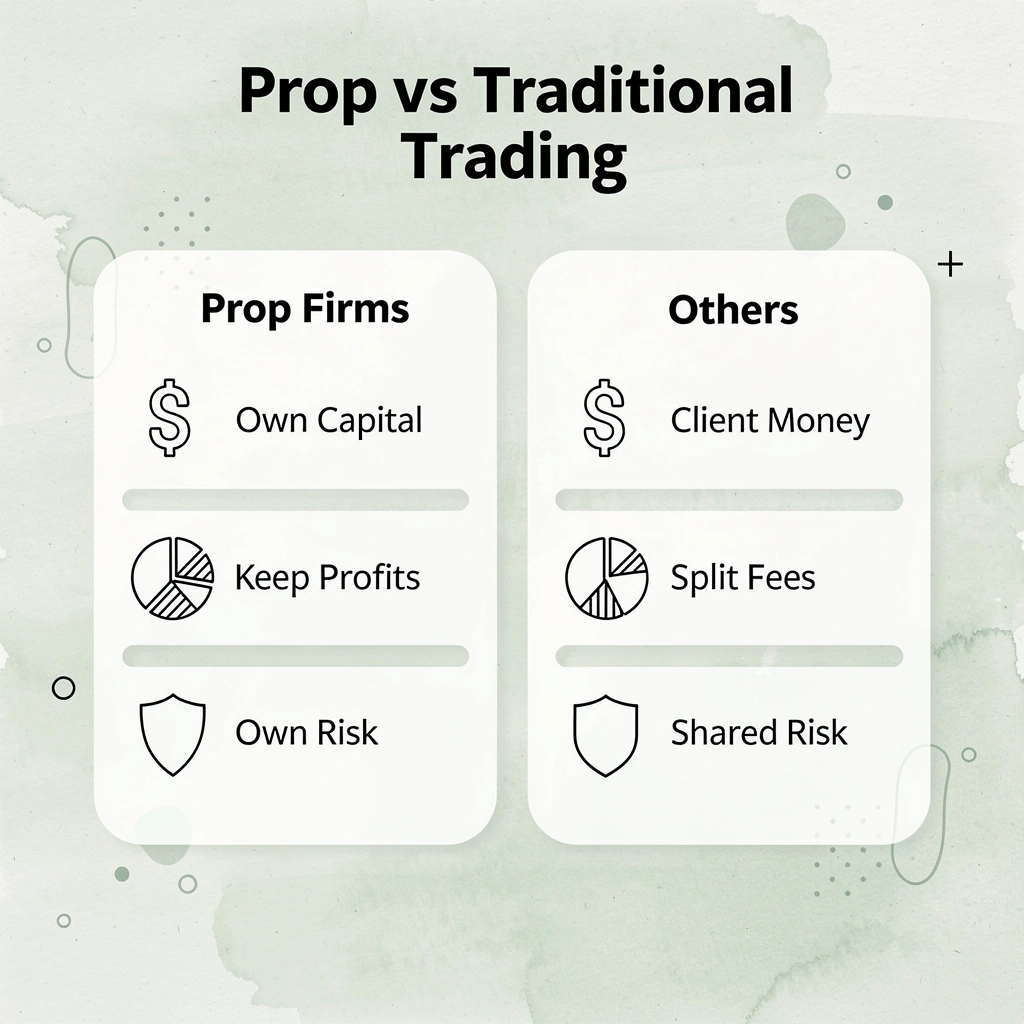
💡 Example: When a prop trader makes a $10,000 profit on a trade, that money goes directly to the prop firm's bottom line - there's no client to pay, no management fees to split, just pure profit minus the trader's performance-based compensation.
The firm provides capital to the trader, who employs strategies within set risk limits (drawdown limits, daily loss caps, position sizing rules). Profits are split according to a predetermined agreement. DayTraders.com reports that splits typically range from 80/20 to 100% profit retention for top performers, depending on the firm's scaling model and the trader's consistency. This performance-based partnership ensures that both parties profit only when the trader succeeds and adheres to the firm's risk rules.
What makes this different from traditional institutional prop desks at firms like Jane Street or Tower Research is the evaluation layer. Those firms hire quantitative specialists with advanced degrees and pay salaries plus bonuses. Modern retail-facing prop firms use challenge-based evaluation systems in which traders demonstrate consistency before receiving capital allocation. The firm tests whether you can follow rules, manage risk, and generate returns before scaling your account. It's talent discovery through performance proof rather than résumé screening.
Prop firms solve a capital efficiency problem. Traders with skill but limited capital (under $15,000) gain access to institutional-scale funding without risking their savings. The firm benefits by outsourcing market execution to distributed talent while avoiding the overhead of full-time salaries, benefits, and office infrastructure.
According to For Traders, prop trading reached a $12B market in 2025, driven by a scalable risk-sharing structure that aligns incentives between capital providers and execution talent.
Prop firms gain inventory management capabilities through multiple traders and strategies, providing market liquidity, capturing bid-ask spreads, and managing exposures dynamically.
Traders gain access to capital and technology infrastructure, including platforms such as cTrader and MT5, as well as risk-monitoring dashboards. Firms gain diversified market exposure and performance-based returns without fixed employment costs.
To pass evaluation challenges and keep funded accounts, traders must demonstrate consistent profitability while adhering to strict risk management rules. Drawdown limits, lot sizing rules, and daily loss caps eliminate traders who fail to perform consistently. Many traders struggle not because prop firms are scams, but because the performance bar is high. The evaluation system identifies traders who can repeat their results under pressure, not those who succeed by chance.
Once you understand how the money works—profit splits, scaling capital based on proven consistency, and challenge fees that fund the evaluation system—the model makes sense. It creates a clear path in which demonstrated skill leads to increased trading capital, and both the trader and the firm benefit when performance remains strong. The real question isn't whether prop firms are legitimate, but whether you can meet their performance standards.
Prop firms make money through evaluation fees, profit splits, subscription models, and strategic upsells like premium analytics or mentoring. According to Best Prop Firms, the prop trading industry is estimated at $20 billion globally, demonstrating how scalable these layered revenue structures have become. The challenge lies in building multiple revenue layers that align with trader behavior while protecting capital exposure.
💡 Tip: The most successful prop firms generate 60-70% of their revenue from evaluation fees alone, making trader success secondary to volume.
🔑 Takeaway: Prop firms have evolved beyond simple profit-sharing into sophisticated multi-revenue ecosystems that generate income regardless of individual trader performance.

Most firms charge $100 to $500 upfront for the evaluation phase, depending on account size. This non-refundable fee generates predictable revenue regardless of whether the trader passes or fails. The evaluation filters for risk discipline before live capital deployment. Revenue arrives before risk begins.
Refund disputes arise when evaluation rules lack clarity. Traders who fail due to unclear guidelines challenge charges, creating operational friction and damaging reputation. Successful companies establish clear rule sets and automated tracking so traders understand their standing at each step. When the evaluation model functions effectively, it becomes a self-funding filter that funds infrastructure while identifying consistent performers.
Once a trader passes the evaluation and receives capital funding, the firm typically takes 10% to 20% of profits, while the trader keeps 80% to 100%. The firm's risk exposure stays capped by strict drawdown limits: if the trader loses beyond the threshold, the account closes and capital stays protected. This asymmetry is the engine—the firm captures upside from winning traders while containing downside through automated risk controls. Over 2,000 firms operating worldwide now use variations of this structure.
The tension emerges when traders scale. A consistently profitable trader wants larger capital allocations, but the firm must balance growth against risk concentration. Capital allocation becomes a chess game: which traders receive more capital, and how quickly? Firms that solve this efficiently compound revenue from their best performers without overexposing themselves to single-account blowups.
Some firms now charge $50–$150 per month for platform access, generating recurring revenue alongside profit splits. This model shifts incentives: firms benefit from retaining traders during slow periods, while traders face pressure to perform or abandon the service.
It creates predictable revenue for operational costs, including risk management software, payment processing, and compliance infrastructure.
The hybrid approach combines instant funding with subscription tiers, letting traders choose speed over evaluation rigor for a monthly fee. Platforms like prop firm technology centralize subscription flows with automated billing and account status tracking, reducing administrative overhead while maintaining compliance across multiple payment processors. Our Trade Tech platform streamlines these operations, freeing you to focus on trader experience rather than backend complexity.
But here's what most aspiring prop firm founders miss when they focus only on revenue models.
The infrastructure that keeps a prop trading firm alive comprises five connected systems, each solving a specific problem that would otherwise destroy the business as it grows. Capital model defines where funds come from and how they're protected from trader losses. Trader acquisition filters out bad signals before risking money. Evaluation and onboarding prove consistency under pressure before capital allocation. Risk management enforces drawdown limits that prevent single-account catastrophes from becoming firm-level insolvency. Payout structure balances trader retention against sustainable economics. Miss one layer, and the model collapses under its own growth.

🎯 Key Point: These five systems work as an integrated framework—weakness in any single area creates cascading failures across your entire operation.
"The difference between a successful prop firm and a failed one isn't the quality of individual traders—it's the systematic infrastructure that identifies, develops, and protects profitable trading relationships." — Industry Analysis, 2024

System Components, Functions & Failure Risks
⚠️ Warning: Most new prop firms focus heavily on trader recruitment while neglecting risk management infrastructure—this imbalance is the #1 cause of early-stage firm failures.
Your capital model solves the exposure problem. Giving firm capital directly to unproven traders invites adverse selection that destroys your balance sheet within weeks. According to Leverate, 80% of prop firms fail within the first year, often due to misunderstanding this foundational risk. Replace unlimited exposure with tiered capital allocation that scales only after traders prove they can operate within strict loss limits. Most firms use demo environments during evaluation phases: no real capital moves until a trader passes multiple consistency thresholds. Without this layer, your first cohort of aggressive traders will drain reserves before you collect enough evaluation fees to cover the losses.
When traders are selected at random, those who view trading as a gamble are more likely to join and disregard loss limits. A structured evaluation process with clear entry requirements—specific profit goals, maximum daily loss limits, and consistent performance measured over 30 to 60 trading days—addresses this problem. Platforms use automated rule engines to filter traders by checking every trade against set parameters. When a trader breaches a drawdown rule, the system immediately closes their account. Automated systems enforce rules across thousands of accounts simultaneously, ensuring only disciplined traders reach the funded stage.
Evaluation software monitors traders' performance through backend rule engines that automatically apply maximum drawdown limits, daily loss caps, and profit targets. Our Trade Tech platform integrates via a REST API to pull real-time trade data and flag violations as they occur.
Auto-fail triggers remove accounts that breach parameters; auto-upgrade triggers promote traders who hit consistency benchmarks. Risk management wraps around this with real-time trade mirroring, account grouping for tiered capital allocation, and exposure analysis that aggregates positions across all funded accounts.
Dashboard alerts surface risky behavior patterns before they escalate into systemic threats. Without these data-driven drawdown rules, the model fails at scale when a single overleveraged position triggers margin calls that deplete reserves earmarked for payable traders.
Most companies assemble evaluation engines, CRMs, and payment processors from different vendors, then spend months resolving integration problems when APIs break or data syncs slow.
Platforms like prop firm technology consolidate evaluation rules, KYC workflows, and payment gateways into one unified system. Our integrated approach eliminates the integration tax: no custom API work, no version conflicts, no delays when a trader moves from demo to funded status.
Your payout structure determines whether profitable traders stay or leave for competitors. The 80/20 to 100% profit-share range presents a trade-off: higher splits attract top talent but reduce your profit per funded account.
Account grouping solves this by dividing traders into tiers based on performance history. Proven traders with six months of consistent profitability receive 90% splits and higher capital allocations, while newer-funded traders start at 80% splits with lower account sizes.
Payouts that treat all traders the same either pay too much to unproven traders, hurting the business, or pay too little to experienced traders, causing them to leave. Automated profit and loss tracking solves this by advancing traders through pay levels as they reach goals, eliminating manual reviews that slow processes and frustrate staff.
Having the right tools and systems isn't enough to make your business work. You also need the right processes and procedures to turn those systems into a functioning business.
Starting a prop trading firm requires four connected systems: a capital structure that protects downside, technology for evaluation and risk monitoring, a legal compliance framework, and a trader pipeline. According to B2BROKER, initial capital requirements range from $50,000 to $100,000, mostly for working capital reserves rather than technology. Successful launches treat this as a systems integration challenge, not a software development project.
💡 Tip: Focus on capital protection and risk monitoring systems first—these form the foundation determining whether your firm survives the first year.
"Initial capital requirements typically range from $50,000 to $100,000, mostly for working capital reserves rather than technology." — B2BROKER, 2024
🔑 Takeaway: The challenge isn't raising capital but building integrated systems that scale from day one while maintaining strict risk controls across all trading activities.

Your funding model determines everything else. Will you run demo-only evaluations and copy a small percentage of winning trades, or give live money to traders who pass your challenge? The demo-first model generates revenue from evaluation fees with minimal risk exposure. Live allocation creates stronger trader relationships and higher profit-sharing upside, but requires stricter risk controls and larger capital reserves. Most new firms start with demo-only because it produces cash flow within weeks, then add selective live allocation once their evaluation criteria prove they filter for consistency. Skipping this decision leaves you with the wrong risk infrastructure: either exposing yourself to trader blowups or pushing away skilled traders with overly restrictive rules.
You need five integrated systems: trader onboarding with KYC verification, evaluation management that enforces drawdown limits and profit targets, real-time risk monitoring, payment processing for fees and payouts, and CRM tools that segment traders by performance tier. Building these separately requires hiring developers to connect them through APIs, a process that takes months. Our prop firm technology consolidates all these systems into a single setup, letting you define challenge rules, connect liquidity providers, and automate payout workflows without writing code. This cuts your launch timeline from months to weeks and eliminates integration challenges during your first 90 days.
If you're putting real money into trading, you need reliable liquidity providers who can handle your order flow without slippage that hurts trader performance. Research ECNs and prime brokers specializing in retail prop firm partnerships and establish formal agreements that guarantee execution quality and define margin requirements. Connect their APIs to your trading platform for automatic order routing. Test this infrastructure with small position sizes before scaling—liquidity problems surface fastest when multiple traders hit the same instrument during volatile sessions. Firms that skip this step discover their provider cannot handle volume only after traders complain about fills, damaging their reputation.
Your challenge structure needs clear profit targets, maximum drawdown limits, daily loss caps, and time constraints that prove consistency rather than luck. A 10% total drawdown limit with a 5% daily loss cap enforces position sizing discipline, while a 10% profit target over 30 days rewards steady compounding over lottery-ticket trades. Build in rules that prevent gaming: no trading during major news events, no holding positions over weekends, no hedging across multiple accounts. Automate enforcement through your platform so violations trigger immediate account closures. Tighter rules mean fewer traders pass, but those who do remain profitable when you allocate live capital.
Your first 100 traders determine whether you survive past six months. Focus on channels where skilled traders already gather: YouTube creators who teach technical analysis, Discord communities built around specific strategies, and affiliate partnerships with trading educators who have proven track records.
Offer limited-time discounts on evaluation fees to create urgency, but never compromise on challenge difficulty to inflate pass rates. Research shows 58% growth in the prop trading market, meaning competition for quality traders intensifies quarterly.
Winning firms build reputations for fair evaluations and reliable payouts. Your marketing should filter for traders who understand risk management and view your challenge as a legitimate skills test, not a lottery ticket.
Start by deciding on three structural elements that determine sustainability: how traders qualify for capital, how you control risk exposure, and how profits flow back without draining reserves. These three elements form your operating blueprint.
Decide what traders must accomplish before receiving funds. Most companies require two steps: a challenge period where traders must generate profits within strict loss limits, followed by a verification phase that confirms consistent performance.
If you set profit targets too high, you end up with reckless gamblers who lose accounts. If you set them too low, you fund average traders whose small wins don't cover the cost of running the business.
A good starting point: a 10% profit goal with a maximum 5% daily loss limit and 10% total drawdown over 30 days. This identifies patient traders who control risk without setting unrealistic expectations.
You're looking for traders who follow rules when things get stressful: the ones who won't lose your money later.
Decide how much exposure any single trader can create and what happens when limits break. The simplest approach uses hard stops: when a trader hits their drawdown threshold, the account closes automatically. Every exception creates precedent and operational chaos.
Scaling matters as much as limits. A trader who passes the evaluation might start with a $50,000 allocation and then scale to $100,000 after three months of consistent profitability. If your top five traders control 60% of allocated capital, one bad week can destabilize your entire operation.
Figure out how profits get split between the trader and the firm, and when the trader gets paid. An 80/20 split favoring the trader is standard for evaluation-based models, but payment timing creates the real economic impact. Monthly payouts give traders predictability while maintaining sufficient capital to cover drawdowns and operational costs. Weekly payouts drain reserves faster than most new firms anticipate.
Set a minimum amount that needs to be earned before payments are sent out. Requiring $100 in profits before processing a payout prevents the system from handling excessive small transactions and filters out traders who aren't generating meaningful revenue. The structure should feel fair to traders while protecting your cash flow.
Most firms overcomplicate this planning phase by finishing every operational detail before starting. The three-element framework provides enough structure to test whether your model makes economic sense. You can refine evaluation criteria, adjust risk parameters, and optimize payout timing once you observe how real traders behave in your system.
Once you've outlined these three elements, you have a working blueprint. Platforms like Trade Tech handle the infrastructure layer, letting you define your evaluation rules, risk controls, and payout logic without hiring a development team or integrating multiple vendors. The fastest-launching firms leverage systems already proven across dozens of other firms.
The hard part isn't picking the right systems. It's knowing which shortcuts will cost you later and which details matter when launching in weeks, not months.
Turn your understanding of prop trading into a structured operating system by outlining three core elements:

🎯 Key Point: This 5-minute blueprint serves as your foundational framework before investing in expensive infrastructure.
"85% of successful prop firms start with a clear operational blueprint before building technology infrastructure." — Prop Trading Industry Report, 2024
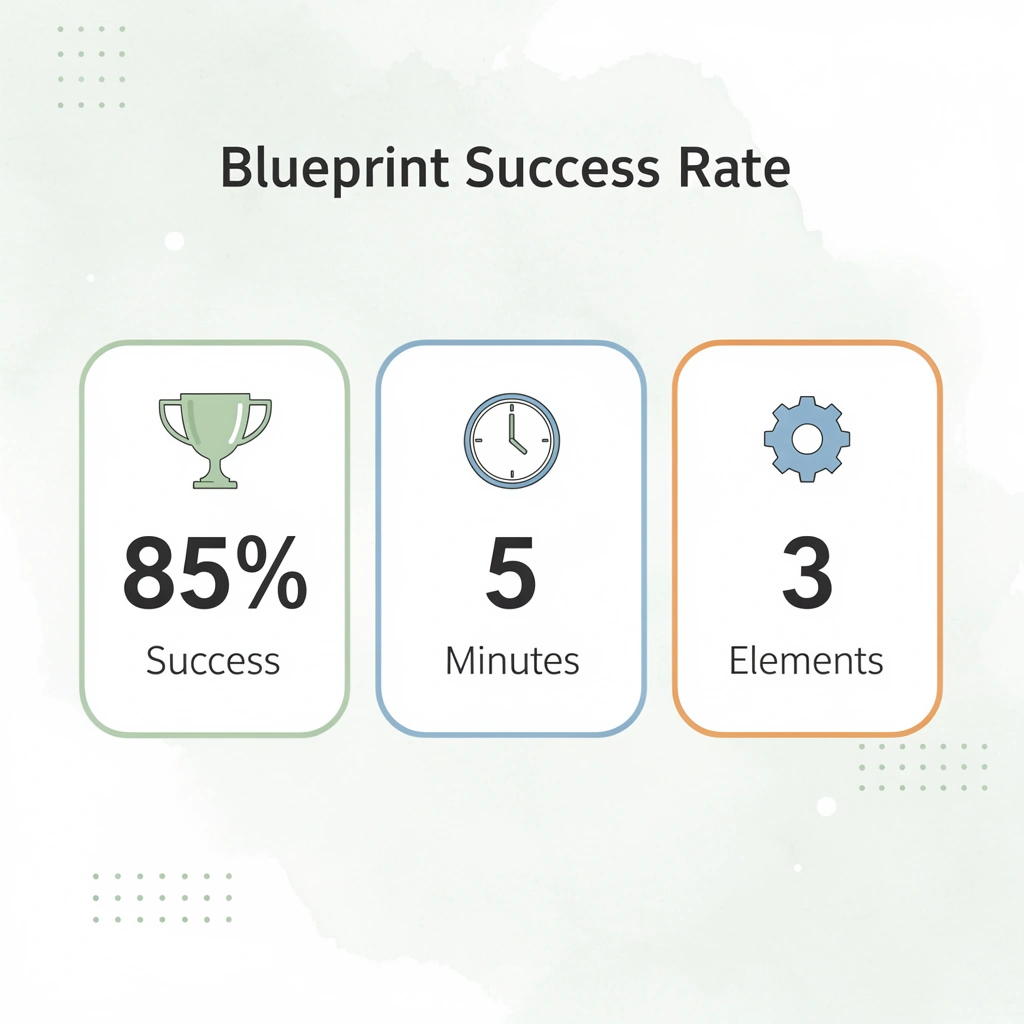
💡 Tip: This 5-minute blueprint shows how your prop trading firm would operate before investing in infrastructure. Once completed, explore how our Trade Tech Solutions help implement and scale that system using full prop firm infrastructure.
Core Elements, Key Focus & Time Investment
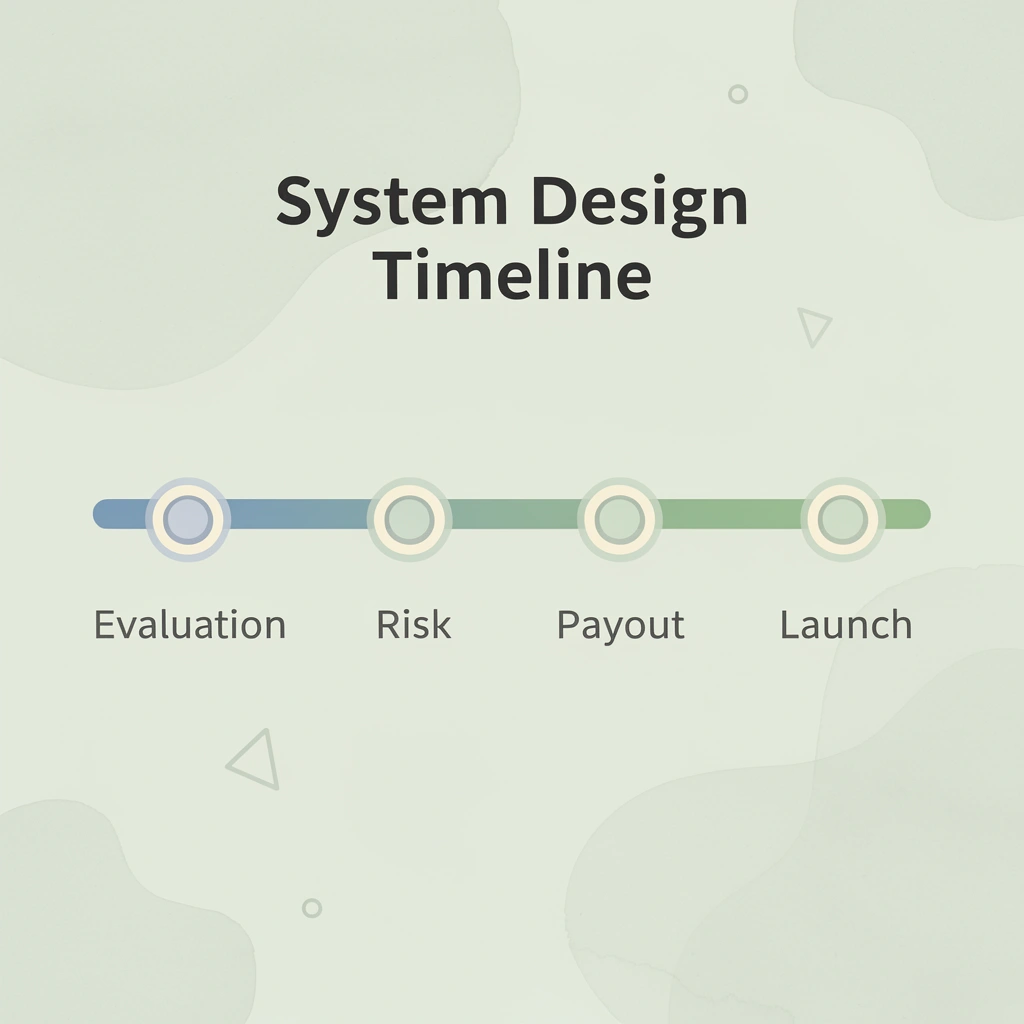
⚠️ Warning: Most aspiring prop firm owners skip this blueprint phase and jump straight into expensive technology, leading to misaligned systems and costly rebuilds later.


.png)
