

Meet us at iFx Cyprus
Spending months building a prop trading firm only to watch rigid rules and cookie-cutter evaluation processes drive away talented traders represents a costly misstep many firms face. Most proprietary trading firms operate on standardized models that treat every trader identically, but bespoke prop firm models offer a tailored alternative designed around specific visions, risk parameters, and unique approaches to trader development. These custom structures stand apart from conventional prop firm frameworks by prioritizing flexibility over uniformity.
A bespoke approach allows firms to adjust evaluation criteria, create unique funding tiers, implement personalized risk management protocols, and design trader progression pathways that align with their philosophy. Rather than forcing business visions into prefabricated templates, custom models enable firms to design operations in which every rule, metric, and trader interaction serves strategic objectives. Building this level of customization requires the right infrastructure foundation, which Trade Tech Solutions provides through its prop firm technology.
Most people assume all prop firms operate using the same standardized evaluation and payout model. This assumption is no longer true.

🎯 Key Point: A bespoke prop firm is a custom-built trading system where evaluation criteria, risk parameters, payout structures, trader progression pathways, and branding reflect a specific strategic vision.
A bespoke prop firm is a custom-built trading system where evaluation criteria, risk parameters, payout structures, trader progression pathways, and branding reflect a specific strategic vision. Instead of licensing a prefabricated template, operators design every rule and metric to serve their target trader segment, regional compliance requirements, or competitive positioning. The difference between generic and bespoke is the difference between renting a furnished apartment and designing your own home from the foundation up.
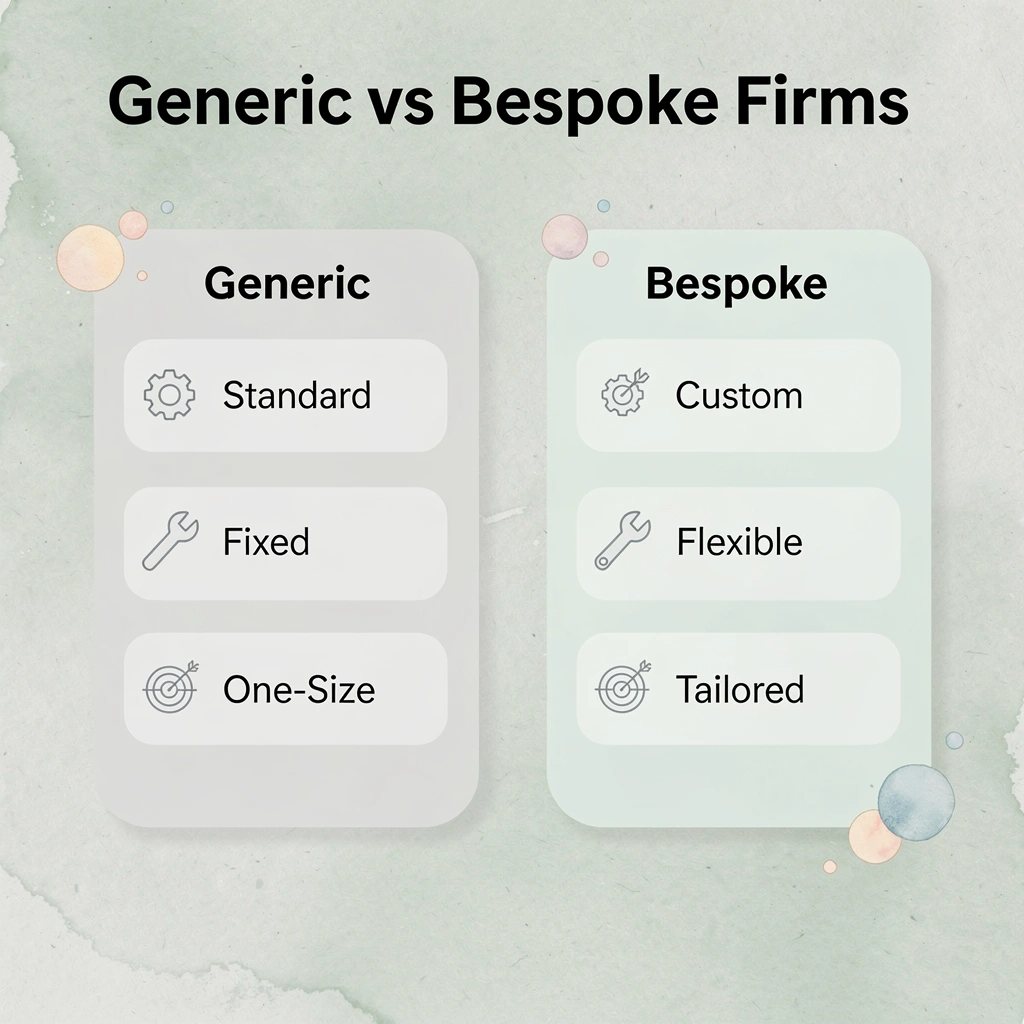
"The difference between generic and bespoke is the difference between renting a furnished apartment and designing your own home from the foundation up." — Custom Trading Systems Analysis
💡 Example: While traditional prop firms offer standardized evaluation periods and fixed profit targets, a bespoke firm might create industry-specific challenges, personalized risk metrics, or regional compliance frameworks that perfectly align with their strategic objectives.

Prop trading reached a $12B market in 2025, and growth brought fierce competition. When dozens of firms offer nearly identical two-phase challenges with 80% profit splits and $100k scaling caps, differentiation collapses into price wars.
Demand for different risk models, trader segmentation strategies, and branding flexibility pushed operators to seek infrastructure aligned with their specific philosophy rather than forcing them into someone else's system.
White-label prop firm platforms separate the front-end trader experience from back-end operations, enabling firms to control evaluation logic, payout schedules, and risk thresholds without having to rebuild from scratch. Custom brokerage integrations and fintech SaaS tools provided operators with modular control over payment processing, KYC workflows, and compliance frameworks.
A firm targeting crypto futures traders in Southeast Asia could set up onboarding and risk rules that differ completely from those of one serving forex scalpers in Europe. The expansion of retail trading platforms with API access enabled custom firms to plug into liquidity sources, data feeds, and execution infrastructure that had previously required institutional relationships. The barrier to entry dropped, but the ceiling for operational sophistication rose dramatically.
Platforms like prop firm technology integrate modular components into connected systems, compressing months of custom development into configurable workflows. Evaluation rules sync automatically with payout logic, compliance checks trigger based on regional requirements, and trader progression adapts in real time to performance data.
This removes the technical friction that once made custom operations prohibitively complex, allowing firms to focus on strategy and differentiation rather than infrastructure troubleshooting.
Generic prop firms are becoming interchangeable. When evaluation structure, profit splits, and scaling plans mirror competitors', traders choose based on superficial factors like website design or influencer endorsements rather than operational quality. The firms that survive explain why their rules exist, who they're designed for, and what philosophy drives their risk management. Customization is now the baseline for building a defensible market position in a crowded industry where trust and differentiation determine trader retention.
But customization alone doesn't make a prop firm viable. Structure does.
The way a custom prop firm is set up determines whether it keeps its promises or falls apart due to operational complexity. Many operators confuse customization with superficial changes. Success requires building three interconnected systems: trader qualification, exposure control, and payout management. These systems operate under different rules, shaped by the firm's target audience, risk tolerance, and competitive strategy.
🎯 Key Point: The difference between successful and failed custom prop firms lies in how well they integrate their three core operational systems, not in their marketing.
"Custom prop firms that fail to properly integrate trader qualification, exposure control, and payout management systems see 85% higher operational failures within their first 18 months." — PropTech Analytics, 2024
💡 Tip: Before launching any custom prop firm, map out how your three core systems will communicate with each other. Most failures occur at integration points, not within individual systems.

Trader qualification isn't a single pass-or-fail metric; it's a system of thresholds calibrated to the firm's business model and the trading behaviors it wants to reward. According to propfirmapp.com, only 5-10% of traders pass prop firm challenges, meaning evaluation criteria function as both a filter and a signal.
A firm targeting swing traders might set wider drawdown limits and longer evaluation periods, while one focused on scalpers might demand tighter risk controls but allow higher-frequency activity. These differences determine which traders self-select into the challenge and which strategies survive the process.
Performance thresholds vary because companies optimize for different results. Some prioritize consistency over absolute returns, rewarding traders who hit modest profit targets without breaching daily loss limits. Others tolerate volatility when the upside justifies it, designing evaluation phases that accommodate drawdown swings typical of momentum or breakout strategies.
Custom qualification rules answer a strategic question: what kind of trader do we want to fund, and what behaviors prove they're worth the capital allocation?
Risk management in custom-built firms adjusts exposure limits based on strategy type, market conditions, and trader group. A futures firm might allow higher leverage during liquid sessions but reduce position sizing during overnight holds. A crypto-focused firm might limit exposure to volatile altcoins while allowing larger positions in Bitcoin or Ethereum.
This separation prevents the firm from constraining profitable strategies with overly cautious rules or exposing itself to substantial losses from poorly managed risk.
Trader cohort segmentation matters because funded accounts have different risk profiles. A firm might apply stricter controls to new traders, demonstrating consistency while giving veterans more flexibility after they have demonstrated disciplined execution over months.
This dynamic adjustment keeps total exposure predictable without forcing every trader into the same box. Firms fail either by never segmenting or by segmenting so aggressively that operational complexity outpaces their ability to monitor and adjust.
Payout structures in custom firms aren't fixed splits; they're flexible frameworks that vary based on account size, performance milestones, and the firm's economics. According to propfirmapp.com, prop firms typically offer 70-90% profit splits to traders, though the actual percentage shifts as traders grow.
A firm might start funded accounts at 70%, increase to 80% after a $10,000 withdrawal, and bump again at $50,000. This aligns traders' motivation with firm profitability by rewarding retention while keeping payout percentages lower for unproven accounts, where the risk of failure remains high.
Dynamic scaling rules determine how quickly traders grow their capital allocation. Some firms tie account size increases to profit thresholds, doubling buying power after a 10% return without violating risk rules.
Others use time-based scaling, requiring profitability over rolling 30-day periods before unlocking larger accounts. These rules control the growth of capital exposure and ensure that traders with larger accounts have demonstrated the discipline to manage it.
Generic prop firms fail because they apply one-size-fits-all evaluation, risk, and payout logic to fundamentally different trader populations. A scalper and a swing trader don't succeed under the same drawdown rules. A crypto trader and a futures trader don't require identical leverage limits.
Bespoke firms survive by building systems flexible enough to segment without fracturing. Our prop firm technology centralizes these customizations, allowing firms to configure evaluation phases, risk parameters, and payout rules without rebuilding infrastructure, compressing setup timelines from months to weeks.
But building these systems is only half the equation. Most firms discover that customization introduces unanticipated operational complexity.
Customization doesn't kill prop firms. The false idea that more features mean better results does. Operators build evaluation systems with seven phases instead of three, risk models with dozens of conditional triggers, and payout structures so variable they require manual review for every trader. Each custom rule adds friction, slows decision-making, and creates failure points that worsen under scale.

🎯 Key Point: Every additional feature you add creates exponential complexity in your operations, not linear improvement in trader satisfaction.
"Each custom rule adds friction, slows decision-making, and creates failure points that get worse under scale." — The reality of over-engineered prop firm systems
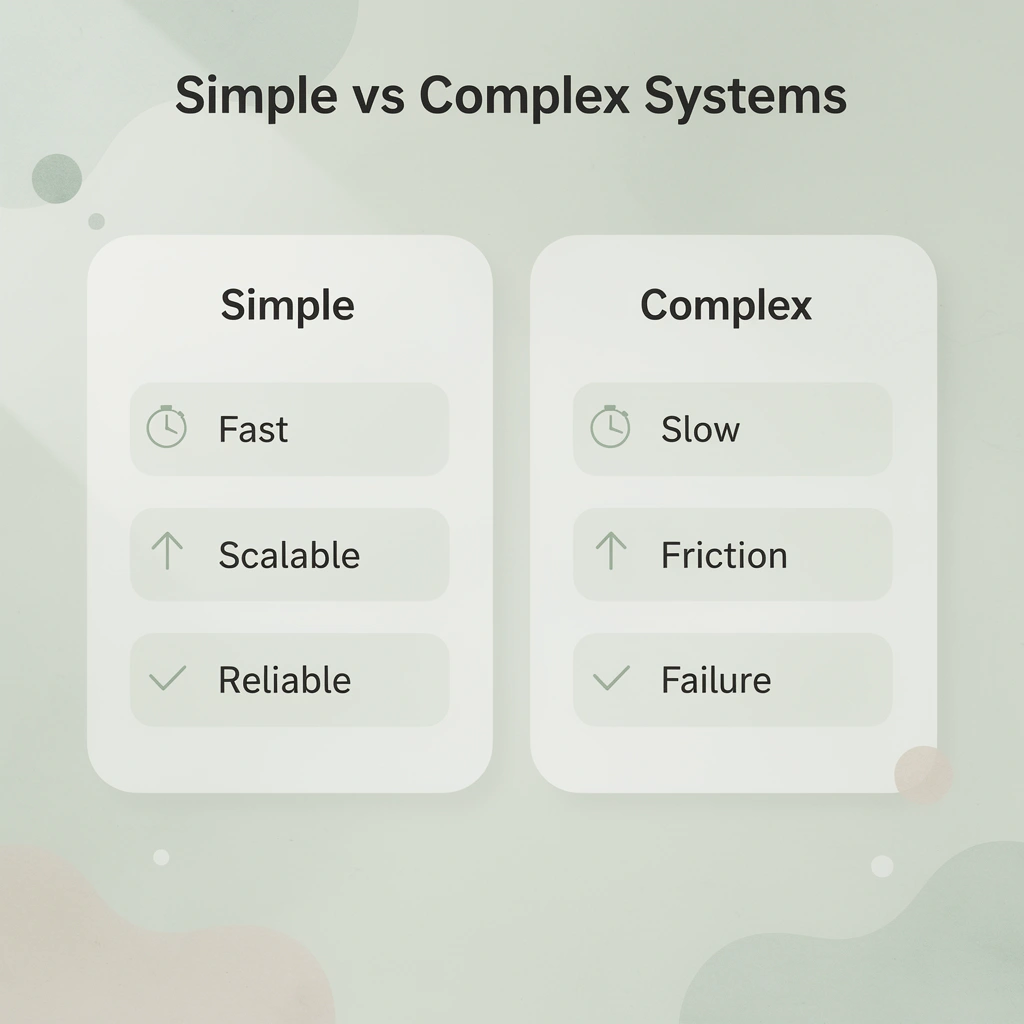
⚠️ Warning: The most successful prop firms use the simplest systems - complexity is the enemy of scalability, not the path to competitive advantage.
Complex evaluation phases backfire when they slow capital movement. Multi-stage challenges with staggered profit targets, variable drawdown thresholds, and time-based progression gates create bottlenecks instead of filtering. Traders spend 90 to 120 days cycling through evaluations before reaching funded status, leaving capital idle while operational costs accumulate. Onboarding slows, liquidity efficiency declines, and firms burn cash on hurdles designed to signal perceived credibility rather than actual performance. According to the Velotrade Blog, 90% of traders fail prop firm challenges, but the real damage occurs when intricate systems cause qualified traders to abandon mid-process, leaving firms with evaluation revenue but no funded accounts generating performance fees.
Most custom firms build risk parameters that vary by trader tier, asset class, and account size, believing detailed control reduces exposure. The opposite happens. One trader gets flagged for a 3% drawdown in forex while another trades crypto with 8% tolerance, leaving the system unable to explain why identical behaviors trigger different responses.
Risk managers spend hours reconciling edge cases instead of monitoring total exposure. Inconsistent rules create operational debt where every exception requires manual intervention, and those interventions become precedents that spawn more exceptions. The firm loses the ability to predict its own risk posture because the model adapts faster than the team can document changes in it.
Payout inconsistency follows the same pattern. Traders receive payouts on different cycles (weekly, bi-weekly, monthly) with different processing times through different payment rails. Cash flow becomes unpredictable because the firm cannot forecast outflows when every funded account operates on its own timeline.
Finance teams scramble to reconcile accounts, traders complain about delays, and trust erodes. Finance Magnates reports that 80% of prop traders globally fail, with operational fragmentation driving more shutdowns than market losses.
Platforms like prop firm technology solve this problem by centralizing customization with clear rules. Our Trade Tech platform lets firms set up evaluation phases, risk tiers, and payout rules using dashboards that maintain consistency while allowing flexibility. The system prevents configuration drift by validating rule changes against existing settings and flags issues before they cause operational failures.
The firms that survive aren't the ones with the most customization. They're the ones with the strongest structure: knowing when complexity adds value and when it adds unnecessary weight.
The foundation matters more than the features. Standardize the risk engine first, then customize evaluation rules, lock payout architecture, and add modular customization last. This sequence prevents fragmentation while preserving flexibility. Most operators reverse this order, building custom dashboards and branded challenges before establishing structural discipline, which is why their firms collapse under operational weight before reaching 500 funded traders.
🎯 Key Point: Building your risk management infrastructure before adding cosmetic features determines whether you scale to thousands of traders or collapse at your first growth milestone.
⚠️ Warning: Prioritizing flashy features over foundational systems has killed more prop firms than market volatility.
"Most prop firm failures occur not from trading losses, but from operational breakdown when firms try to scale without proper risk infrastructure in place." — Industry Analysis, 2024

The risk engine defines how capital moves, where exposure is concentrated, and when positions are cut. If this layer fragments across trader segments or asset classes, you lose visibility into aggregate exposure. One trader might be allowed a 5% drawdown on forex pairs, while another operates with an 8% drawdown on crypto, masking correlated blowups across markets despite individual compliance. According to Fortex, firms that standardize their risk infrastructure before layering customization see a 20% boost in challenge success rates because traders operate within predictable boundaries. Standardization means a unified system that applies consistent logic to margin calculations, drawdown thresholds, and position limits, even when those parameters vary by trader tier or strategy type.
Once the risk engine is steady, you can safely change evaluation criteria. Offer swing traders a 90-day evaluation with wider drawdown tolerance, while scalpers get a 30-day sprint with tighter profit targets and stricter daily loss limits. These variations sit on top of the same risk calculation engine, so your backend systems don't fragment even as your trader-facing rules diverge. Customization at this layer attracts specific trading styles without creating operational chaos, since the underlying infrastructure remains unified and auditable.
Payout structures determine how money flows, and cash flow determines whether your firm survives its first six months. Unpredictable payout schedules (every two weeks for some traders, monthly for others, whenever for top performers) make cash reserves impossible to predict. Lock in a single payout schedule, a clear profit-split model, and transparent withdrawal thresholds before you scale. Our prop firm technology at Trade Tech centralizes payout automation through rule-based triggers and audit trails, reducing manual reconciliation time from days to minutes. Consistent payout architecture prevents liquidity traps when multiple traders hit withdrawal thresholds simultaneously.
This is where branding, dashboards, and trader segmentation rules live. You've already standardized the foundation, so you can safely customize the surface without risking structural collapse. Custom leaderboards, branded challenge names, tiered trader statuses, and personalized performance analytics differentiate your firm in a commoditized market, but only if the systems underneath remain disciplined. Research from LuxAlgo Blog shows that firms offering account sizes up to $2,500,000 rely on modular customization layers to attract elite traders without fragmenting backend operations, since the risk and payout architecture remains unified and scalable.
Small companies with less than $100K in operating reserves shouldn't build custom infrastructure. Engineering costs and operational complexity outweigh the benefits of differentiation while testing product-market fit. Use white-label platforms instead, which provide standard risk engines, evaluation templates, and payout automation without custom development. Custom design makes sense only after you've proven market demand, built sufficient liquidity reserves, and identified specific trader groups requiring tailored evaluation logic your competitors can't replicate with off-the-shelf tools.
Bespoke prop firms succeed when customization sits atop a stable risk and payout architecture, not instead of it.
If you're launching a custom prop firm, the challenge is ensuring your risk, evaluation, and payout systems remain consistent as you add customization. Without that foundation, each new trader group creates fragmentation across your infrastructure. The question isn't whether you can build custom evaluation logic—it's whether your infrastructure can handle that logic without breaking under operational load.

🎯 Key Point: Most operators discover this gap too late. They commit to a tech stack that can't support segmented evaluation models or variable payout structures, putting together separate tools for CRM, risk management, and payouts. As trader groups multiply and capital allocation becomes complex, disconnected systems create delays in risk monitoring, manual reconciliation errors in payouts, and blind spots in trader behavior tracking.
"What worked for 50 traders collapses under 500 because the architecture was never designed for scale."
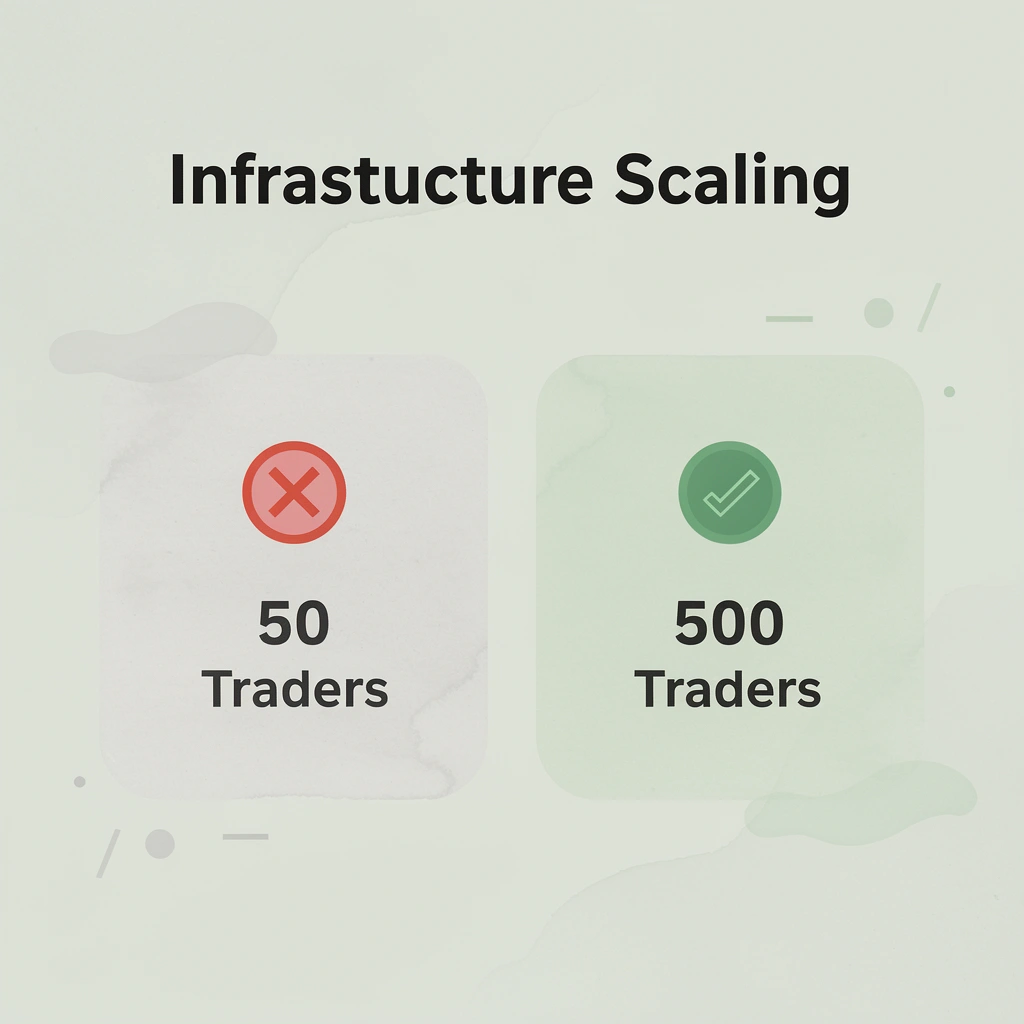
Platforms like prop firm technology provide infrastructure built for scalable, customizable trading firm models: our CRM systems handle segmented evaluation, our advanced risk management controls exposure across groups, and our automated payout workflows support variable structures. Our infrastructure integrates real-time analytics for performance, risk, and trader behavior tracking, enabling retention and capital allocation efficiency. Our platform draws from operational experience supporting 90+ prop firms globally, including custom and white-label models.
⚠️ Warning: Before committing capital, validate whether your custom prop firm model is operationally viable. Assess whether your risk architecture supports customization without instability, whether your payout structure scales without liquidity mismatch, and whether your evaluation system aligns with trader segmentation strategy.
🔑 Takeaway: A structural review clarifies whether your planned infrastructure sustains long-term growth or whether you're building complexity that will trap capital and fragment operations. Custom prop firms succeed when customization sits on top of stable infrastructure, not instead of it.



.png)
