

Meet us at iFx Cyprus
Building a proprietary trading firm requires more than capital and trading expertise. Success depends on establishing robust infrastructure, implementing effective risk management systems, creating proper legal frameworks, and developing trader evaluation processes that attract top talent.
Most aspiring founders struggle with the operational complexity of launching a sustainable trading business. Rather than spending months developing custom platforms or managing fragmented vendor relationships, successful firms focus on integrated solutions that handle trader onboarding, challenge management, real-time risk monitoring, and payment processing, allowing founders to concentrate on building trader relationships and scaling operations through reliable prop firm technology.
You don't need a Wall Street background or years of experience working at a trading desk to start a prop trading firm. What you need is operational discipline, risk management expertise, and infrastructure to onboard traders, monitor positions, and process payments.

🎯 Key Point: Success in prop trading comes from systematic processes and technology infrastructure, not necessarily from traditional finance credentials. Many successful prop firm founders started with strong analytical skills and business acumen rather than trading floor experience.
"The most successful prop trading firms are built on robust risk management systems and operational excellence, not just trading expertise." — Financial Technology Review, 2024

⚠️ Warning: While industry experience isn't mandatory, you'll need to invest heavily in compliance knowledge, regulatory understanding, and technology systems. The real barrier to entry is capital requirements and operational complexity, not your resume.
The companies growing successfully today are often run by business owners who understand business systems better than trading orders. They focus on building lasting operations rather than proving their trading prowess.
Fear keeps more people away than complicated rules. Many believe you need a degree from a prestigious school, extensive trading knowledge, or connections in capital markets to start a business. According to Axcera Blog, the global prop trading market is expected to grow at a CAGR of 6.2% from 2023 to 2030, with much of that growth from people without traditional finance backgrounds. Running a prop firm is fundamentally about managing a platform that connects capital with traders, not about being the best trader in the room.
Most people confuse prop trading firms with hedge funds, assuming both require millions of dollars to start and regulatory approval for managing client money. Prop firms use their own capital to fund traders, eliminating the need to manage outside investors' funds or comply with the same regulatory requirements. Some firms fund a small number of traders with modest account sizes, while others use evaluation-based models where traders pay for challenges before receiving funded accounts. Neither approach requires the startup capital most people assume.
The real barriers aren't credentials or capital—they're operational. Can you verify trader identity and manage KYC compliance? Can you monitor risk across multiple accounts in real time? Can you process payouts reliably across different payment methods and currencies? Can you handle customer support for rule violations and account issues? Teams often spend months integrating separate tools for CRM, payment processing, risk monitoring, and challenge management, only to discover the technical complexity exceeds expectations.
Platforms like prop firm technology integrate these needs into a single system, with built-in tools for onboarding traders, monitoring risk in real time, handling challenges automatically, and processing payments across multiple currencies. Our platform reduces launch time from months to weeks while maintaining compliance and oversight. The question isn't where you come from, but whether you understand how a prop firm works as a business and whether you'll establish the operational foundation before marketing to traders.
A prop firm needs infrastructure for evaluation, funding, risk monitoring, and payment processing before accepting traders. Without this foundation, you collect fees but cannot deliver service, creating legal exposure and reputational damage.

🎯 Key Point: Infrastructure is not optional - it's the foundation that separates legitimate prop firms from fee collection schemes. Every trader you accept without proper systems in place increases your liability.
"Without proper infrastructure for evaluation, funding, risk monitoring, and payment processing, prop firms create legal exposure and reputational damage while failing to deliver promised services." — Risk Management Analysis, 2024

⚠️ Warning: Accepting traders before your infrastructure is ready is a recipe for disaster. You'll face angry traders, potential lawsuits, and regulatory scrutiny that can permanently damage your firm's reputation.
The capital requirement depends on whether you're running an evaluation-only model or funding traders. According to B2BROKER, initial capital typically ranges from $50,000 to $100,000 for funded accounts. Evaluation-only businesses, where traders pay for challenges but never receive funding, operate as software-as-a-service, offering trading simulations and requiring significantly less capital. The risk emerges when firms market themselves as funding traders but lack sufficient capital to pay out winnings. Traders who pass evaluations, then wait weeks for funded accounts, will share that experience publicly.
The economic model breaks when liabilities exceed available funds. If you allocate $25,000 each to 20 traders but retain only $200,000 in reserves, a profitable month where multiple traders reach their goals simultaneously creates a liquidity crisis. Teams underestimate this because they focus on evaluation pass rates (typically 5-15%) rather than planning for simultaneous withdrawals by successful traders.
Risk monitoring must happen in real time. By the time you review yesterday's trades to discover a violation, a trader may have already worsened the problem today. Real-time position tracking, automated rule enforcement, and instant account suspension are basic operations that prevent a single careless trader from creating losses exceeding their account size. The real challenge is stopping bad behavior before it happens, not finding violations after they occur.
Platforms like prop firm technology combine risk parameters with automated monitoring that flags violations as positions open, rather than after losses occur. Our Trade Tech solution compresses the response window from hours to seconds while maintaining audit trails that document every enforcement action. Manual monitoring through periodic trade reviews creates a dangerous lag between violation and detection.
Payment processing gets complicated because money moves in both directions: traders pay evaluation fees upfront, then you pay profit splits and withdrawals later. The operational complexity lies not in processing individual transactions, but in maintaining compliance across multiple payment methods (credit cards, wire transfers, cryptocurrency), handling chargebacks on evaluation fees, and executing timely payouts that match your profit-split agreements.
According to B2BROKER, modern prop trading infrastructure can be operational in 2-4 weeks with integrated platforms, though this timeline assumes your payment processing can handle trader evaluation fees and performance-based payouts simultaneously.
The friction point most firms underestimate is chargeback management. A trader who disputes a failed evaluation charge creates administrative overhead: each dispute requires documentation, response time, and processor scrutiny that can threaten your merchant account. When chargeback rates exceed 1%, processors view you as high risk and may increase fees or terminate service entirely. Operational infrastructure is only half the equation; the real test comes when your economics are put to the test against actual trader volume and payout obligations.
Starting a prop trading firm means solving three connected problems: setting up your legal structure and following the rules, building or acquiring the technology you need, and creating a system to evaluate traders that protects your capital while attracting talent. Your legal setup determines which markets you can trade in, your technology choices determine what evaluation models you can use, and your evaluation criteria shape your capital requirements. Get the order wrong, and you'll spend months fixing issues or launch with problems that become expensive to remedy once traders have your money.
⚠️ Warning: Getting the sequence wrong is the #1 reason prop firms fail in their first year. Your legal structure must be established before selecting technology platforms.
🎯 Key Point: Each decision constrains the next step: legal structure → technology capabilities → evaluation criteria → capital requirements.

The proprietary trading market is projected to grow at a CAGR of 6.2% from 2023 to 2030, but this growth will bring more competition for traders' attention, smaller profits, and higher expectations for platform quality. Your launch strategy must account for a market where traders compare your offering against dozens of other options.
"The proprietary trading market is projected to grow at a CAGR of 6.2% from 2023 to 2030, but increased competition is driving down profit margins." — PwC Asset Management Report, 2023
Market Factor
Impact on New Firms
6.2% CAGR Growth
More opportunities but increased competition
Platform Expectations
Higher technology investment is required
Trader Options
Need a stronger differentiation strategy
💡 Tip: Focus on niche markets or specialized trading strategies rather than competing directly with established firms on generic offerings.
Problem: Launching without a clear market focus leads to technology mismatches and compliance gaps. A CFD-focused firm requires different broker integrations, risk controls, and regulatory frameworks than a futures firm. Pivoting to another market after launch means rebuilding core infrastructure. What happens if ignored: Six months in, you'll discover your technology can't support the instruments traders need, forcing expensive platform migrations or limiting your addressable market.
Decide which trading accounts to offer: CFDs, futures, crypto, forex, or sports betting evaluation accounts. Each option carries different liquidity needs, regulatory requirements, and trader profiles. CFD companies require less starting capital but face more complex hedging decisions. Futures companies must partner with FCMs and meet higher regulatory capital requirements, though they benefit from centralized exchange systems. Crypto companies access 24/7 markets but must address custody and security challenges absent in traditional markets.
Your choice of trading model (one-step evaluation, two-step challenge, instant funding) determines how efficiently you use capital and how much risk you take on. Two-step models filter out unprofitable traders but delay profitability. Instant funding attracts experienced traders but requires advanced real-time risk controls. A two-step model might need 30% less risk capital than instant funding, though your customer acquisition cycle extends by weeks.
Problem: Running your business without the right legal setup puts your personal money and assets at risk and can result in government fines. Payment processors, broker partners, and institutional liquidity providers require verification that you have a legitimate business with proper registrations. What happens if ignored: You'll encounter obstacles when opening a business bank account, setting up payment systems, or partnering with brokers. This can delay your launch by months while you retroactively establish your business structure.
Register your business entity in a location that supports prop trading operations. Many firms choose offshore jurisdictions such as St. Vincent and the Grenadines, the Seychelles, or Vanuatu for their favorable regulatory frameworks and lower compliance costs. Others register in the UK, the US, or the EU to build traders' confidence, accepting greater compliance obligations in exchange for brand credibility. Your registration location affects tax treatment and the availability of payment processors.
Obtain the required licenses or registrations based on your business location and applicable laws. If you offer funded accounts in regulated instruments, consult securities attorneys to determine whether your model requires broker-dealer registration, investment advisor status, or an exemption. The distinction between prop trading evaluation and securities offering varies by jurisdiction. Non-compliance creates serious legal risk that can shut down your operation.
Problem: Separate systems for CRM, risk management, payments, and trader dashboards create operational gaps and slow performance. Why it matters: Each disconnected system requires manual data transfer, custom integration, and separate maintenance, adding substantial technical overhead before you onboard your first trader. What happens if ignored: You'll spend weeks reconciling trader performance across platforms, manually processing payouts, and troubleshooting integration issues instead of acquiring new traders and scaling your business.
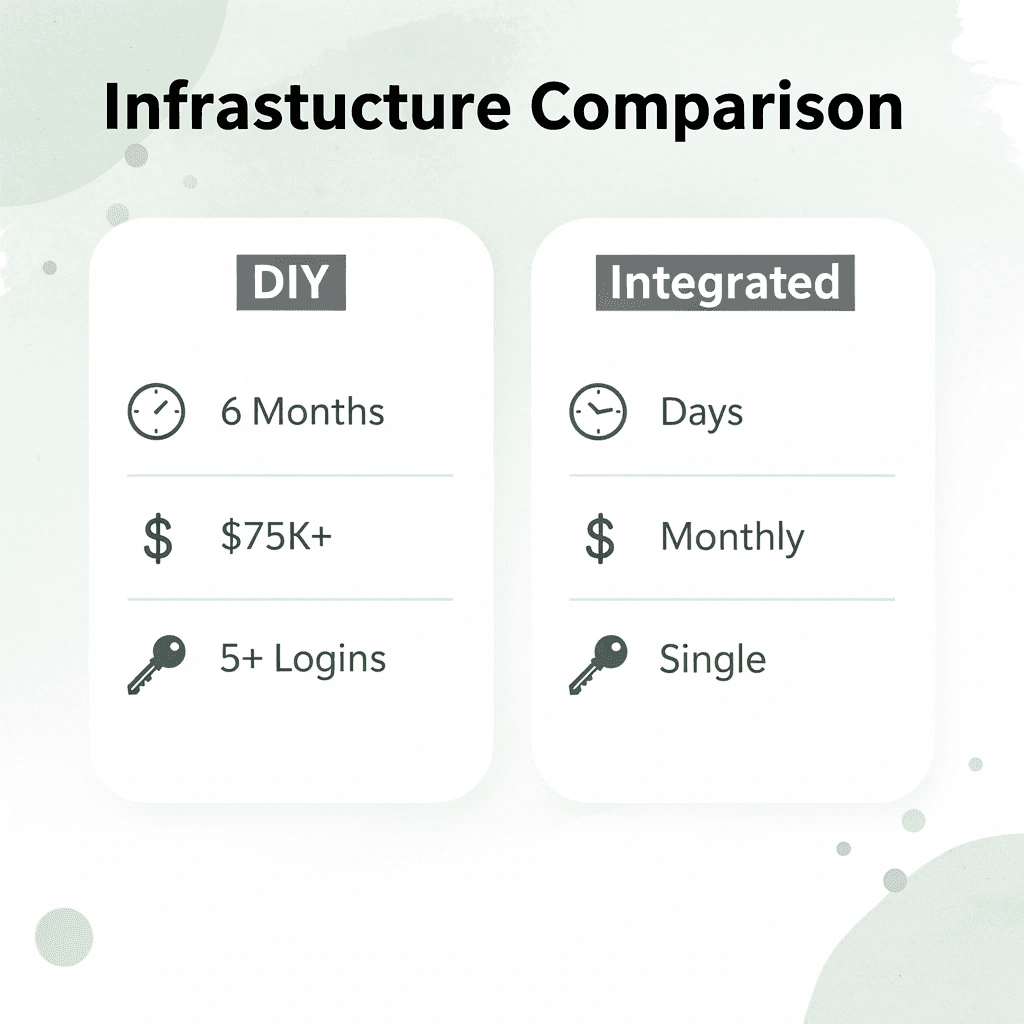
Most new prop firms face a build-versus-buy decision. Building custom infrastructure requires 6 months of development time, a technical team, and ongoing maintenance costs exceeding $15,000 per month. As complexity grows, custom systems accumulate technical debt: every new feature requires development sprints, bug fixes multiply across codebases, and scaling demands hiring more engineers rather than serving more traders.
Platforms like prop firm technology provide integrated infrastructure combining CRM, risk management, payment processing, and trader dashboards. Our Trade Tech platform compresses setup time from months to weeks. Firms using comprehensive platforms report focusing 70% more time on trader acquisition rather than technical troubleshooting, since core infrastructure works out of the box.
Problem: Unclear or inconsistent evaluation criteria lead to disputes among traders and unexpected losses. Every evaluation rule you set—daily drawdown limits, profit targets, prohibited trading styles—directly affects trader success rates and your capital exposure. Traders exploit unclear rules; you'll face constant support disputes about rule violations, and your risk models will fail because actual trading behavior doesn't match your assumptions.
Set clear metrics: maximum daily loss, maximum total drawdown, profit targets, minimum trading days, and prohibited strategies (holding through news, weekend positions, hedging between accounts). Tighter daily loss limits (2% versus 5%) reduce tail risk but increase trader failure rates and extend your payback period. Requiring a minimum number of trading days filters out luck and favors skill, but lengthens your evaluation cycle.
Set position size limits, leverage restrictions, and instrument-specific rules before your first trader starts. A trader who passes evaluation through high-frequency scalping on major forex pairs creates a different risk exposure than one trading weekly options on volatile stocks. Your risk management system must enforce these distinctions automatically, not through manual review after problems emerge.
Problem: Manual payout processing creates delays, errors, and trader dissatisfaction. Traders expect fast, reliable payouts; payment friction drives negative reviews that hurt acquisition. As trader volume grows, your team becomes overwhelmed verifying requests, initiating transfers, and handling support tickets, while payout delays damage your reputation and payment errors create costly disputes.
Connect payment gateways that support your target markets (Stripe, PayPal, crypto processors, wire transfer systems). Each processor offers different fees, geographic coverage, and setup complexity. Stripe serves US and European traders well but has limited reach in Asia and Africa. Crypto payments enable worldwide customer access but involve price volatility and require wallet infrastructure.
Set up automatic payout workflows so approved withdrawals process automatically based on your payout schedule (weekly, bi-weekly, monthly). Automation eliminates manual review delays and creates audit trails that protect you if traders dispute payout amounts or timing. But even firms with solid technology and clear rules hit a wall when their unit economics don't hold up as trader volume scales.
Starting a prop trading firm and running a profitable one are two different challenges. Whether your business makes money depends on whether your costs and earnings align as you scale and traders shift their behavior.

🎯 Key Point: The initial setup costs can be manageable, but scaling profitably requires a careful balance of trader incentives, risk management, and operational efficiency.
"85% of new prop trading firms fail to achieve sustainable profitability within their first 18 months due to scaling challenges." — Trading Industry Research, 2024

⚠️ Warning: Many firms underestimate how trader behavior shifts as the firm grows - what works with 10 traders often fails completely with 100+ traders due to risk concentration and management complexity.
Most new firms copy payout models from competitors without testing them against real trader volume. Offering 80% profit splits attracts talent, but when dozens of traders hit withdrawal thresholds simultaneously, cash flow craters. According to For Traders, over 70% of new prop firms fail within their first 18 months because payout structures that looked sustainable on paper collapsed under actual demand. The math that works for ten funded accounts breaks when processing fifty payouts a week.
Payout liability grows faster than revenue without clustering plans. Traders withdraw unevenly, bunching around month-end, after big wins, or during market shifts. If reserves can't handle three weeks of bunched payouts without slowing operations, the structure isn't sustainable. Surviving firms build payout schedules, reserve ratios, and profit-sharing tiers that account for variance, not averages.
More traders increase risk significantly. Each new trader adds exposure, and if risk controls don't scale with the number of traders, you're building a weak system. One trader breaking drawdown limits can trigger a chain reaction: margin calls worsen, losses compound, and weeks of profit from disciplined traders vanish. Platforms like prop firm technology bring together risk monitoring across all accounts, flagging unusual activity in real time so firms can intervene before a single account destabilizes the entire operation. Trade Tech's platform centralizes risk controls and real-time alerts across your entire trader network.
When more traders join, operations become more complex. Support requests accumulate, compliance checks take longer, and payment processing slows. For Traders reports that customer acquisition costs have risen 40% year over year. Operational inefficiencies drain firm margins: companies without automated systems or strict risk controls spend more per trader than they earn from evaluation fees and profit splits.
Companies that grow profitably retain traders who trade strategically and consistently, while eliminating those who treat funded accounts as gambling. Repeated account blowups waste resources on hiring and testing without building a stable, profitable trader base. Successful companies align traders' incentives with long-term company interests through growth plans that reward steady performance, loss limits that protect capital, and compensation structures that don't penalize careful traders or reward reckless risk-taking. But even the best rewards fail if the underlying systems cannot handle the volume, complexity, and speed growth demands.
Building infrastructure from scratch takes most operators 6 months and $75,000 before they fund their first trader. You're assembling separate platforms for risk monitoring, payout processing, trader dashboards, and CRM functions, then spending weeks integrating them. By launch, your timeline has doubled, and your capital reserve is depleted.
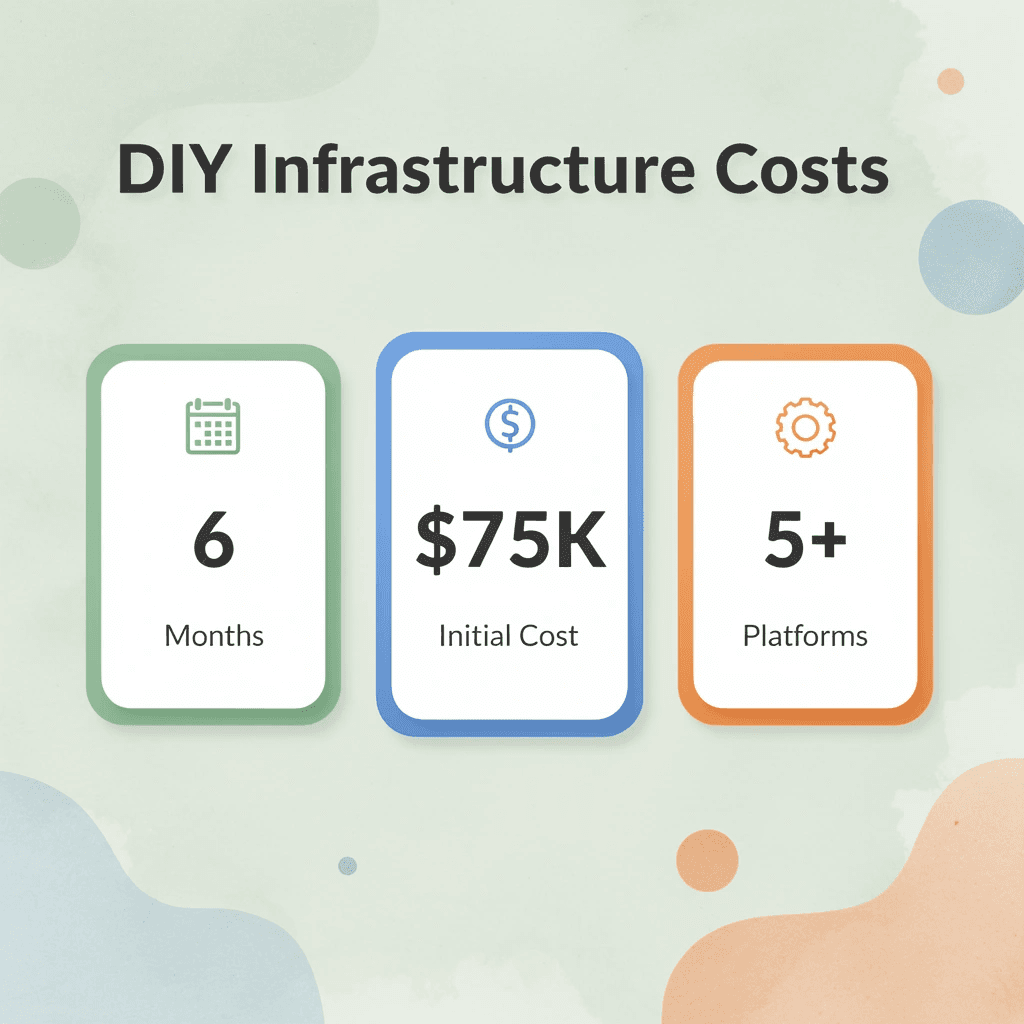
🎯 Key Point: Assembling a tech stack piece by piece feels like you're maintaining control, but as your trader count grows from 10 to 50 to 200, integrations break. Your risk system doesn't sync with your dashboard. Payout requests sit in manual review queues because your payment processor doesn't communicate with your P&L tracking system. You're managing five different logins, three support contracts, and bugs no single vendor will own.
"The firms that reach profitability built operational capacity before they needed it, treating technology as a foundation rather than an afterthought."

Platforms like Trade Tech Solutions provide integrated infrastructure combining CRM tools, risk management, payout workflows, trader dashboards, and analytics in a single environment built for prop trading. Trusted by more than 90 prop firms globally, Trade Tech eliminates integration gaps that impede scaling, letting you focus on trader selection and capital deployment.
⚠️ Warning: Book a consultation today—it takes less than five minutes to schedule. The firms that reached profitability built operational capacity before they needed it, treating technology as a foundation rather than an afterthought.


.png)
