

Meet us at iFx Cyprus
Proprietary trading firms offer an intriguing proposition: they provide capital to traders, absorb losses when trades go wrong, and pay out profits when traders succeed. Yet these firms continue to thrive across financial markets. Their success stems from a sophisticated business model built on challenge fees, profit splits, subscription models, and carefully designed risk parameters that protect their bottom line.
Behind every successful prop firm lies a robust technological infrastructure that enables its profit model. Automated risk management tools prevent catastrophic losses, evaluation frameworks filter profitable traders from unprofitable ones, and payment processing systems handle everything from challenge fees to profit distributions. Trade Tech Solutions delivers prop firm technology that helps firms implement the exact systems needed to generate consistent revenue.
Yes, traders do earn real performance fees at legitimate firms. You make money when your strategy fits the published rules (drawdown type, hold times, news windows), you pass the evaluation and verification phases, you maintain discipline on the Qualified Account, and you meet performance fee conditions like minimums, consistency requirements, and payout schedules.
🔑 Key Takeaway: Real prop firms pay actual performance fees, but success depends on strict adherence to their specific trading rules and passing multiple evaluation phases.

Industry pass rates on the first attempt hover around 10-15% for multi-step evaluations. Budget fees multiplied by expected attempts, not one perfect run.
"Industry pass rates on the first attempt hover around 10-15% for multi-step evaluations." — Damn Prop Firms, 2024
⚠️ Warning: Most traders fail their first evaluation attempt. Factor multiple entry fees into your budget rather than expecting immediate success.
The numbers reveal both opportunities and risks. According to For Traders, prop trading reached a $12B market in 2025, while Topstep reports over $1 billion in funded capital flowing through the industry. Yet only 5-10% of traders pass evaluation hurdles. More than 2,000 prop firms now compete for attention, each promising access to capital that once required deep personal wealth.
Democratized access means what once required hundreds of thousands of dollars in capital is now available for a few hundred dollars in evaluation fees. Low barriers to entry let firms start with minimal overhead, fuelled by technology platforms and modular infrastructure. Viral success stories and community hype draw more people into the space, while the pandemic shift toward remote work and digital income streams prompted many to explore trading as an alternative career. Rapid expansion also attracted bad actors, making sharp design and clear messaging essential.
Real companies publish business registration details, name their leadership, and operate under verifiable legal frameworks. FTMO lists its Czech incorporation publicly, and TopStep has processed payouts since 2012, with over 200,000 traders completing their evaluation process.
Real firms tell you exactly what you pay at the start, what the profit split is, how you can withdraw your money, and what the evaluation rules are. They don't promise you'll make money and acknowledge that most traders fail. When a firm discloses the real pass rate, it's being honest about what they offer: a test of your skill, not a shortcut to wealth.
Professional platforms work with established brokers and include real-time risk management tools. You can verify payout histories through community feedback and third-party reviews. These firms have reputations to protect: they succeed when traders succeed and remain active.
Fraudulent operations invest heavily in appearance: polished websites, convincing testimonials, and influencer promotion. Red flags emerge in the details: unclear terms and conditions that change without notice, unverifiable business registrations, leadership teams lacking trading backgrounds, and payout processes that stall indefinitely.
The revenue model charges fees for challenges designed to fail through impossible rule combinations, hidden spread markups, or platform glitches during high-volatility periods. Some operate entirely on demo accounts, where no real capital changes hands. Traders pay for challenges, fail due to manipulated conditions, and pay again until frustration or financial limits stop them.
Pressure tactics speed up the cycle. Limited-time discounts and fake scarcity ("only 50 spots left") push people to make decisions before doing due diligence. Influencers receive fake accounts preloaded with winning trades and then promote the firm without disclosing the setup. By the time complaints arise, the firm has changed its name or disappeared. According to For Traders, the prop trading market reached $12 billion in 2025, and rapid growth attracts those who exploit traders' ambitions.
Start with registration. A legitimate firm operates under a legal entity you can verify through public records. If the business address is a virtual office or the incorporation details are missing, that's a warning sign. Check whether leadership is named and has verifiable professional histories. Firms hiding behind anonymity are hiding for a reason.
Next, examine the fee structure. All costs should be listed clearly: evaluation fees, monthly platform fees, profit split percentages, withdrawal minimums, and processing times. If the firm charges $500 for a challenge but offers no way to withdraw earnings without extra fees or unfair conditions, the economics don't support trader success. They support fee collection.
Community feedback reveals patterns that individual experiences might miss. Review multiple platforms beyond the firm's own testimonials: trading forums, social media groups, and independent review sites. Consistent complaints about payout delays, rule changes, or platform manipulation indicate systemic issues. A handful of negative reviews is normal; dozens following the same pattern suggest a problem with the business model.
Finally, test communication. Legitimate firms respond to questions about rules, payouts, and risk parameters with specific answers. Unclear responses, delayed replies, or contradictory information from different support agents suggest the firm either doesn't know its own policies or doesn't want you to understand them. Transparency is operational: firms built to last don't hide how they work.
Understanding whether a firm is legitimate answers only half the question. The harder part is understanding how they make money, since even transparent firms profit in ways most traders don't expect.
Prop firms sell access to trading opportunities under controlled conditions, not capital. Revenue comes from evaluation fees, subscription services, and software access. Most traders pay to prove themselves worthy of funding they will likely never receive.

🎯 Key Point: The real product isn't capital access—it's the promise of trading opportunities wrapped in evaluation programs that generate consistent revenue regardless of trader success.
"Most traders pay to prove themselves worthy of funding they will likely never receive, creating a revenue model based on aspirational participation rather than actual capital deployment." — Industry Analysis, 2024

⚠️ Warning: Understanding this business model is crucial before entering any prop firm evaluation—you're paying for the chance to prove yourself, not guaranteed funding access.
Revenue Streams in Trading Platforms
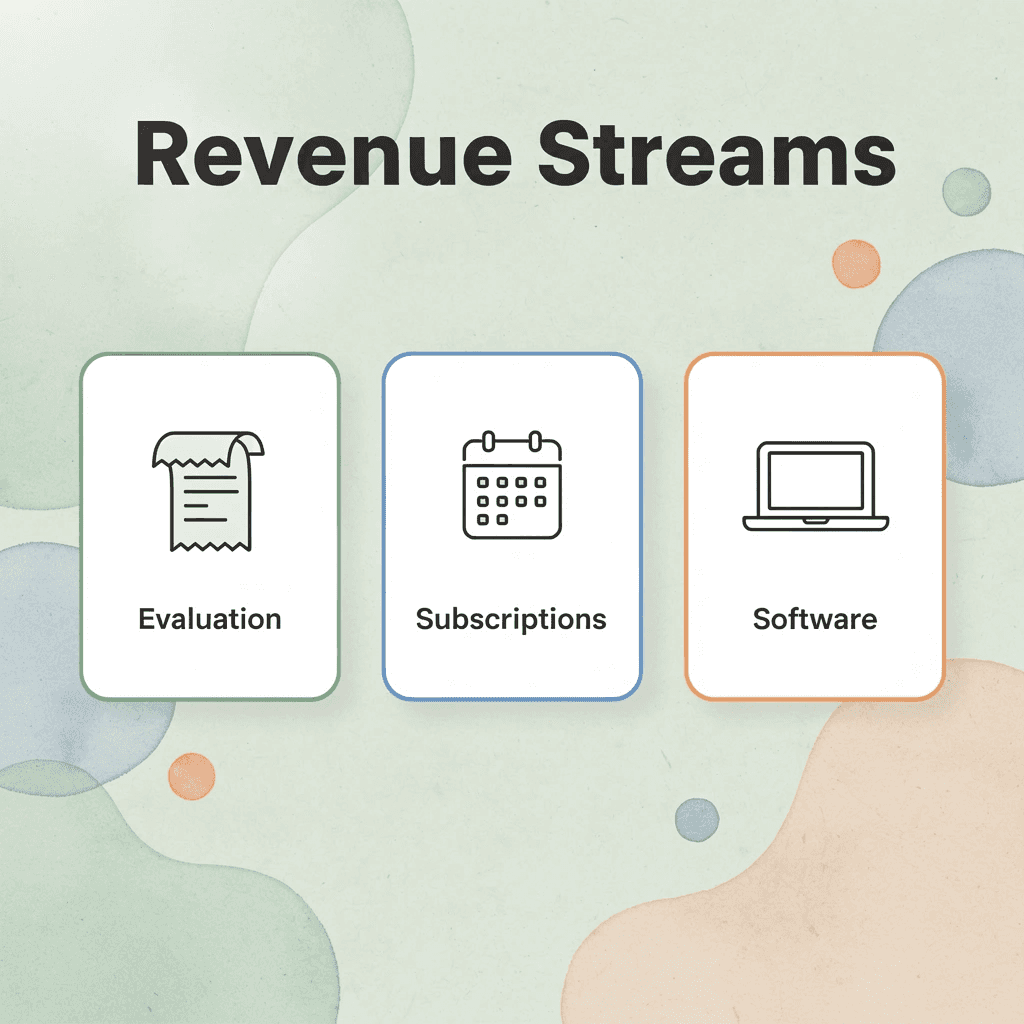
The evaluation fee is the engine. Traders pay $100–$500 to attempt a simulated challenge with profit targets and drawdown limits. According to FTMO's 2024 transparency report, only 10% of traders pass the first evaluation phase. The firm collects fees from the 90% who fail, then offers retries for additional fees: a subscription model disguised as merit-based opportunity.
Reset fees worsen this problem. When traders break the rules (such as hitting daily loss limits), they can pay around $150 to restart instead of starting over. The psychology is compelling: you've already spent time, emotional energy, and money. Paying to reset feels cheaper than quitting, even though you're now paying for the same statistical failure rate twice. The firm's risk stays zero because the account is simulated. Your risk grows with every reset.
Platforms bundle evaluations with dashboards, analytics tools, and access to trading communities, positioning themselves as education technology providers rather than financial brokerages. Users gain access to win-rate metrics, risk-management trackers, and sometimes coaching sessions. This reframing matters legally and economically: it transforms a potential securities offering into a software service.
Some firms sell trade copier licenses or proprietary platform access, particularly in futures markets. These tools let traders execute the same strategy across multiple simulated accounts simultaneously, increasing the number of paid evaluations a single person might purchase. The software revenue adds to challenge fees, creating multiple income streams from the same customer.
Prop firms need some traders to succeed and build marketing credibility. A firm with zero funded traders and no payout history looks like a scam. But they need most traders to fail for revenue stability. This contradiction shapes every rule, every drawdown limit, and every profit target. The math works when 5 to 10% of traders get funded and generate enough simulated profit to receive payouts, while the other 90% continue paying for attempts, resets, and retries.
Most companies using fragmented systems struggle to manage this balance efficiently. When challenge rules, payout structures, and risk parameters live in separate tools, companies either become too restrictive, losing credibility, or too lenient, eroding margins. Platforms like prop firm technology integrate CRM, risk management, and customizable evaluation rules into a single system, enabling companies to precisely calibrate that tension. Our Trade Tech solution lets you adjust drawdown thresholds, automate payout approvals, and track trader behavior across the entire lifecycle. Once you understand what prop firms sell, the next logical question becomes uncomfortable: how does the same business model profit whether traders win or lose?
Prop firms make money through upfront evaluation fees, trader failure rates, and profit-sharing structures. Most revenue comes from traders who never reach the funded stage, paying $100 to $500 per evaluation attempt plus reset fees for rule violations. For funded traders, the firm retains 20% to 50% of simulated profits via the performance split, with payouts capped based on total evaluation fee inflows.

🎯 Key Point: The majority of prop firm revenue comes from failed evaluations rather than successful trader profits, creating a business model that benefits from high failure rates.
"Most revenue comes from traders who never reach the funded stage, paying $100 to $500 per evaluation attempt plus reset fees when they break rules." — Industry Analysis

💡 Pro Tip: Understanding this revenue structure helps explain why prop firms can offer seemingly generous profit splits - they're banking on most traders never reaching the payout stage.
Trading Platform Revenue Sources
When you pay $300 for a $100,000 evaluation, you're buying a rule-set measurement system, not actual money. The firm keeps that fee immediately. If you exceed drawdown limits or break trading rules, you can restart for an additional $150 to $200, or purchase a new evaluation. According to For Traders, prop trading reached a $12B market in 2025, built largely on an evaluation economy where most traders attempt multiple times before achieving funded status.
Passing prop firm challenges is difficult. The gap between evaluation success and live trading, where execution, slippage, and emotional control differ significantly, creates a natural funnel: evaluation fees flow consistently while funded payouts remain the exception.
For traders who pass the evaluation and maintain discipline in funded accounts, the firm retains a contractual share of simulated profits, typically 20% to 50%. On an 80/20 split generating $10,000 in simulated profit, the firm keeps $2,000. Optional add-ons such as split upgrades or plan variants provide additional revenue streams beyond base evaluation fees. The business model profits from identifying and filtering talent, not merely from deploying capital.
Prop firms stay profitable even when traders withdraw profits because evaluation fees and trader failure rates exceed the profits firms must share. Most retail prop evaluations in 2026 use simulated funds—your $50,000 simulated account measures whether you trade within limits, not real capital. Simulated results do not reflect real trading outcomes in all respects, and performance fees are performance-based. Your evaluation fee is at risk if you breach.
Failed evaluations are part of normal economics: gym memberships work the same way, with most members paying for the few who use the facility daily. A firm becomes predatory when rules are designed to be nearly impossible, so you keep repaying, when rules are so easy the firm probably never intended to pay (unsustainable), or when performance fee requests are systematically denied without documented cause. Before paying any firm, verify their objectives are achievable for your strategy, not merely whether the fee is cheap.
Once you see how these revenue streams connect, the harder question becomes whether this structure can survive in the long term or is built on trader attrition.
Prop trading firms stay successful by examining how results spread across thousands of accounts. Strong firms balance two things: evaluation fees fund necessary systems and filter out unprepared traders, while a smaller group of high-performing traders generates additional business for growth. The model works when both revenue streams reinforce each other.

🎯 Key Point: The sustainability of prop firms depends on maintaining a delicate balance between evaluation revenue and trader success rates - neither can exist without the other.
"The most successful prop trading firms achieve sustainability by creating a symbiotic relationship between their evaluation process and trader development programs." — Industry Analysis, 2024

⚠️ Warning: Firms that rely too heavily on evaluation fees without supporting trader success risk creating an unsustainable attrition-based model that damages their long-term reputation.
Prop firms operate through fee-based business models and liquidity partnerships. Industry analysis shows that prop firms generate 80-90% of their revenue from evaluation fees rather than from traders' profits. Those fees pay for risk management systems, platform technology, data feeds, payment processing, and automated enforcement systems that prevent reckless exposure across thousands of simultaneous accounts. They represent the baseline cost of maintaining the system while the firm waits for the small number of traders who will succeed, grow their accounts, and generate volume sufficient to send to liquidity providers or manage internally.
Companies that rely solely on challenge fees reach a revenue limit. Bad reputation spreads faster than five years ago: traders share information across forums, track payout histories, and leave companies that show patterns of unfair rule enforcement or systematic withdrawal denial. The constraint is real: companies must attract skilled traders to build credibility and volume, yet they depend on the 90% of traders who fail their evaluation to generate the fee revenue that sustains operations during the months it takes for successful accounts to mature.
Whether prop trading firms can stay in business depends less on individual traders failing and more on how results spread across thousands of accounts. Firms that endure don't rely solely on traders losing money. Instead, they build systems where high-performing traders generate substantial trading activity, returning traders add value over time, and safety controls prevent catastrophic losses.
This is the loudest and most damaging misconception: if traders fail challenges or blow accounts, the firm collects fees and wins. Reality is more complicated. Yes, challenge fees are one way firms make money, but firms that rely solely on trader failure hit a limit: a bad reputation and the loss of traders eventually catch up. Successful prop firms are built on helping traders succeed over the long term. When traders perform consistently, firms gain access to something far more valuable than a one-time fee: returning traders, funded accounts, and growing volume.
Prop firms generate revenue from overlapping sources, which explains their varied structures.
Evaluation and challenge fees cover platform costs, data, technology, and risk infrastructure while filtering out underprepared traders. According to research from ForTraders, prop firms generate 80 to 90% of their revenue from evaluation fees rather than from traders' profits.
Trader volume and scalability matter because consistent traders create flow. Firms benefit from active, disciplined traders who grow their capital over time. Well-run firms manage risk flexibly, allocating capital to consistent performers while limiting losses from unstable behavior.
Long-term trader lifecycle is where real value emerges. A trader who persists, grows their trading, resets, and continues is far more valuable than someone who tries once and fails. Industry analysis from ForTraders shows that only 5 to 10% of traders who pass evaluations remain profitable over time, forcing firms to balance losses from unsuccessful traders against the costs of retaining profitable ones to survive.
This belief usually stems from hidden rules, sudden account closures, or unclear drawdown mechanics. In reality, profitable traders are the business. Winning traders bring credibility, marketing value, volume, and scalability. Reputable firms publish rules clearly, automate risk enforcement, and focus on consistency metrics rather than one-off wins. If a firm seems hostile to profitable behavior, the issue isn't profitability—it's misaligned incentives.
Rules exist to protect companies from careless exposure while encouraging professional behavior. Drawdown limits, position-sizing caps, and consistency requirements mirror real-world risk desks far more than casino-style setups do. The difference between fair rules and predatory ones lies in clarity and enforcement. Transparent companies define expectations upfront and apply them evenly. Questionable companies bury edge cases in fine print or change conditions mid-stream. Not all prop firms operate ethically, and a few bad actors poison trust for an entire industry. Education matters because traders who understand real mechanics can identify and reject misleading models.
Ask whether the firm explains how risk is managed, documents rules publicly, ties trader progression to consistency rather than luck, and aligns incentives so both trader and firm benefit from longevity. Firms that answer these questions clearly tend to operate with fewer surprises.
Beyond payout promises and profit splits, firms managing risk across thousands of accounts need operational efficiency without fragmenting systems. Our prop firm technology at Trade Tech centralizes risk management, payment processing, and CRM into a single infrastructure, reducing manual overhead while ensuring consistent rule enforcement across all trader accounts.
Growth breaks prop firms when systems can't process evaluations in real time, enforce drawdown rules consistently, or automate payouts without manual reconciliation. You can attract 10,000 traders, but without infrastructure to support evaluation volume, risk enforcement, and payout accuracy simultaneously, you're scaling operational chaos, not revenue.
🎯 Key Point: Firms that survive built their operations around automation from day one. When evaluation rules are hardcoded into the platform, risk monitoring happens in milliseconds, and payouts trigger automatically based on verified performance data, the dual-revenue model becomes predictable. Fee income funds infrastructure. Trader success generates liquidity partnerships. Both streams grow without cannibalizing each other.
"The difference between a firm capping at 5,000 evaluations per month and one scaling to 50,000 is whether technology handles rule customization, real-time risk tracking, and payment reconciliation without proportional headcount increases."
Most prop firms patch together separate tools for CRM, payment processing, risk monitoring, and trader analytics. As volume increases, disconnected systems create reconciliation errors, delayed payouts, and rule enforcement gaps that erode trust and profitability. Our platform integrates evaluation management, risk controls, and payout automation into a single operational layer, eliminating manual handoffs that impede growth.
⚠️ Warning: Operational leverage comes from systems that enforce your economics automatically, not spreadsheets requiring constant human intervention. The difference between scaling successfully and hitting operational walls is whether technology handles rule customization, real-time risk tracking, and payment reconciliation without proportional headcount increases.
Manual Operations vs Automated Systems

If you can't answer how many traders are in drawdown, what percentage passed evaluations, or which payouts are pending verification, you're managing by feel instead of data. You can't optimize fee structures, adjust risk parameters, or forecast cash flow with confidence. Prop firm profitability comes from knowing how evaluation difficulty, fee pricing, and payout timing interact, then tuning those variables based on real performance data.
Book a consultation with Trade Tech Solutions to evaluate whether your infrastructure supports the economics you're building. You'll receive a review of how your evaluation workflows, risk systems, and payout processes align with scalable operations and where gaps are costing margin or limiting growth.



.png)
