

Meet us at iFx Cyprus
Skilled traders often face a familiar frustration: limited capital restricts earning potential despite proven strategies and market knowledge. Proprietary trading firms offer a solution by providing access to substantial capital without requiring traders to risk personal funds. These firms evaluate trading abilities and, upon approval, fund accounts ranging from thousands to millions of dollars.
The success of prop trading depends heavily on robust technology platforms that manage risk, track performance, and facilitate smooth operations between traders and firms. Trade Tech Solutions offers comprehensive prop firm technology that creates the infrastructure necessary for these trading partnerships to thrive.
Prop trading (proprietary trading) is when firms trade financial markets using their own money instead of client money. A trader makes positions across stocks, futures, currencies, or derivatives, and both parties split profits based on a predetermined agreement. Unlike brokerages that earn commissions on client trades, prop firms keep 100% of the gains when trades succeed and absorb 100% of the losses when they fail.

🎯 Key Point: The fundamental difference between prop trading and traditional brokerage is risk ownership - prop firms use their own capital and keep all profits and losses, rather than earning small commission fees from client transactions.
"Proprietary trading represents a high-risk, high-reward model where firms put their own capital at stake, keeping 100% of profits while absorbing 100% of losses." — Financial Markets Analysis, 2024
💡 Example: If a prop trader makes a $50,000 profit on a currency trade, they might keep $25,000-$40,000 depending on their profit-sharing agreement with the firm, whereas a traditional broker would only earn a small commission fee regardless of the trade's success.
For many years, investment banks ran large proprietary trading desks, using special access to market information and customer orders to generate profits that far exceeded commission revenue. After the 2008 financial crisis, regulators created the Volcker Rule to prevent banks from making risky bets that could harm depositors. This rule pushed proprietary trading into standalone firms, which operate with less government supervision but also lack the protections of regulated banks.
A prop firm provides traders with capital to trade—sometimes $200,000 or more, depending on their trading history and risk tolerance. When traders generate profits, they split the earnings, with traders typically receiving up to 90% of the profit split while the firm retains the remainder. Risk is managed through maximum drawdown limits that automatically halt trading if losses reach a predetermined threshold.
This arrangement solves a fundamental problem: skilled traders lack the capital to scale their strategies, while firms have capital but need people who can execute trades effectively. The profit-split model aligns both sides' interests: traders earn more when they perform well, and firms profit by deploying capital across multiple traders rather than relying on a single internal team.
Companies engage in proprietary trading because it strengthens their balance sheet without the burden of managing client accounts. Hedge funds, by contrast, must answer to investors, deliver quarterly reports, and process redemption requests.
Prop traders answer only to the firm: no client calls, no need to explain performance to outsiders, and no constraints on strategy based on client risk tolerance. According to For Traders, prop trading reached a $12 billion market in 2025, demonstrating companies' growing preference for this model over traditional asset management structures.
The firm also benefits from maintaining extra inventory on hand. When markets become difficult to trade or volatile, positioned assets allow the firm to act as a market maker, providing liquidity to clients and institutions while profiting from the bid-ask spread.
This dual function creates revenue streams that commission-based brokerages cannot access. The firm actively participates in price discovery and market movements rather than waiting for client orders.
Many people view prop trading as simply "funded trading access," a quick way to gain leverage without personal capital. The reality differs significantly. It involves strict evaluation phases, drawdown limits, and rule enforcement that can result in account shutdowns. Traders face suspension for breaching risk parameters, using unapproved tools, or triggering compliance flags. Some traders report account bans or denied payouts after strong returns. This gap between the model's promise and its execution creates friction.
Proprietary trading differs from retail trading, in which individuals risk their own money and keep all profits. It's not asset management, where firms charge fees on assets under management, nor brokerage work, where firms earn commissions without taking risk. Prop firms use their own capital, take a percentage of trader profits, and control risk through real-time monitoring technology. The infrastructure powering these operations—from CRM tools to automated risk controls—determines whether firms grow efficiently or fail under operational complexity.
Understanding the structure is only half the picture. The real question is how firms turn trader activity into sustainable revenue and why that model creates both opportunity and friction.
Prop firms make money from organized risk models and performance scaling. Revenue flows through profit-sharing arrangements where firms keep 10% to 30% of trader-generated gains, but the engine is the evaluation system itself. According to the European Financial Review, evaluation fees range from $100 to $500, and 90% of traders fail the evaluation phase. That's not a flaw. It's the business model.

🔑 Key Insight: The evaluation fees create a massive revenue stream that's independent of trading performance. With thousands of traders conducting evaluations each month, firms generate consistent income regardless of market conditions.
"Evaluation fees range from $100 to $500, and 90% of traders fail the evaluation phase." — European Financial Review
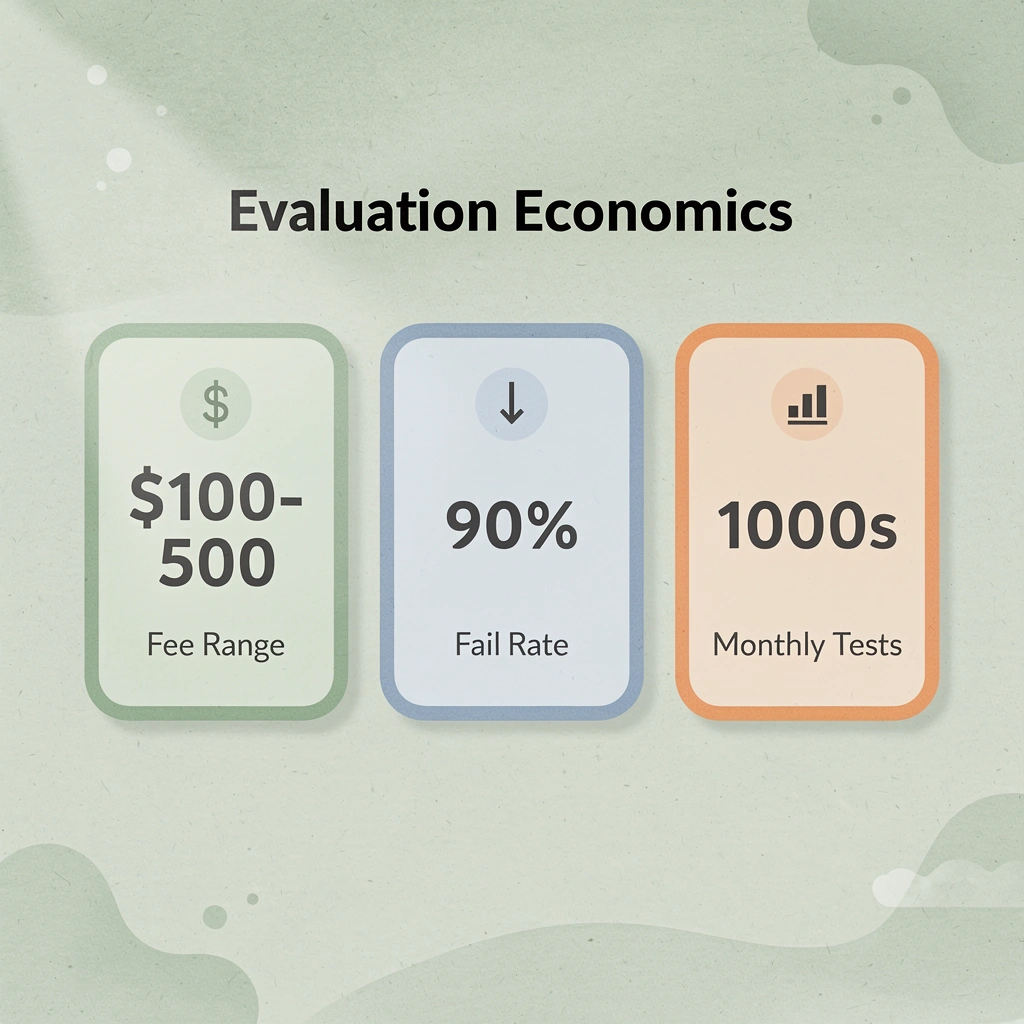
⚠️ Reality Check: The 90% failure rate isn't a bug—it's a feature. This means for every 100 traders paying evaluation fees, only 10 actually reach the profit-sharing stage where the firm shares revenue.
When a trader passes evaluation and makes $100,000 in profits, a typical 80/20 split sends $80,000 to the trader and $20,000 to the firm. The European Financial Review notes that profit splits range from 70% to 90% for traders, but those percentages matter only if traders reach payout. Capital allocation scales based on demonstrated performance. A trader managing a $25,000 account within strict drawdown limits for three months might qualify for $50,000; another month of consistent results could unlock $100,000. Firms expand capital only after traders prove they can control risk.
Challenge fees create a revenue stream for companies independent of trader performance. A trader pays $300 to attempt a two-phase test with a 10% maximum drawdown and 5% daily loss limits. Most fail by violating drawdown caps or overtrading during volatile sessions, then pay again to retry. Firms don't require traders to lose recklessly—they need repeated evaluation attempts, with a small percentage qualifying for funded accounts and generating the profit-sharing revenue that scales the business.
Drawdown caps and daily loss limits are firm survival mechanisms. A trader allocated $50,000 with a 10% maximum drawdown can lose $5,000 before automatic account termination. Daily loss limits of 5% mean a single $2,500 loss triggers suspension. Real-time position monitoring, rule violation flagging, and automated account disabling within seconds prevent catastrophic capital erosion while enabling six-figure allocations. Platforms like Trade Tech Solutions centralize this monitoring across hundreds of traders' accounts, replacing manual oversight with automated rule enforcement that protects the firm's capital at scale.
This is not free access to trading capital. It's a performance-filtered capital allocation that requires proven skill, consistency under pressure, and adherence to risk parameters most traders cannot maintain. The structure works because firms profit whether traders pass or fail evaluations, then profit again when the small percentage who pass generate returns.
Passing the evaluation is only the beginning. What happens after a trader qualifies reveals why so few ever reach their first payout.
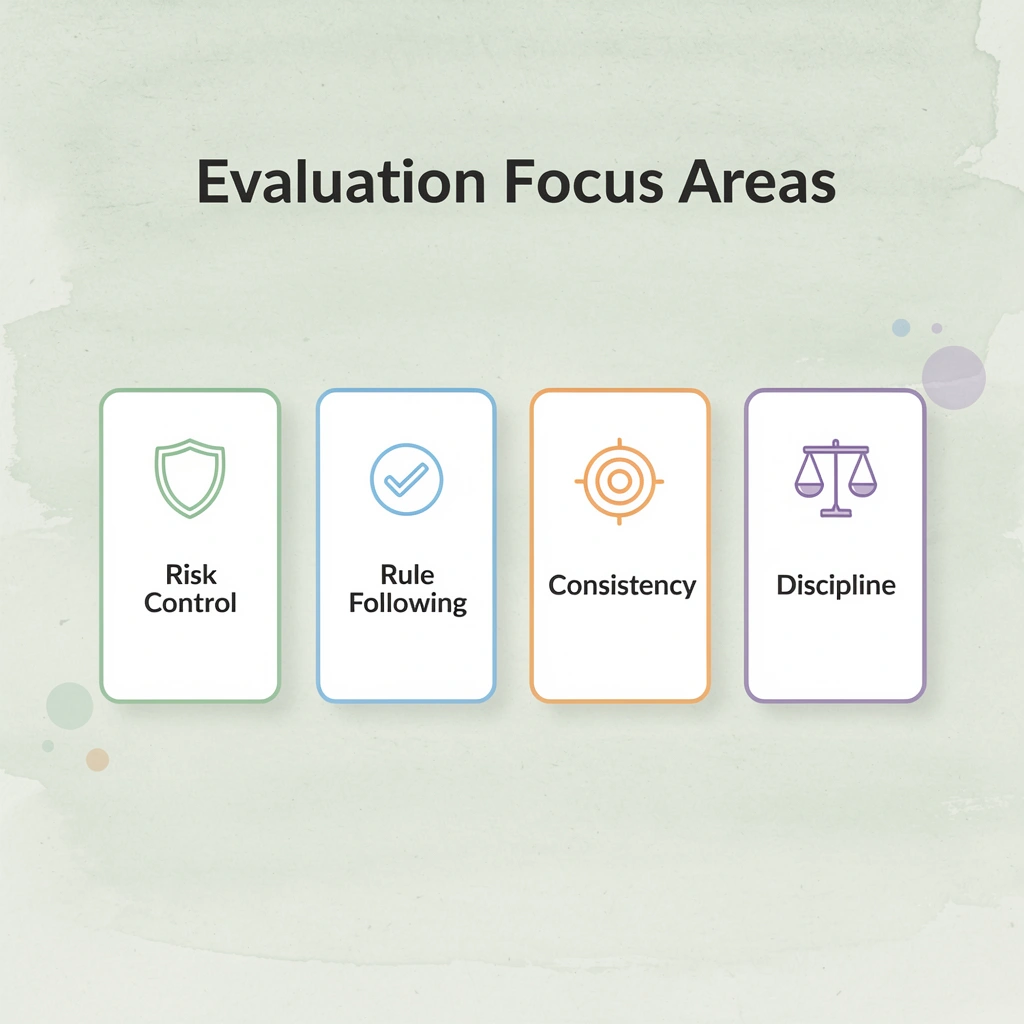
Getting funded in prop trading requires proving you can follow rules, manage risk, and stay consistent under pressure—not predicting market moves. Firms structure evaluations to filter for discipline, not genius.
🎯 Key Point: Prop firms prioritize risk management and rule adherence over profit maximization during evaluations.

"Successful prop traders demonstrate discipline and consistency rather than exceptional market prediction abilities." — Industry Analysis, 2024
💡 Tip: Focus on maintaining drawdown limits and following trading rules rather than chasing high returns during your evaluation period.
The process starts with registration. You pay an entry fee (typically $100 to $500) and choose your challenge parameters: account size, profit target, and drawdown limits. This tests whether you can operate within constraints.
Phase one requires hitting a profit target (often 8-10% of the account balance) while adhering to loss limits. Most challenges set a 10% total drawdown limit and a 5% daily loss cap. Breaching either threshold ends the evaluation immediately with no second chance.
Traders who pass phase one enter verification, which requires a smaller profit target (4-5%) with the same risk limits to prove the first result wasn't luck. Only after clearing both phases does a trader receive a funded account allocation.
The evaluation measures drawdown control, not win rate. A trader who wins 70% of trades fails due to reckless position sizing. The system prioritizes capital preservation over gains.
Being consistent matters more than making money. Companies watch how you reach your goals: steady, step-by-step gains show discipline, while unpredictable ups and downs suggest gambling. One trader failed for three years before passing the two-phase one challenges on the same day. The breakthrough wasn't a better strategy, but understanding that risk management discipline and consistency were being tested, not your ability to predict the market.
How you size your positions reveals much about you as a trader. Traders who use excessive leverage while losing money tend to fail, whereas those who reduce risk when underwater and increase it during winning streaks demonstrate the behavioral control firms seek. The challenge demands systematic discipline, not brilliance.
Taking on too much risk kills more trading accounts than bad strategy does. A trader risks 5% per trade, hits three losses in a row, and triggers the daily drawdown limit before lunch. The account is done.
Inconsistency creates the second failure mode. A trader makes 6% in week one, then gives back 4% in week two, chasing losses. The profit target recedes while the drawdown limit approaches.
Platforms like Trade Tech Solutions automate risk monitoring and phase progression, compressing what once required dedicated compliance teams into real-time automated enforcement.
The challenge structure itself filters aggressively. According to For Traders, prop trading reached a $12B market in 2025, fuelled largely by evaluation fees from traders who never reach funded status.
Passing verification doesn't mean you get unlimited money. Initial funded allocations typically start at $25,000 to $50,000. Traders prove themselves under live conditions with real firm capital at risk. Consistent profitability within risk parameters unlocks larger allocations. Poor risk management, even if profitable in the short term, stalls progression.
The payout structure reveals the final test. Traders must meet the minimum trading-day requirements (often 5-10 days) and maintain profit thresholds before requesting a withdrawal. Some firms process payouts within days; others delay weeks. Verification isn't evaluation—it's entering a relationship where the firm controls capital access, payout timing, and scaling decisions.
Not all prop trading models structure these rules the same way, and the differences determine which traders succeed in which environments.
Prop trading firms work under different models that determine how much capital you can access, how risk is managed, and how you get paid. The model you choose affects how fast you access capital, how much control you retain, and whether your trading style aligns with the firm's risk rules. Most traders choose based on cost or capital size without understanding the operational differences that impact long-term profitability.

🎯 Key Point: The prop trading model you choose will determine your capital access speed, risk parameters, and profit-sharing structure - making it crucial to understand operational differences beyond just initial costs.
"Understanding the operational differences between prop trading models is essential for long-term profitability, as most traders focus only on capital size and costs." — Industry Analysis, 2024
💡 Tip: Before committing to any prop trading firm, evaluate how their specific model aligns with your trading frequency, risk tolerance, and capital growth goals rather than just comparing headline numbers.
This model requires traders to pass multi-phase challenges before accessing firm capital. You pay an evaluation fee (typically $100 to $500), then prove you can hit profit targets while respecting drawdown limits. Once verified, the firm funds your account and splits profits, often 80/20 or 90/10 in your favor. Capital scales as you demonstrate consistency, sometimes reaching $200,000 or more.
The tradeoff is time and repeatability. You might spend weeks or months passing evaluations and paying fees each time you break a rule. But if you're disciplined and learning to manage risk, this model teaches you to trade within boundaries before real money is at stake.
Some firms skip the challenge phase entirely. You pay a higher upfront fee (sometimes $1,000 to $5,000) and gain immediate access to capital, but with stricter risk controls and smaller profit splits.
Drawdown limits tighten, daily loss thresholds drop, and the firm monitors every trade in real time. According to AquaFutures' 2025 analysis of top prop firms, instant funding appeals to experienced traders who value speed over scaling flexibility, but the model penalizes inconsistency faster than evaluation-based programs.
This works if you have a proven strategy and discipline to operate within narrow risk parameters. It fails if you're still experimenting or prone to emotional trading. Most traders breach limits within the first month.
Hybrid models combine evaluation phases with ongoing monthly fees, typically $50–$200 per month for capital access with profit splits that vary by performance. Some firms offer flexible scaling: increase capital allocation by passing internal milestones without restarting evaluations. Others structure it as a membership model, where fees provide access to tools, capital, and community support.
Sustainability depends on whether monthly profits exceed subscription costs. Consistent profitability justifies the model; breakeven or learning phases compound into losses. These models suit traders seeking ongoing access without the pressure of challenges, but require a steady income to offset recurring fees. Platforms like prop firm technology automate billing cycles, track performance milestones, and adjust capital allocations based on real-time risk metrics, replacing manual oversight with automated workflows.
Beginners benefit most from evaluation-based models because the structure enforces discipline before capital is risked. Experienced traders with proven strategies are a good fit for instant funding, where speed matters more than guidance.
Traders investing significant capital might prefer hybrid models that offer flexibility without repeated evaluation fees. Choose based on how you trade, not marketing promises. If your strategy requires wide stop losses or volatile instruments, strict daily loss limits will eliminate you. If you're inconsistent, subscription fees will drain you.
The wrong model burns out traders who could succeed elsewhere, creating a mismatch between how they trade and how the firm measures success.
Understanding prop trading as an idea differs from understanding how prop trading systems enforce the rules. The infrastructure behind evaluation phases, payout workflows, risk controls, and trader dashboards determines whether a firm grows or fails under operational weight. Most traders never see this layer, and most founders underestimate it until manual processes break at 50 traders.
💡 Tip: The difference between a successful prop firm and one that collapses isn't just trading talent — it's the operational infrastructure that can handle growth without breaking under pressure.

"Most founders underestimate operational complexity until manual processes break at 50 traders — by then, it's often too late to rebuild without major disruption." — Industry Analysis, 2024
🎯 Key Point: Trade Tech shows how real prop trading systems are structured in practice, from risk management automation to payout logic and compliance workflows used by operating firms across CFD, crypto, and futures markets. Book a consultation to explore how modern prop firm infrastructure works and what separates scalable operations from unsustainable ones.
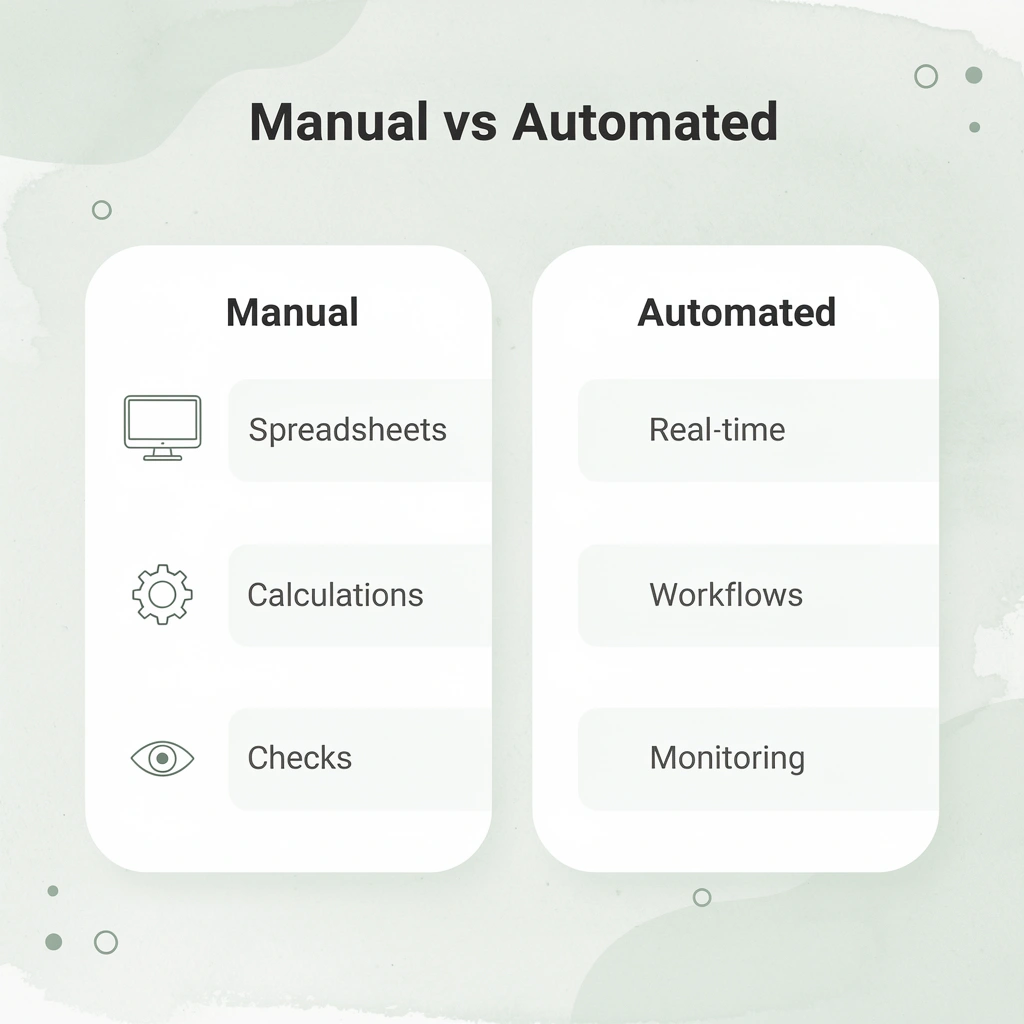
Manual Approach
Daily spreadsheet checks
Automated Infrastructure
Real-time monitoring with instant cutoffs
Manual Approach
Manual calculations
Automated Infrastructure
Automated workflows with compliance checks
Manual Approach
Subjective review
Automated Infrastructure
Data-driven metrics and standardized phases


.png)
