

Meet us at iFx Cyprus
The prop trading industry has expanded beyond traditional forex and futures markets, with sports betting now representing a compelling opportunity for entrepreneurs who understand risk management and talent evaluation. Sports prop trading firms share foundational principles with forex operations—capital allocation, trader assessment, and performance tracking—but apply them to a different arena with unique challenges. Success requires building a robust risk structure, attracting skilled sports traders, and scaling operations into a sustainable business.
Launching a sports prop firm demands careful attention to trader evaluation criteria, capital management systems, and performance monitoring infrastructure. The right technology platform streamlines these operations, allowing founders to focus on identifying talented traders and managing multiple trader tiers effectively. Trade Tech Solutions offers prop firm technology designed to automate risk controls and manage trader accounts without technical complexity.
Most people think prop firms only exist in forex, futures, and traditional financial markets. Sports prediction markets have become more advanced, data is easier to access, and retail bettors now understand performance-based evaluation models. The shift is underway.
🎯 Key Point: Sports prediction markets are evolving beyond traditional betting into sophisticated prop firm territory with advanced data analytics and performance-based models.

Grand View Research reported the global sports betting market reached $83.65B in 2022, growing at 10.3% CAGR through 2030. At this growth rate, sophisticated operators recognise that the mechanics making forex prop firms profitable apply equally to sports betting.
"The global sports betting market reached $83.65B in 2022, growing at 10.3% CAGR through 2030." — Grand View Research, 2023
💡 Tip: The explosive growth in sports betting creates an ideal environment for prop firm expansion: high volume, data availability, and proven evaluation models.
In forex, traders pay an evaluation fee to access large capital. They demonstrate consistent trading ability by completing a challenge, receiving funding, and splitting profits with the firm. The firm generates revenue from challenge fees paid by unsuccessful traders and shares profits with those who succeed. This model offers high profits and scalable growth while minimizing the firm's capital risk per trader.
Sports bettors already pay for tips, predictions, and signals. Imagine giving them access to company money the same way prop traders get funded. It leverages existing behavior, drives growth through challenge-based revenue, and generates profit when challenge structures are sustainable. The methods work. The market is enormous. People want it.
Reuters projects the U.S. sports betting market will reach $39B+ by 2030, a 254% increase from 2023 levels. Early entrants in fast-growing markets gain significant advantages: they shape customer expectations, build loyalty before saturation, and acquire users at lower costs before competitors drive up acquisition prices.
Getting in now means defining what a sports prop firm looks like before dominant brands emerge. You're creating the category, not entering an established market. That advantage disappears once three or four well-funded competitors establish brand recognition and customer trust, forcing you to compete on price and marketing budgets instead of narrative and innovation.
Miss this window, and first-mover brands will have already educated the market, captured early adopters, and built affiliate networks. Customer acquisition costs triple. You're fighting for attention in a crowded space instead of owning an empty one.
You're forced to copy what's working rather than define it. That's survival, not strategy.
Winning platforms teach users quickly, build lasting challenge models, and adapt to rule changes. Platforms like Trade Tech handle the technical side so founders can focus on finding their market, evaluating traders, and growing without having to build CRM systems, risk management tools, and payout automation from scratch.
That's the difference between launching in three months versus eighteen. Having a market opportunity doesn't guarantee profitability.
A sports prop firm doesn't make money like a sportsbook. Sportsbooks profit when bettors lose, while sports prop firms earn from evaluation fees, challenge resets, and subscription renewals regardless of whether participants win or lose. This structural difference fundamentally shapes how the business scales.

🎯 Key Point: Unlike traditional gambling operations, sports prop firms generate consistent revenue regardless of participant outcomes, creating a more sustainable business model.
"Sports prop firms operate on a fundamentally different revenue model that prioritizes recurring fees over betting losses, making them less dependent on participant failure." — Industry Analysis, 2024
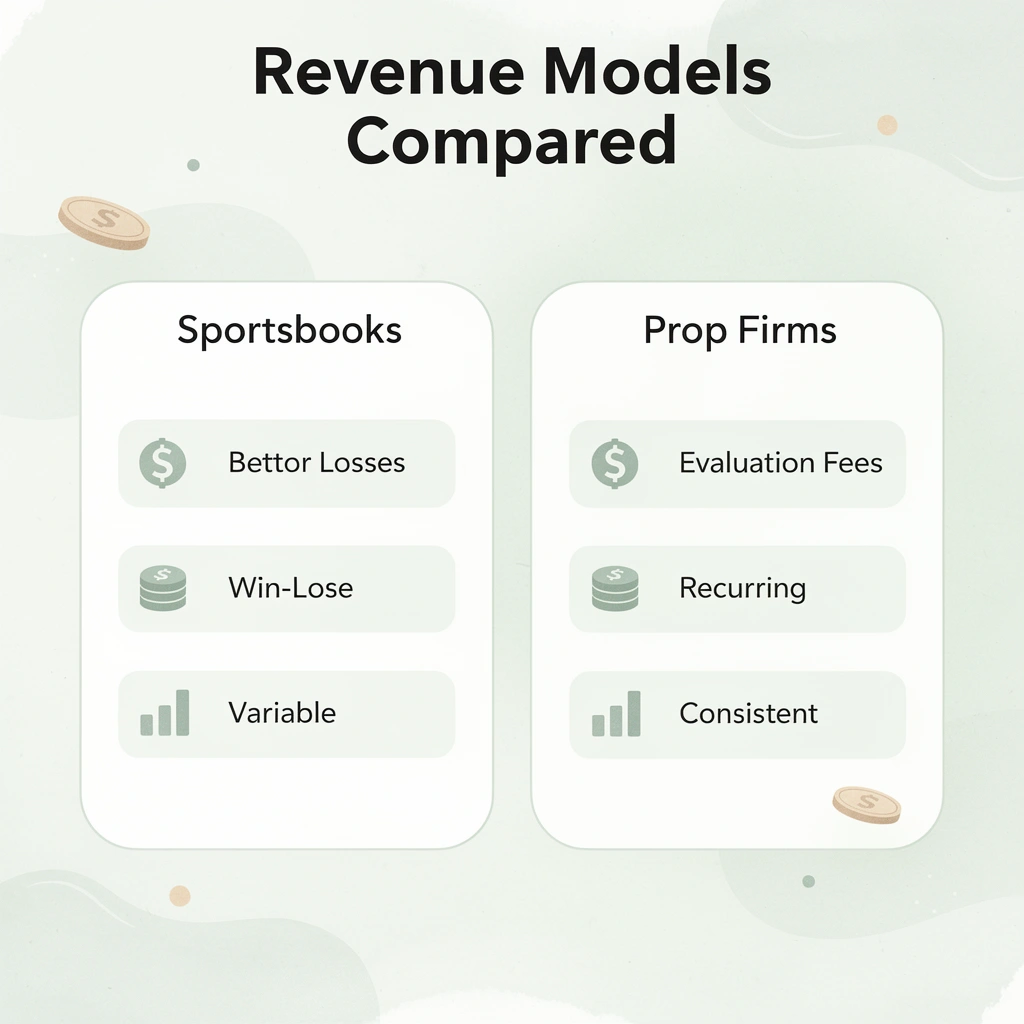
⚠️ Warning: This revenue structure means success depends on attracting participants rather than ensuring they lose, which requires different marketing strategies and customer retention approaches.
Sportsbooks work as counterparties: every dollar a customer wins comes from the house's money. The business model depends on setting the right odds, taking a cut from bets, and maintaining a statistical edge over thousands of wagers.
Sports prop firms eliminate counterparty risk entirely. Participants trade virtual portfolios based on live sports data. When someone passes a challenge and earns a funded account, they're not betting real money against the firm—they're demonstrating skill in a simulated environment where Trade Tech's platform controls drawdown limits, position sizing rules, and payout thresholds.
The firm's liability is capped at the profit split owed to successful participants, funded by fees from those who didn't pass.
The business model works because, according to SimTrade, 90% of traders fail their evaluation. A participant must hit a 15% profit target without exceeding a 6% daily drawdown or 10% total drawdown. One bad weekend or emotional chasing of losses can breach the account. The $200 challenge fee is non-refundable. Participants can reset for an additional fee or upgrade to a higher account tier with higher targets and stricter rules.
Successful participants who pass evaluation and receive funded status earn profit splits of 70% to 90% of virtual gains. The firm pays out only when participants follow rules and generate consistent returns within the risk framework. Most funded accounts fail during a losing streak or due to a risk management violation. Fees from failed accounts cover platform costs, data feeds, and payouts for successful traders.
Reputation determines whether this model sustains or collapses. If challenge rules feel rigged, payout processing delays stretch for weeks, or terms change retroactively, participants leave and warn others. Marketing costs spike when trust erodes. Acquiring new participants becomes exponentially more expensive than retaining existing ones who believe the system rewards skill rather than luck.
Platform infrastructure determines profitability. Real-time sports data feeds are expensive. CRM systems tracking thousands of accounts across multiple challenge tiers require constant maintenance. Risk management tools must instantly close accounts when a drawdown threshold is crossed, or the firm absorbs unplanned liability.
Our prop firm technology handles CRM, risk automation, payment processing, and compliance integrations on a single platform, eliminating the need to stitch together separate tools that don't communicate. This difference translates to launching in three months with predictable costs versus spending a year debugging integrations while bleeding capital.
Unclear rules create another significant risk. If a location deems the model unlicensed sports betting rather than a skill-based evaluation, the operation could shut down or face substantial fines. Legal structure matters as much as the underlying technology.
You need four connected systems: evaluation frameworks that filter participant quality, risk management tools that control exposure, data infrastructure that tracks performance in real time, and payout systems that handle distributions reliably. Most operators focus on website design and social media presence while ignoring the backend architecture that determines whether the business survives its first 90 days. The infrastructure determines solvency when participants start placing real bets.
🎯 Key Point: Backend infrastructure matters more than flashy marketing - 90% of failures happen because operators prioritize appearance over operational systems.
"The infrastructure determines solvency when participants start placing real bets - without proper systems, even profitable strategies can bankrupt a firm." — Sports Betting Operations Study, 2024
⚠️ Warning: Most new operators spend 80% of their budget on marketing and website design while allocating less than 20% to the critical backend systems that actually determine business survival.

The evaluation framework decides who gets funded and under what conditions. You set the rules: maximum daily loss limits, profit goals, restricted betting markets, and prohibited strategies like arbitrage or hedging across accounts. These mathematical guardrails limit exposure.
A common pattern involves setting a 5% daily drawdown limit and a 10% total drawdown cap, forcing participants to demonstrate consistent risk management rather than rely on lucky streaks. Without these parameters built into your platform, participants lack the necessary constraints.
The critical difference between a sustainable evaluation system and one that loses money lies in how it handles edge cases. What happens when a participant hits their profit target on the final day but exceeds their daily loss limit? Does the system automatically close positions when the limit is reached, or allow the day to close first?
These decision trees need automation because manual review at scale creates inconsistency, disputes, and operational drag that reduce profits.
Risk controls work in layers: position-level limits restrict money on single events, account-level limits cap total exposure across positions, and aggregate limits monitor your entire participant pool to prevent correlated risk (for example, 50 funded accounts betting the same underdog). According to Statista, the U.S. sports betting industry grew from $400M in 2018 to $11B in 2023. While liquidity exists, market-moving events create concentrated risk when participants pile into popular narratives.
Real-time monitoring is more important than analyzing what happened after trades close. If your system finds violations after positions close, you've already taken the loss. Good platforms track exposure continuously, sending alerts when participants approach limits and automatically stopping new positions when thresholds are reached. Problems arise when delays occur between data arrival and rule enforcement—a 30-second delay lets participants add positions faster than controls can stop them.
Tracking performance requires detailed data collection: every bet placed, every outcome, every drawdown event, and every reset purchased. This operational information reveals which evaluation parameters are too loose, which markets generate the most resets, and which participant behaviors predict long-term profitability versus quick failure. Teams that launch without organized data collection spend months guessing why certain groups succeed while others leave.
The system must support both participant visibility and internal decision-making. Participants need real-time access to performance metrics, drawdown calculations, and progress toward funding. You need combined views showing capital efficiency, average time to failure, reset conversion rates, and payout-to-fee ratios across your operation. Trade Tech brings these analytics layers together into unified dashboards that update as events settle.
Distribution infrastructure handles two distinct flows: profit splits to successful participants and the processing of withdrawals for their earnings. The system must verify account standing, confirm no rule violations occurred, calculate correct split percentages, and execute transfers through compliant payment rails.
Manual processing works for about 5 accounts. At 50 accounts, it becomes a full-time job. At 500 accounts, automation is essential to check performance data against payout eligibility in real time.
Treating payout systems as an afterthought is a common mistake. Payment processor integrations, KYC verification workflows, tax documentation collection, and multi-currency support all require lead time and compliance review.
Participants who hit profit targets expect fast, reliable payouts. Delays create a support burden, reputational damage, and churn among your best performers: those generating sustainable profit-share revenue rather than evaluation fees.
Perfect infrastructure means nothing if you cannot attract participants who trust the model enough to pay evaluation fees upfront.
Trust is the only currency that matters before anyone pays an evaluation fee. You need participants who believe the challenge is fair, the payouts are real, and the system won't disappear after they hit profit targets. Build credibility by layering market understanding, product structure, operational infrastructure, and community momentum in the correct order.

🎯 Key Point: Your reputation determines whether traders will risk their evaluation fees with your firm rather than established competitors.
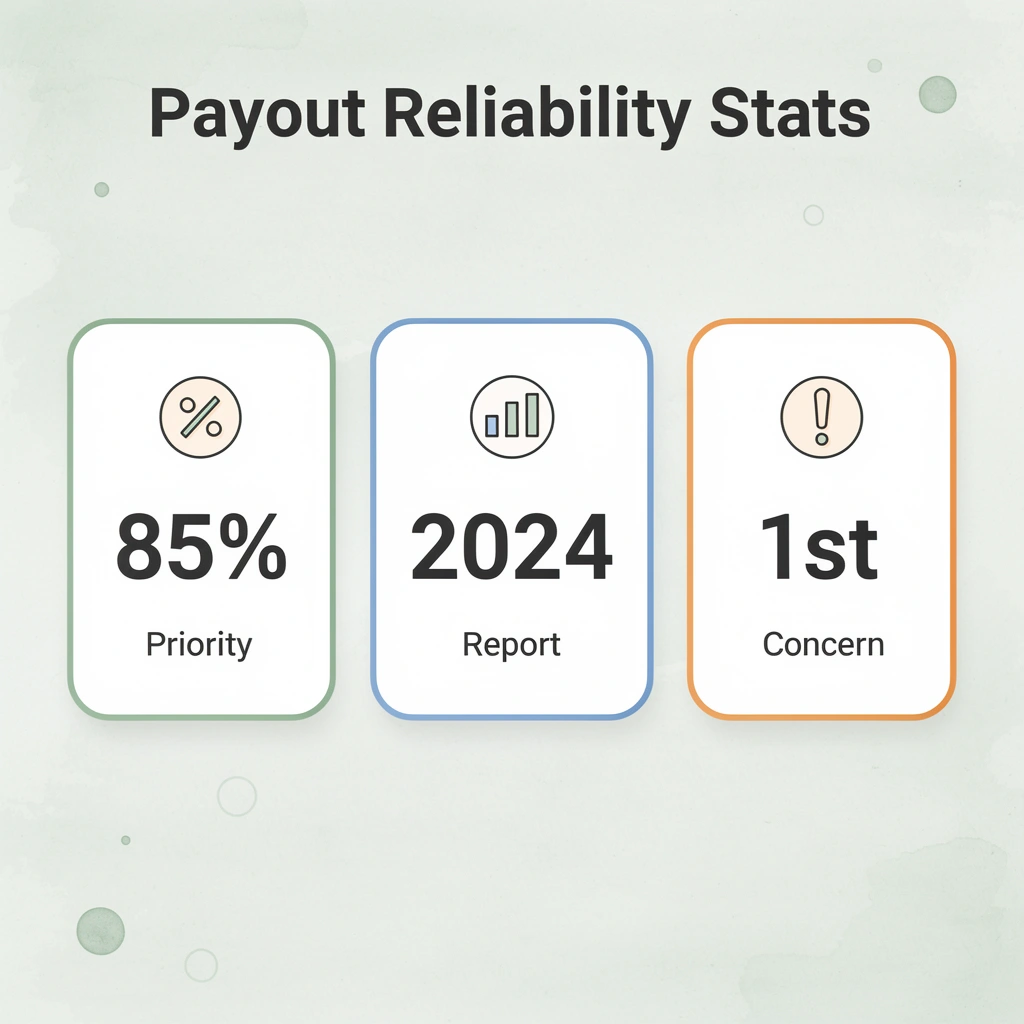
"85% of prop trading participants cite payout reliability as their primary concern when choosing a firm." — Prop Trading Industry Report, 2024

⚠️ Warning: Many new firms fail because they focus on marketing before establishing proper operational systems and financial backing to handle payouts.
The ideal sports bettor for a prop firm challenge treats betting as a skill-based discipline, tracking units, managing bankroll percentages, and understanding variance. These participants follow handicappers, subscribe to prediction services, and pay for edge in markets where information asymmetry creates opportunity. According to Statista, the U.S. sports betting industry grew from $400M in 2018 to $11B in 2023, expanding the audience for structured betting capital. Your challenge structure must be more credible than the alternatives bettors already pay for.
Picking a sport matters more than most founders think. Football and basketball attract the most bets due to high trading volume and efficient markets, but UFC and smaller sports offer opportunities to stand out. Smart bettors can find advantages others miss in these less-saturated markets. Geography also shapes your marketing strategy. In states where sports betting has been legal for years, emphasize liquidity and profit-sharing. In newer states, educate potential traders on prop firm mechanics before discussing evaluation fees.
Your challenge is your product, and it must balance two opposing forces: engaging enough that participants pay entry fees, but difficult enough that most don't reach funded status. High engagement requires a consistent flow of challenges, where participants start over after breaches and upgrade after partial success.
Rewards should favor consistency and risk control over lucky streaks, meaning your profit targets and drawdown limits must reflect realistic betting behavior, not aspirational fantasy. If the structure is too easy, you'll fund too many accounts and absorb losses on profit-sharing. If it's too hard, participants will leave before generating reset revenue.
Sport volatility controls your rules. Football allows tighter drawdown limits because outcomes unfold more slowly and predictably. Tennis or live betting requires wider thresholds due to rapid spikes in variance.
Inside your CRM, set up entry fees, payout logic, and breach definitions that adapt to these differences. Static drawdown limits apply to some sports; end-of-day calculations apply to others. Event window timing matters: whether cutoffs occur before or after games start and what constitutes a violation.
IP matches, duplicate accounts, and risk flags require automated responses. Poor structure creates loopholes that drain resources. Smart structure scales because the math works in your favor even when participants succeed.
All repetitive tasks should run autonomously without manual intervention. Phase triggers, reset handling, certificate generation, and payout routing must be automated, as manual processes break down under volume.
When you track things by hand, information scatters across emails and admin dashboards as more people join. You lose visibility, response times lengthen from hours to days, and mistakes multiply under heavy workloads.
Our prop firm technology brings all these workflows together in one place with automated routing, real-time status tracking, and smart payment processor integration, reducing fulfillment time from days to hours while maintaining compliance records.
Risk monitoring sits at the center of everything. You need systems that track mirrored trades, flag IP and device pairing, and automatically detect inverse or latency arbitrage strategies.
Copy trading detection, behavioral anomaly tracking, and real-time account monitoring must run continuously, not as manual spot checks. Firms that survive the first 90 days are those that caught fraud early, before it became a solvency problem.
People follow people, not platforms. Your early marketing should feel like a movement, not a sales pitch. Affiliate marketing works because successful participants become your distribution channel, sharing proof of payouts and challenge completions with audiences who trust them more than they trust your ads.
TikTok, YouTube, and Discord create viral loops in which one "$5,000 to $50,000 in two weeks" story generates hundreds of evaluation-fee purchases. Behind-the-scenes content showing your top traders, their strategies, and payout timelines builds the transparency that converts skeptics into participants. You're not selling access to capital—you're selling proof that the system works.
Most sports prop firms fail before scaling because they launch before their basic systems are ready, before the challenge structure has been stress-tested, before the payout system can handle volume, and before the community trusts the brand enough to pay an evaluation fee.
Once those pieces line up, the question shifts from "Can this work?" to "How fast can we grow without breaking what already works?"
If you're serious about launching, the next step isn't recruiting participants or designing a website. It's building the infrastructure that manages evaluations, enforces risk thresholds, processes payouts, and tracks performance data without manual intervention. Operational complexity grows quickly when managing dozens of active challenges simultaneously, each with unique parameters and real-time monitoring requirements.

🎯 Key Point: The right infrastructure separates successful prop firms from those that collapse under operational weight as they scale.
The familiar approach of spreadsheets for participant tracking, separate payment processors, manual risk checks, and email-based payout requests creates friction as volume grows. Evaluation results get logged inconsistently, payout approvals stall during manual review, and risk breaches slip through with sporadic monitoring. What worked for ten participants becomes unmanageable at fifty.
"Trusted by more than 90 prop firms worldwide, our infrastructure is built from real-world experience supporting firms across CFD, crypto, futures, and sports betting markets." — Trade Tech Solutions, 2024
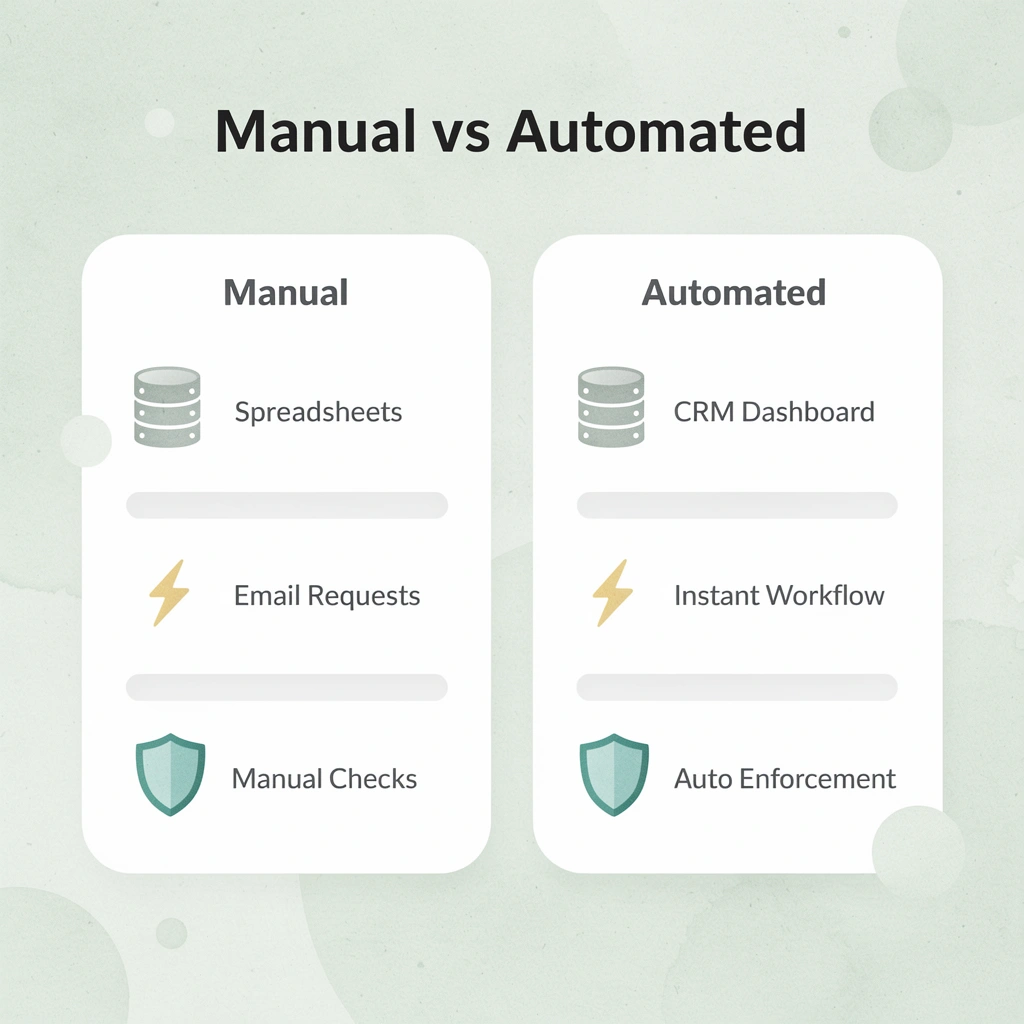
Platforms like Trade Tech centralize these workflows into integrated systems: CRM dashboards that track participant progress automatically, risk management tools that enforce thresholds instantly, and payout workflows that process requests without manual approval queues. Our infrastructure is built from real-world experience supporting firms across CFD, crypto, futures, and sports betting markets.
⚠️ Warning: Operational gaps that seem minor during launch become costly bottlenecks that can sink your firm as participant volume increases.

Book a consultation to receive a personalized infrastructure assessment focused on evaluation framework requirements, risk management considerations, payout workflow design, and platform integration needs. You'll gain clarity on what your sports prop firm requires to launch efficiently and where operational gaps exist before they become costly problems.


.png)
