

Meet us at iFx Cyprus
The prop trading industry has exploded in recent years, creating opportunities for entrepreneurs who understand financial markets and risk management. Starting a prop trading firm might seem attractive with its potential for substantial profits, but several factors determine whether it remains viable in 2026. Success depends on evaluating real market demand, assessing genuine risks, and understanding what separates thriving firms from those that close within their first year.
Launching a successful operation requires more than trading expertise and capital. Founders need robust infrastructure, effective trader evaluation systems, and sound risk management frameworks. Trade Tech Solutions offers prop firm technology designed for entrepreneurs focused on building sustainable businesses rather than chasing quick wins.
Most people think starting a prop trading firm requires trading capital and a profitable strategy. This is wrong. The growth in prop firm launches—2,000+ firms now operating worldwide in a $20+ billion industry—stems from brokerage leaders who've discovered that retail prop trading operates on a different business model.

🎯 Key Point: The biggest misconception about prop trading firms is that you need substantial trading capital upfront. In reality, successful prop firms focus on risk-management technology and trader evaluation systems rather than on massive capital reserves.
"The prop trading industry has grown to over $20 billion globally, with 2,000+ active firms, proving this isn't just a niche market but a fundamental shift in how trading businesses operate." — Industry Analysis, 2024

⚠️ Warning: Don't fall into the traditional thinking trap. Modern prop firms succeed by leveraging technology platforms and trader assessment models, not by having the largest trading accounts. The real barrier to entry is understanding regulatory compliance and risk management systems.
The 3,000%+ surge in "prop trading" search interest between 2022 and 2026 stems from social media spreading a specific narrative: skilled traders obtaining "funded accounts" and escaping financial hardship through payouts. Each screenshot of a five-figure payout reinforces the belief that prop firms deploy real capital to trade alongside talented traders, much like hedge funds. The language itself is misleading: when firms advertise "funded opportunities" and "access to institutional capital," traders naturally assume they'll trade with the firm's money once they prove themselves.
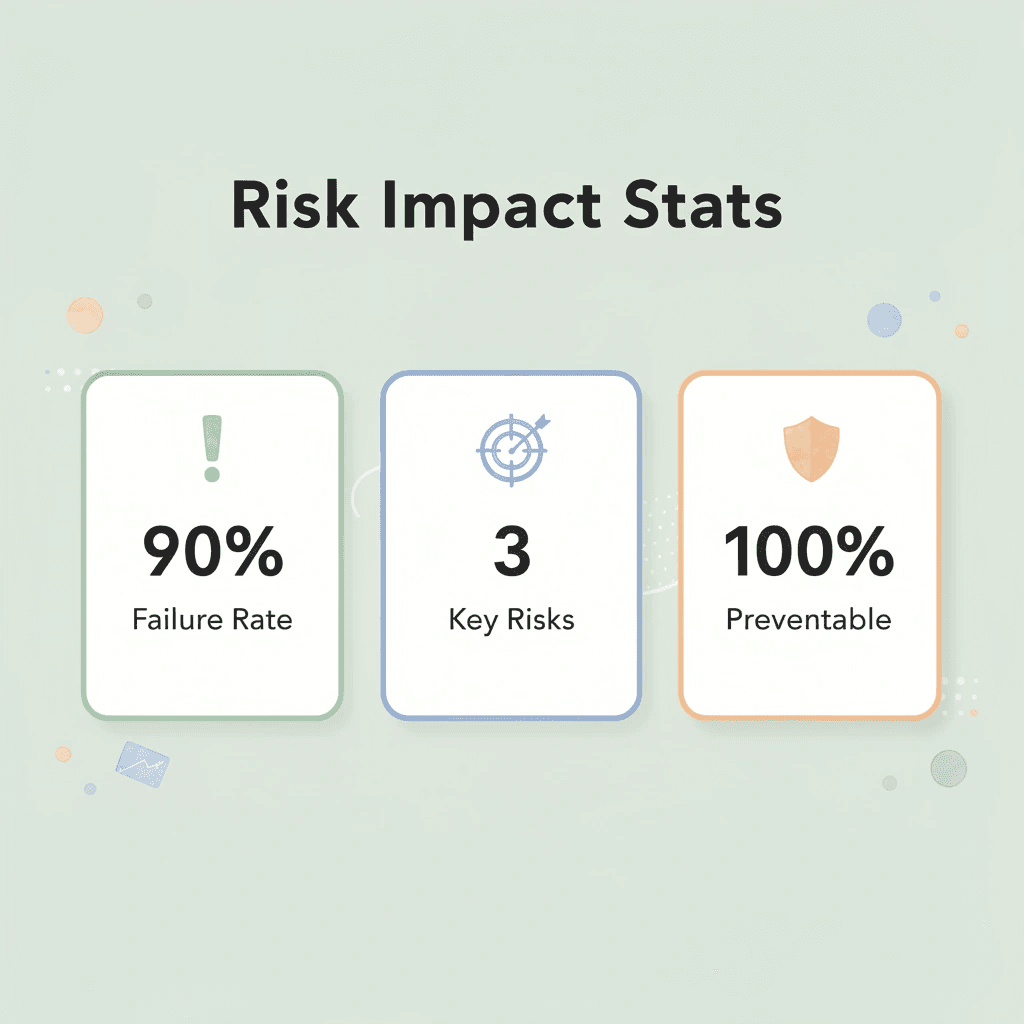
The confusion between prop trading firms and traditional institutional prop desks runs deep. At investment banks, proprietary trading meant using the firm's money through skilled traders who made returns from market movements. Retail prop trading borrowed the terminology but built something entirely different. According to EarnForex's 2025 analysis, 90% of prop firms fail within their first year, primarily due to misunderstanding the business model rather than trading losses.
Prop firms make money from fees and subscriptions that traders pay to access evaluation challenges, not from trader performance. All initial trades are executed on demo accounts. After passing challenges and receiving a "funded account," traders don't trade directly with the firm's money. Instead, the firm can copy its trades if desired and retain complete control over capital allocation and payout timing.
Money comes in based on how many traders sign up for challenges. A trader might spend $8,000 on 200 evaluation attempts before getting a funded account—pure revenue before any capital allocation. The firm faces minimal risk because capital remains separate and trade copying occurs only at the firm's discretion.
Retail prop trading remains unregulated because firms don't hold client funds or securities. They operate in a regulatory loophole that avoids the oversight CFD brokers face and the compliance requirements governing asset management. For brokerage leaders, the operational question is which regulatory path fits their jurisdiction and risk appetite.
When traders discover their accounts have been closed before payout, the reality becomes apparent. Risk management at the firm level operates on fundamentally different logic from individual trading discipline. Firms use fraud detection systems that flag shared payment methods across accounts, monitor IP addresses, track identity verification patterns, and aggregate risk across thousands of evaluation accounts simultaneously.
Traders say that rule violations are ignored during evaluation phases but result in immediate account termination when payout requests come in. This is systematic risk management for capital-preservation events. The firm's business model depends on collecting evaluation fees while maintaining discretionary control over whether to deploy capital by copying the positions of funded traders.
For aspiring prop firm founders, this creates operational challenges beyond "having a profitable trading strategy." You need integrated tech stacks that handle trader onboarding, evaluation-phase management, fraud detection across payment systems, and discretionary trade-copying infrastructure. You must decide how much capital to set aside before a single funded trade goes live—not for direct deployment to traders, but to maintain operational capacity for trade copying when needed.
Platforms like Trade Tech handle these infrastructure challenges: CRM systems for managing thousands of evaluation accounts; risk management tools that aggregate exposure across copied positions; and payment processing integrated with 50+ processors, with built-in fraud detection. Our technology lets firms focus on evaluation design and capital allocation instead of building backend infrastructure from scratch. Understanding the business model is only the first step; the harder question is how these firms structure their revenue and why that structure determines how they operate.
A prop trading firm provides risk capital to traders through a structured evaluation system rather than client deposits or brokerage services. Revenue comes from evaluation fees paid by aspiring traders and profit splits with successfully funded traders. Unlike traditional hedge funds or brokerages, prop firms profit by selecting high-performing traders while controlling downside exposure through strict risk parameters.

🎯 Key Point: Prop firms operate on a fundamentally different business model than traditional financial institutions - they're essentially talent scouts with capital, not money managers.
"Proprietary trading firms generate revenue through a combination of evaluation fees and profit-sharing arrangements, creating a sustainable business model that aligns trader success with firm profitability." — Financial Industry Analysis, 2024

⚠️ Warning: Many traders mistakenly believe prop firms are just glorified brokers - understanding their actual revenue model is critical before joining any evaluation program.
Traders pay an upfront evaluation fee (typically $100 to $500) to prove their trading discipline under simulated market conditions. According to DailyForex, 90% of traders fail the evaluation phase, allowing the firm to collect fees without deploying its own capital. The 10% who pass gain access to firm capital, usually between $10,000 and $200,000, with profit splits ranging from 50% to 80% in the trader's favor, as reported by the European Financial Review.
This creates a self-funding loop: evaluation fees from unsuccessful traders help pay for capital for successful ones. When funded traders make profits, the firm takes its share percentage. When traders hit set loss limits (typically a 5-10% daily drawdown or a 10-12% total drawdown), accounts close and capital exposure ends. The evaluation fee pool typically exceeds total capital deployment costs.
Hedge funds collect money from qualified investors and charge management fees (usually 2% annually) plus performance fees (typically 20% of profits above a benchmark). They comply with securities regulations, file detailed reports, and bear fiduciary responsibility for client assets. Prop firms use only their own money, charge no management fees to traders, and bear no legal responsibility to traders since traders aren't clients. The relationship resembles employment: traders gain access to capital in exchange for demonstrating skill and adhering to risk rules.
Brokerages make money through spreads, commissions, and payment for order flow by executing trades for clients. They profit regardless of client outcomes. Prop firms have opposite incentives: they need traders to succeed because ongoing profitability generates continuing profit splits, while losses close accounts. The evaluation model filters for discipline before allocating capital, reducing the massive drawdowns that would deplete firm resources.
Most prop firm operators aren't exceptional traders themselves. They're business builders who understand that scalability comes from systems, not individual performance. Platforms like prop firm technology handle operational complexity: customizable evaluation rules, automated risk monitoring across thousands of accounts, real-time drawdown tracking, and integration with payment processors for global fee collection. Our Trade Tech platform streamlines these functions, enabling firms to scale efficiently without proportional increases in overhead.
Without this infrastructure, firms would need huge teams to manually monitor trader compliance, process payouts, and enforce risk limits. The technology compresses what once required 20 people into automated workflows, enabling a small team to oversee hundreds or thousands of active evaluations simultaneously.
Companies that fail misunderstand this principle. They assume trading expertise translates to business success, but operational precision matters more. If your risk system miscalculates a drawdown by even 1%, you might fund a trader who should have been cut, exposing capital to uncontrolled losses.
If payment processing can't handle chargebacks or multi-currency settlements efficiently, cash flow breaks down as evaluation volume grows. The business scales only when every step from signup to payout runs without manual intervention; the technology stack determines growth capacity more than marketing or trader acquisition. But knowing how the model works doesn't tell you how to build one from the ground up.
Your legal structure determines how much money you need to start, what rules you have to follow, and whether banks and other financial partners will work with you. Most founders choose between operating without a license (which costs less to start) or getting a full license (which gives you more credibility with banks and money providers). This choice affects your timeline and budget before you start writing code.

🎯 Key Point: The licensing decision is your most critical early choice - it impacts startup costs, regulatory compliance, banking relationships, and investor confidence throughout your firm's lifecycle.
"The legal framework you choose at the beginning will determine 90% of your operational constraints and funding opportunities for the first 3-5 years of your prop trading firm." — Financial Services Regulatory Report, 2024

⚠️ Warning: Many new founders underestimate the time investment required for licensing - the process can take 6-18 months and requires significant capital reserves to maintain compliance during the application period.
Keep your operational capital separate from your trading reserves before allocating funds to traders. Operational capital covers salaries, platform fees, and legal costs, while trading reserves fund trader allocations and payouts. According to Leverate's 2024 analysis, 70% of prop firms fail within their first year due to cash flow collapse when these pools mix. A firm unable to pay traders after one bad trading week loses credibility permanently.
Plan to set aside at least 3 months of operating expenses before allocating additional funds to traders. If you spend $15,000 per month, keep $45,000 in your operating account untouched. Allocate different account sizes based on trading experience: new traders receive smaller accounts with stricter loss limits, while proven traders receive larger accounts with greater freedom. This approach ensures risk aligns with demonstrated capability.
Your regulatory path sets your capital floor. Unregulated challenge-based firms can launch with $25,000 to $50,000, covering technology, legal setup, and reserves. Licensed entities face higher requirements: EU firms under MiFID need a minimum of €75,000 for Class 3 operations, while U.S. broker-dealers require $250,000 under SEC Rule 15c3-1. Licensing costs more upfront but enables institutional liquidity partnerships and outside capital.
Your evaluation structure filters risk before real capital exposure. The two-phase challenge requires an 8-10% profit target in Phase 1, followed by verification with a lower target in Phase 2, all within strict drawdown limits over 30 to 60 days. This generates predictable revenue from evaluation fees while identifying traders who manage risk under pressure. Industry pass rates range from 5% to 15%, making evaluation fees your primary income stream until funded traders generate profit splits.
Instant funding models skip the evaluation process entirely. Traders pay a higher upfront fee for immediate live capital but receive smaller account sizes and tighter risk parameters. This widens the applicant pool and accelerates onboarding, though it delivers lower trader quality and higher firm risk.
Hybrid models combine both paths, steering applicants by trading history or offering subscription-based access where traders pay monthly fees to maintain their capital. Subscriptions add recurring revenue while maintaining risk control through ongoing performance requirements.
Clear documentation prevents refund disputes. Unclear evaluation guidelines invite traders to claim that the rules were unclear after failing, leading to revenue loss and operational problems. Document profit targets, drawdown limits, prohibited strategies, and payout mechanics in writing before enrollment. Transparency builds trust that keeps traders returning for larger accounts after success.
Your platform determines how well things run, and performance determines whether people stay. Traders who get poor fills or wide spreads will leave regardless of back office quality.
Modern prop firms run on MT4, MT5, or cTrader, and connect to liquidity providers via middleware bridges that route orders and return execution data to the platform. The bridge must support every asset class you offer and maintain uptime guarantees, since even a few hundred milliseconds of market-data lag can trigger requotes that traders notice immediately.
Combined liquidity feeds bring together pricing from multiple top-tier banks and market makers, with your execution engine automatically selecting the best price. If one provider widens, spreads, or goes offline, others fill the gap. Single-dealer access launches faster but shows traders only one provider's pricing and concentrates counterparty risk. For tight budgets, a single dealer gets you to market sooner. Once trader retention becomes the priority, migrating to combined feeds justifies the infrastructure effort.
The CRM tracks evaluation progress, communication history, and payout records. KYC workflows handle identity verification, AML checks, and sanctions screening before traders receive capital. Payment processing reconciles withdrawals against balances and profit splits in real time.
When these systems run separately, your operations team manually copies data between platforms—work that compounds as trader count scales. Our prop firm technology integrates CRM, KYC, payment processing, and risk management in a single dashboard, compressing onboarding cycles and eliminating reconciliation errors that destroy trader trust.
Lock in your drawdown and leverage rules before bringing on your first trader. Standard industry limits set a daily drawdown of 2–5% of allocated capital and a maximum total drawdown of 5–10% before account suspension. Most firms start traders at 3:1 leverage, adjusting upward based on performance or market conditions. Position sizing caps typically limit a single position to 10–15% of allocated capital, protecting firm capital and setting clear expectations.
Enforcement must be automated. Real-time trade mirroring, account grouping for scaling tiers, order aggregation, and exposure analysis need to run systematically. Auto-suspension on drawdown breaches prevents individual trader losses from cascading into firm capital erosion. Dashboard alerts for risky behavior enable proactive intervention before breaches occur.
Set absolute daily loss limits ranging from $500 to $5,000 depending on account size. Once a trader hits that limit, the system closes all open positions and locks the account until the next session. High-frequency strategies require faster response times for these controls because standard enforcement mechanisms may be too slow. Knowing how to build the infrastructure, however, doesn't prepare you for what breaks it.
Running a prop trading firm means managing risks beyond market direction. Trader moral hazard, capital drawdown exposure, and evaluation system failures kill more firms than bad trades. The difference between surviving and joining the 90% that collapse is building risk architecture before you need it.

🔑 Key Risk Factors: The most critical threats to prop firms aren't market-related but operational failures that compound over time.
"90% of prop trading firms collapse due to risk architecture failures rather than market losses." — Industry Analysis, 2024

Risk Categories, Failure Impact & Prevention Priority
⚠️ Warning: Most firms focus on trading performance while ignoring the operational risks that actually determine long-term survival.
When traders risk money they didn't deposit, the incentives break. A trader who paid $300 for evaluation access but controls a $100,000 funded account faces unequal consequences: if they blow the account, they lose access and pay another evaluation fee; if they hit a big win, they keep 70-80% of the profit. That structure creates over-risking pressure that no trading skill assessment can predict.
According to ProFunded Blog's 2024 analysis, 90% of traders fail prop firm challenges due to overtrading and poor risk management. Once funded, traders feel pressure to force trades to meet targets, particularly in Phase 2 evaluations where a single bad week can breach drawdown limits unrelated to strategy quality. The evaluation system itself becomes the obstacle.
Preventing large losses requires real-time automated position limits tied to account equity. If your daily loss limit is $2,000, the system should close positions the moment that threshold is breached, not wait for end-of-day reconciliation. Manual checks arrive too late during volatile news events.
Most new companies don't set aside enough money for payouts. They assume evaluation fees will cover the profits that funded traders earn, but the math falls apart when three skilled traders hit their monthly targets simultaneously. Suddenly, you owe $15,000 in payouts while your evaluation pipeline generated only $8,000 that month. Using operational funds to cover the gap causes cash flow to collapse within weeks.
Multi-phase evaluation structures worsen this exposure by creating multiple chances to lose money and multiplying capital risk with each trader cycle. Firms attract high trading volumes through low pricing, but the structure ensures that most traders never reach funded status, avoiding capital deployment while maximizing reset fee collection.
Separation solves this problem. Keep three months of operating expenses in a reserve account that trader payouts never touch. Your trading capital pool should be sufficient to cover 30% of your funded trader base while also achieving maximum monthly profit. If you have 50 funded accounts at $100,000 each with 10% monthly targets, you need $150,000 liquid to survive a strong month.
Evaluation systems fail when they filter traders based on statistical probability rather than skill. A 2-step model with loose drawdown rules repeated across multiple phases doesn't demonstrate consistency; it increases the likelihood of breaching regardless of trading quality. If your risk controls require multiple attempts to validate competency, your controls are the problem.
It works better to have stricter rules in a single, strong evaluation phase than to have looser rules repeated twice. If a trader can reach profit goals while staying within a 5% daily drawdown and 8% total drawdown in one phase, that should suffice. Adding a second phase with slightly different goals increases the chance that market changes, not trader mistakes, cause failure.
Platforms like prop firm technology combine enforcement of evaluation rules with automated breach detection and customizable risk parameters, enabling real-time position tracking rather than manual monitoring. Our Trade Tech system reduces dispute tickets by making drawdown calculations clear and consistent, rather than leaving them subject to end-of-day interpretation.
Traders notice bad execution immediately and share it publicly. If your liquidity setup widens spreads during NFP or FOMC announcements, funded traders will screenshot slippage, post it on social media, and warn others to avoid your platform. Single-dealer arrangements appear cost-effective but expose you to execution risk that grows with trader activity. When twenty traders try to exit EUR/USD simultaneously during a rate decision, your liquidity provider either handles it smoothly or doesn't.
Test how well your system works under stress before using real money. Run tests in which multiple accounts simultaneously send conflicting orders, such as during news events with high trading activity. If spreads exceed 2-3 pips on major pairs or orders take more than 100 milliseconds to fill, your system isn't ready for real money. Knowing how to build risk controls doesn't prepare you for the design decisions that determine whether traders stay or leave after their first payout.
The infrastructure you build before your first trader receives capital determines whether your firm survives its first year or falls apart from growth. Most prop trading firms treat design as a tooling problem, selecting platforms and connecting APIs without mapping how risk flows through their system. The result is a patchwork of disconnected tools requiring manual oversight, which creates operational bottlenecks that prevent scaling.

🎯 Key Point: Map every decision point where risk enters or compounds throughout your trader lifecycle—from evaluation to funding to payout.
Start by defining how traders move through your system from evaluation to funding to payout. Map every decision point where risk enters or compounds: when a trader passes evaluation, when they receive additional capital after hitting profit targets, when drawdown limits trigger account restrictions, when payout requests arrive during volatile market periods. Each transition point needs automated enforcement rules, not spreadsheet tracking.
"These are predictable failure modes that destroy firms operating without structural clarity." — Common prop firm scaling challenge
Your evaluation system must answer specific structural questions before you write code or configure a platform. How do you prevent traders from gaming the system by opening multiple accounts under different names? How do you handle traders who pass evaluation during low-volatility periods but immediately hit drawdown limits when markets move? How do you scale payout processing when 50 traders request withdrawals in the same week? These are predictable failure modes that destroy firms operating without structural clarity.
⚠️ Warning: Firms that treat infrastructure as an afterthought create operational bottlenecks that become impossible to fix under the pressure of rapid growth.

Successful firms treat infrastructure as a risk management system, not a collection of features. Every component must work together: your CRM tracks trader behavior and flags unusual patterns, your risk engine enforces position limits in real time, your payment processor handles payout workflows without manual approval, and your analytics dashboard surfaces performance trends before they become capital problems.
Most firms patch together separate tools and hire staff to manually reconcile data between systems. Operational friction compounds as you add traders. Teams using prop firm technology find that integrated platforms like Trade Tech eliminate reconciliation overhead by centralizing trader evaluation, risk monitoring, and payout processing in a single system, reducing administrative workload by 60-70% while maintaining tighter control over capital exposure. The goal is to build a firm that manages 100 funded traders as efficiently as it manages 10, with growth strengthening its infrastructure rather than exposing its weaknesses.


.png)
